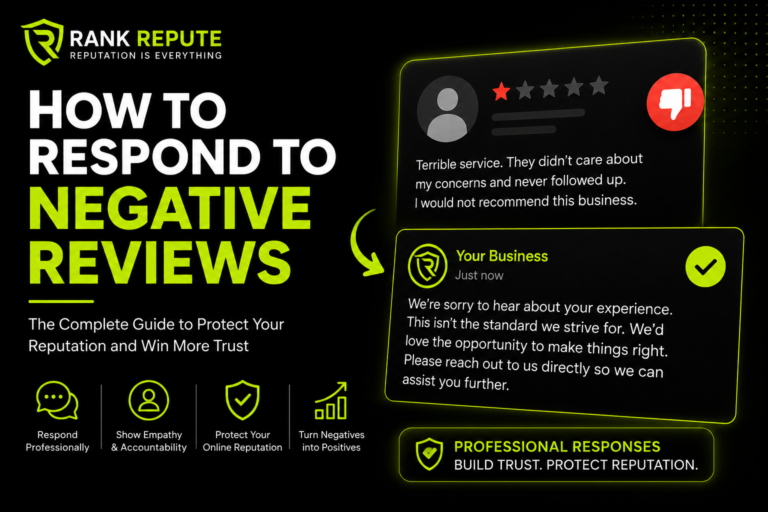
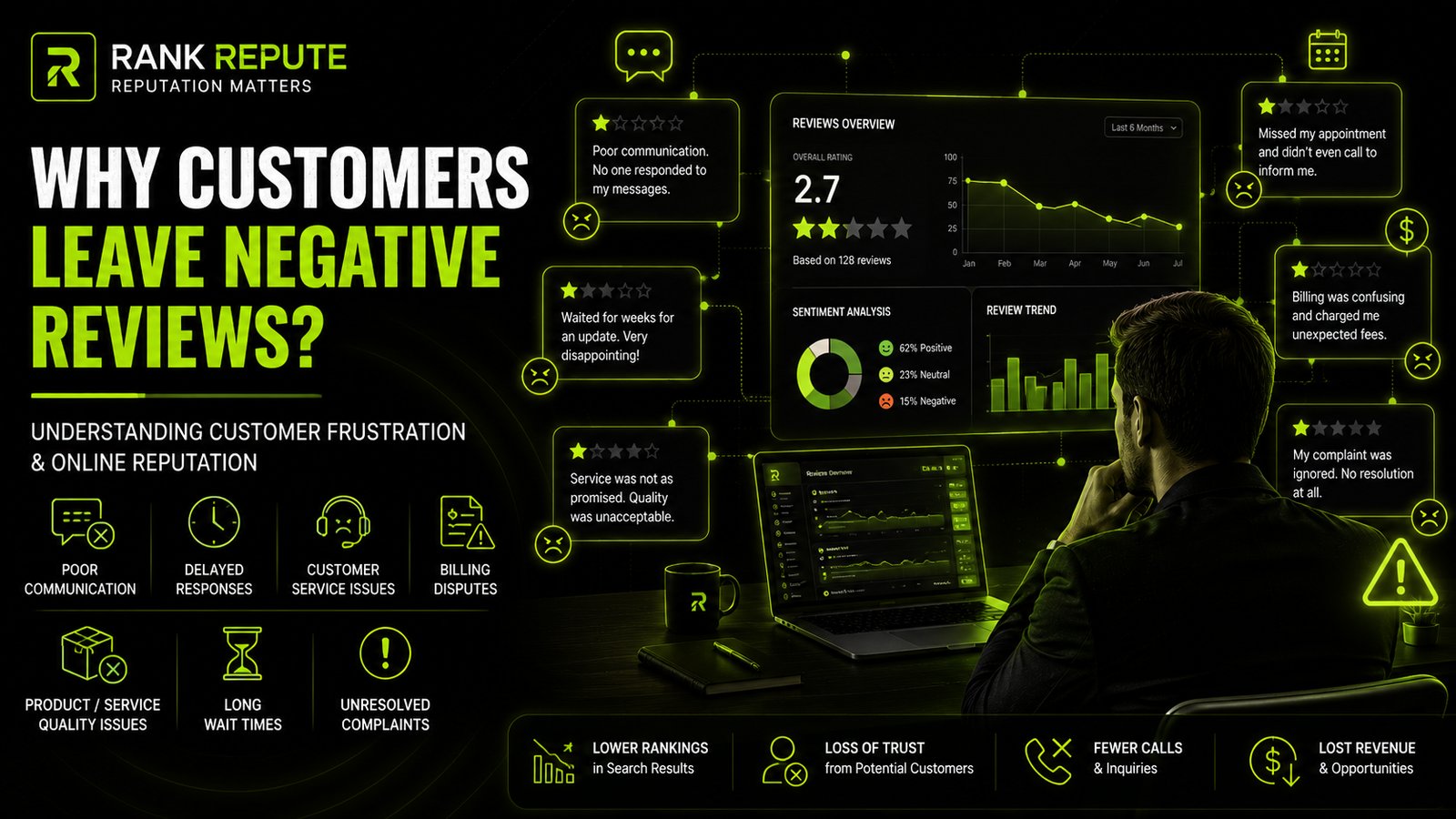
Why Customers Leave Negative Reviews?
Quick Answer
Customers leave negative reviews when their experience falls short of expectations. Common reasons include poor communication, delayed responses, customer service issues, product or service quality concerns, billing disputes, and unresolved complaints. Understanding why customers leave negative reviews helps businesses identify recurring problems, improve customer experiences, and strengthen their online reputation.
Online reviews have become one of the most influential factors in consumer decision-making. Before contacting a business, booking an appointment, hiring a contractor, visiting a restaurant, or purchasing a product, many people check reviews on platforms such as Google Reviews, Yelp, Facebook, Trustpilot, TripAdvisor, Healthgrades, Avvo, and industry-specific directories. While positive reviews help businesses build credibility, negative reviews often provide valuable insight into customer frustrations.
Many business owners assume negative reviews are simply the result of unreasonable customers. In reality, most negative reviews occur because customers believe their expectations were not met. The review itself is often the final step in a longer customer journey involving frustration, disappointment, confusion, or unresolved concerns. Businesses that actively collect customer feedback through a structured review generation strategy are often able to identify issues earlier and address concerns before they escalate into negative public reviews.
Understanding why customers leave negative reviews helps businesses identify weaknesses, improve customer satisfaction, and reduce future complaints.
Why Negative Reviews Matter?
Negative reviews influence more than just ratings. Potential customers often read negative reviews before reading positive ones because they want to understand potential risks before making a decision.
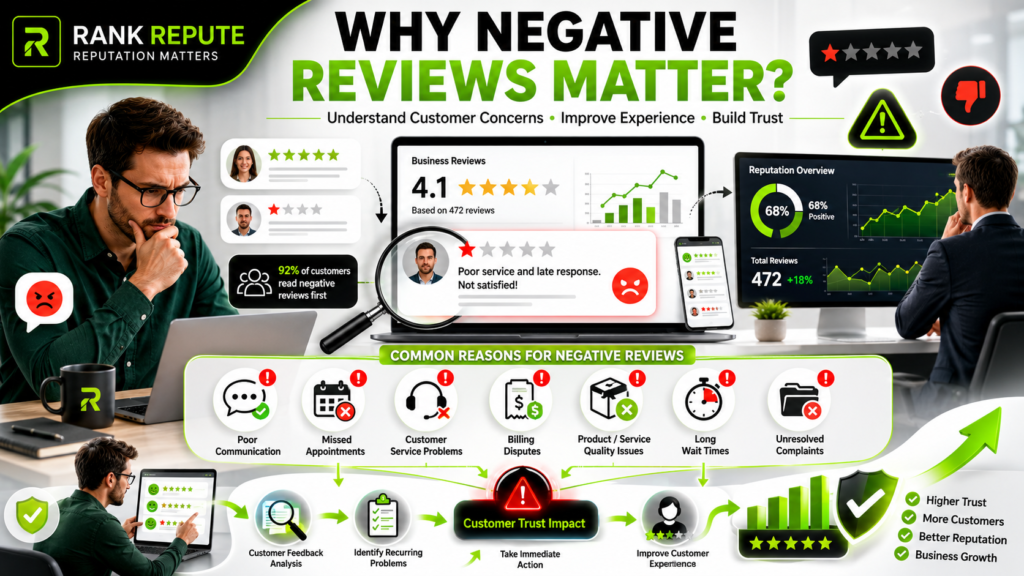
A review profile containing a few negative reviews is not necessarily harmful. In fact, many consumers view a mix of positive and negative feedback as more authentic than a profile containing only perfect ratings. Businesses that use a proactive review management strategy are better positioned to identify these patterns early, address customer concerns, and protect their online reputation. The real issue arises when negative reviews reveal recurring concerns. Examples include:
- Poor communication
- Missed appointments
- Customer service problems
- Billing disputes
- Product quality issues
- Long wait times
- Unresolved complaints
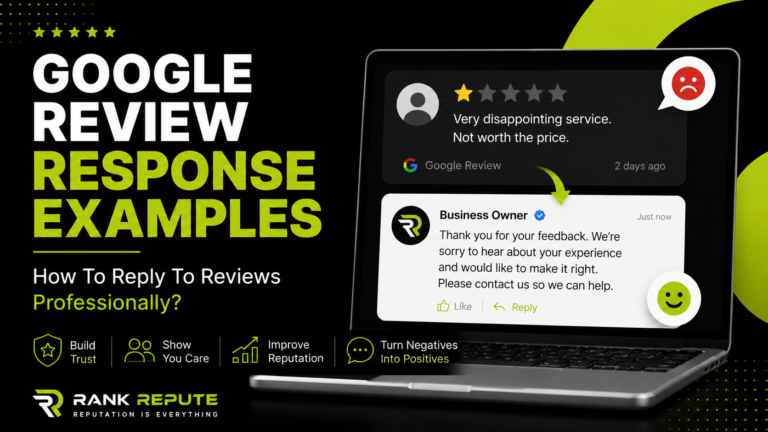
When multiple customers mention the same issue, future customers begin to view those concerns as patterns rather than isolated incidents. This is why negative reviews should be viewed as customer feedback rather than simply reputation problems. Businesses that take the time to analyze feedback and apply best practices for responding to negative reviews are often better equipped to resolve recurring concerns, improve customer experiences, and strengthen long-term trust.
The Psychology Behind Customer Feedback
Customers rarely leave reviews immediately after a minor inconvenience. Most negative reviews occur after a customer reaches a point of frustration. In many cases, the review is not written because of a single problem. While most concerns should be addressed through communication and service improvements, businesses dealing with false, misleading, or policy-violating reviews may also consider negative content removal as part of their broader reputation management strategy. Instead, it is written because the customer feels:
- Ignored
- Disappointed
- Misled
- Disrespected
- Frustrated
- Unheard
Customers often leave reviews when they believe other communication channels have failed. For example:
- Emails were not answered.
- Calls were not returned.
- Complaints were ignored.
- Problems remained unresolved.
The review platform becomes their final opportunity to share their experience publicly. Understanding this behavior helps businesses focus on preventing issues before customers feel compelled to post negative feedback.
The Most Common Reasons Customers Share Negative Feedback
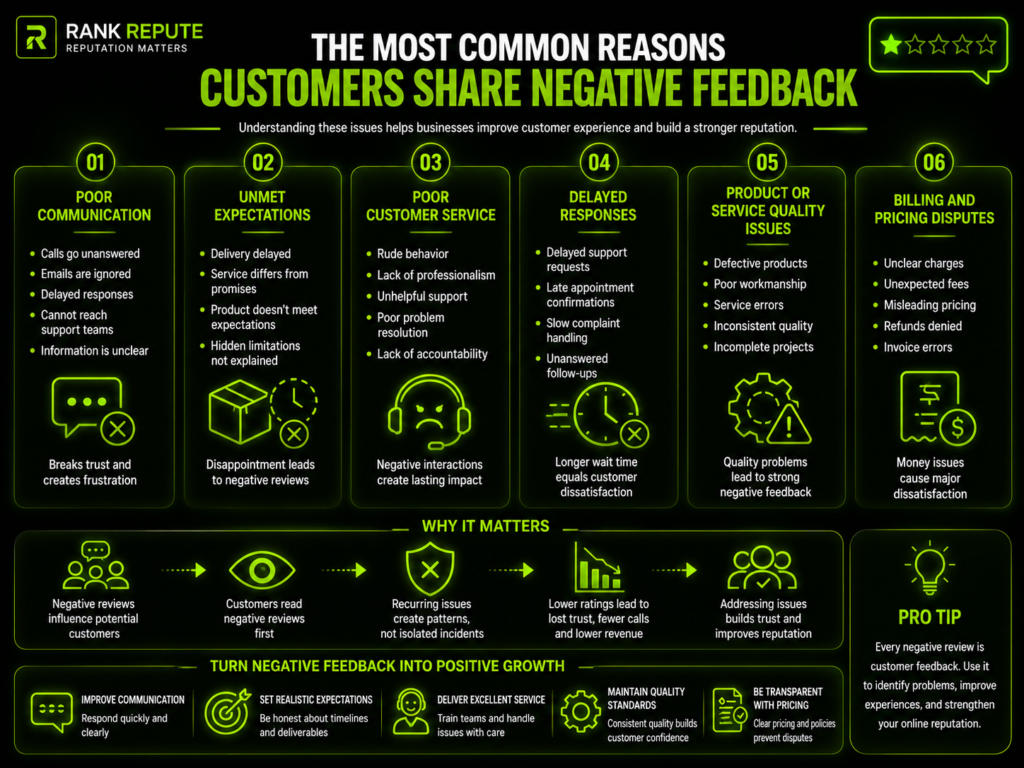
Poor Communication
Communication issues are among the most common causes of negative reviews. Customers expect businesses to respond within a reasonable timeframe. Negative reviews often occur when:
- Calls go unanswered.
- Emails are ignored.
- Messages receive delayed responses.
- Customers cannot reach support teams.
- Information is unclear.
Even when a product or service performs well, poor communication can create frustration. Many customers are willing to accept mistakes if communication remains honest and transparent. However, when communication breaks down, trust often disappears.
Unmet Expectations
Customer expectations heavily influence satisfaction. Problems arise when businesses promise one experience but deliver another. Examples include:
- Delivery times longer than advertised.
- Services that differ from marketing claims.
- Products that fail to meet expectations.
- Hidden limitations are not explained up front.
Negative reviews frequently contain phrases such as:
- “This wasn’t what I expected.”
- “The service was different from what was promised.”
- “The photos looked better than reality.”
Setting realistic expectations is often one of the simplest ways to reduce customer dissatisfaction.
Poor Customer Service
Customer service remains one of the strongest drivers of online reviews. A customer may overlook minor problems when treated respectfully. However, negative interactions with staff can quickly damage customer perception.
Common complaints include:
- Rude behavior
- Lack of professionalism
- Unhelpful support
- Poor problem resolution
- Lack of accountability
Customers often remember how they were treated long after the transaction itself. For many businesses, customer service quality directly influences review quality.
Delayed Responses
Customers expect businesses to respond promptly when issues arise. A delayed response can create frustration even when the original problem is relatively small. Examples include:
- Delayed support requests
- Late appointment confirmations
- Slow complaint handling
- Unanswered follow-ups
The longer customers wait, the more likely they are to feel ignored. In many industries, response speed influences customer satisfaction almost as much as the final resolution.
Product Or Service Quality Issues
Not every negative review is caused by communication. Sometimes the issue involves the actual product or service. Examples include:
- Defective products
- Poor workmanship
- Service errors
- Inconsistent quality
- Incomplete projects
When customers spend money, they expect a certain standard of quality. Failure to meet that standard often leads directly to negative reviews. This is especially common in:
- Home services
- Restaurants
- Automotive services
- Healthcare
- Retail businesses
- Professional services
Billing And Pricing Disputes
Money-related concerns often generate strong emotional reactions. Customers may leave negative reviews when they believe:
- Charges were unclear.
- Fees were unexpected.
- Pricing was misleading.
- Refund requests were denied.
- Invoices contained errors.
Transparency helps reduce these issues. Businesses that clearly explain pricing, fees, and policies generally experience fewer billing-related complaints.
Why Satisfied Customers Rarely Leave Reviews?
One reason businesses struggle with review management is that satisfied customers often leave fewer reviews than dissatisfied customers.
- Psychologists sometimes refer to this as negativity bias.
- People are naturally more motivated to share negative experiences than positive ones.
- A customer who receives expected service may simply move on.
- A customer who feels disappointed often feels motivated to warn others.
This creates an imbalance where negative experiences receive greater visibility. For this reason, businesses should actively encourage satisfied customers to leave reviews rather than relying on spontaneous feedback alone. Combined with effective Google Business Profile optimization, a steady flow of authentic customer reviews can help strengthen credibility, improve local visibility, and create a more balanced online reputation.
Why Customers Share Feedback Publicly Instead Of Contacting The Business?
Many business owners assume unhappy customers will contact them directly before posting a review. Unfortunately, that is not always the case.
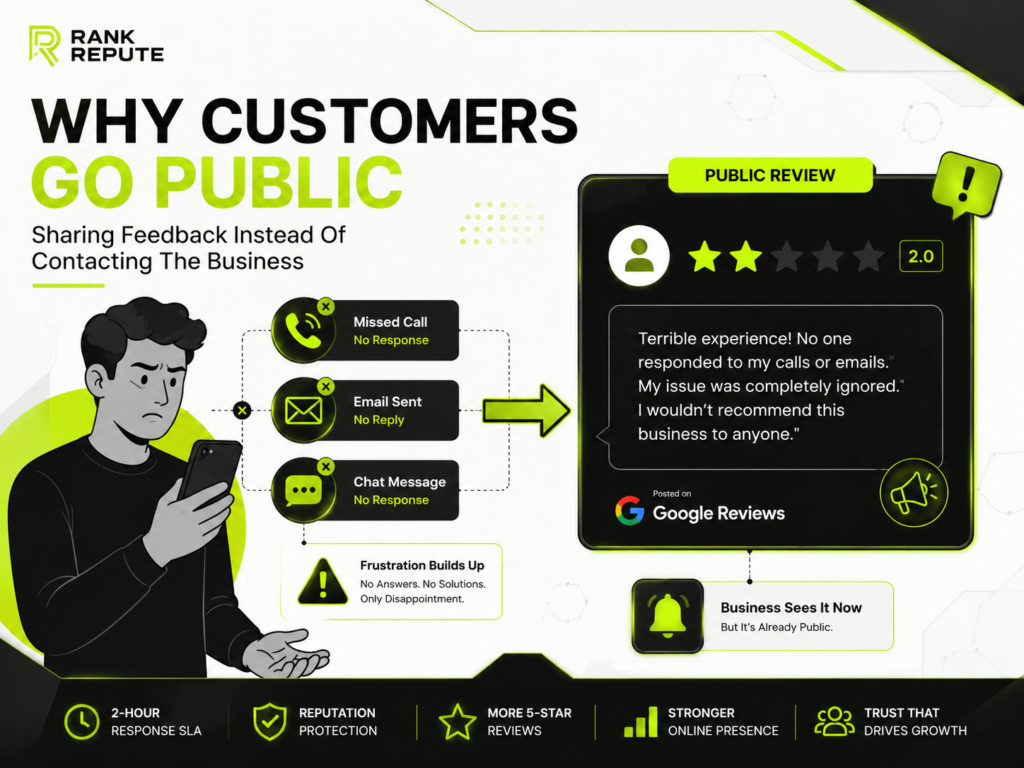
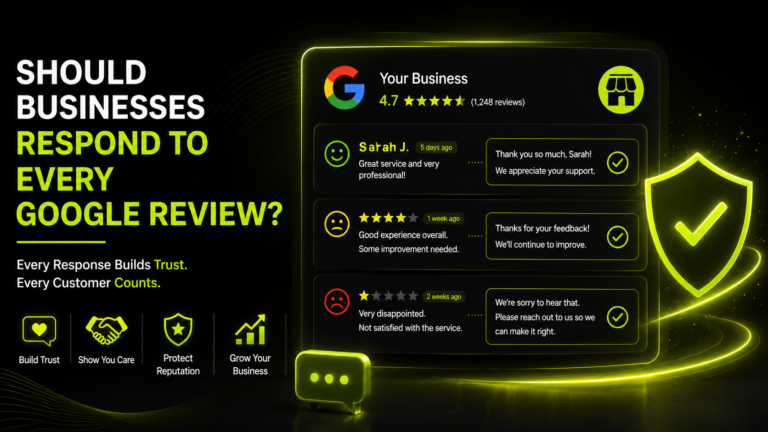
Research and customer behavior patterns show that many consumers leave reviews because they believe previous attempts to communicate were unsuccessful. Others simply find it easier to post a review than to contact a business through traditional channels. This is one reason why businesses should understand the importance of responding to every Google review and maintaining active communication with customers across review platforms. Common reasons include:
- They could not reach customer support.
- Previous complaints were ignored.
- They felt their concerns were dismissed.
- They wanted to warn other customers.
- They believed a public review would receive faster attention.
In some cases, customers never contact the business at all. Instead, the review becomes their first form of feedback. This is one reason why monitoring reviews regularly is essential. A negative review may be the first indication that a customer experienced a problem. However, businesses should also recognize that not every negative review is legitimate, which is why understanding issues such as fake Google reviews is an important part of effective reputation management.
Industries That Receive The Most Negative Reviews
Every business can receive negative reviews, but some industries face greater challenges because customer expectations are higher and service interactions are more frequent. Industries that commonly receive customer complaints include:
- Restaurants
- Dental Practices
- Healthcare Providers
- Law Firms
- Home Service Companies
- Contractors
- Automotive Businesses
- Hotels & Hospitality
- Real Estate Services
- Financial Services
In these industries, factors such as wait times, communication quality, customer service, pricing transparency, and overall experience often influence review sentiment. Because trust plays a major role in customer decisions, review management is particularly important for businesses operating in these sectors.
Learn more about our industry-specific reputation management solutions designed to help businesses build trust and manage customer feedback effectively.
Warning Signs Before A Negative Review Appears
Negative reviews rarely appear without warning. Businesses often receive signals before customers decide to post public feedback. Common warning signs include:
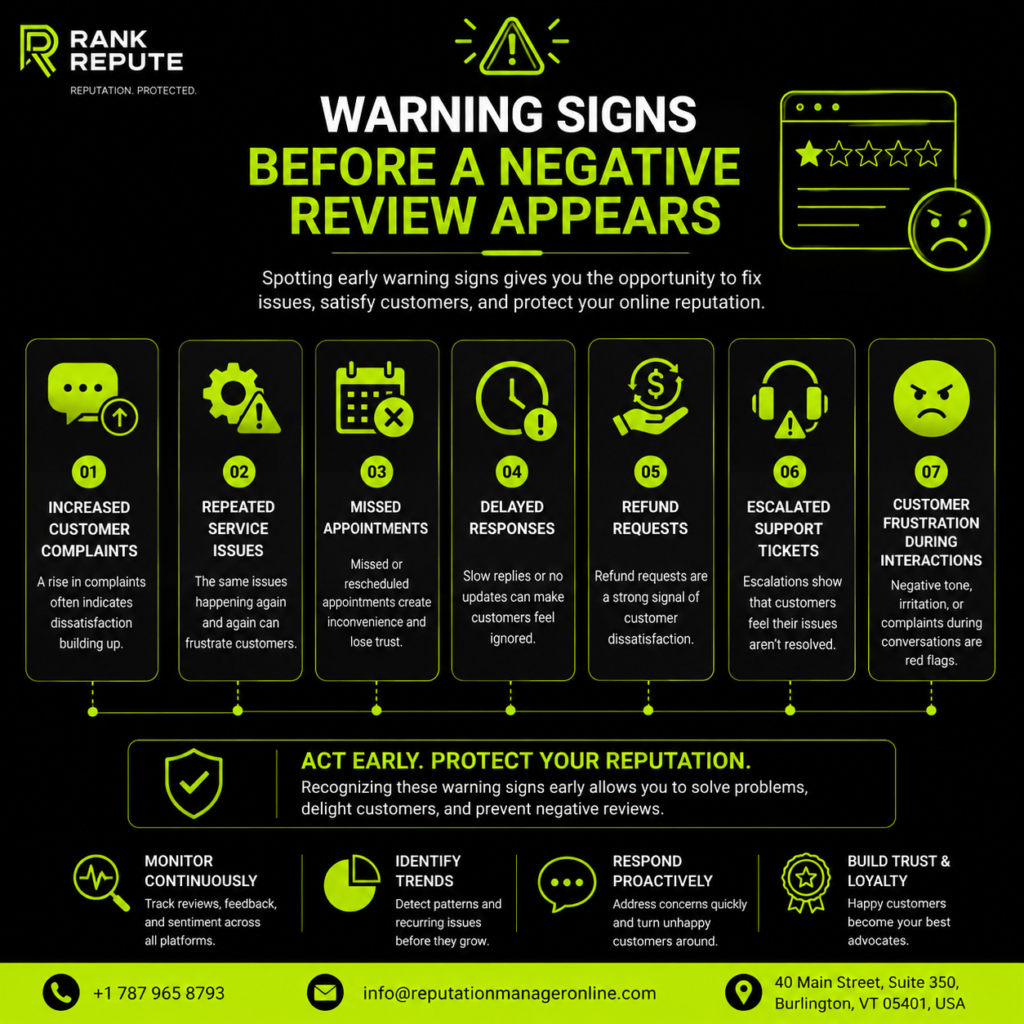
- Increased customer complaints
- Repeated service issues
- Missed appointments
- Delayed responses
- Refund requests
- Escalated support tickets
- Customer frustration during interactions
Recognizing these signals early can help businesses resolve concerns before they become public reviews. Many successful businesses treat complaints as opportunities to identify and fix problems before they affect their online reputation. Consistent reputation monitoring can help businesses detect emerging issues, track customer sentiment, and respond proactively before concerns escalate into negative public feedback.
Common Customer Frustrations And Their Impact
| Customer Issue | Why Customers Become Frustrated | Potential Review Outcome |
|---|---|---|
| Poor Communication | Customers feel ignored or uninformed | Negative review mentioning responsiveness |
| Long Wait Times | Expectations are not met | Complaints about service delays |
| Billing Problems | Customers question fairness or transparency | Pricing-related criticism |
| Poor Customer Service | Customers feel disrespected | Complaints about staff interactions |
| Product Quality Issues | Product fails to meet expectations | Low ratings and dissatisfaction |
| Appointment Problems | Convenience and reliability are affected | Complaints about scheduling |
| Unresolved Complaints | Customers feel ignored | Detailed negative reviews |
| Misleading Information | Expectations differ from reality | Trust-related criticism |
This table highlights a common pattern: most negative reviews are not caused by a single mistake. They often result from frustration that continues over time without a satisfactory resolution.
How Businesses Can Reduce Negative Reviews?
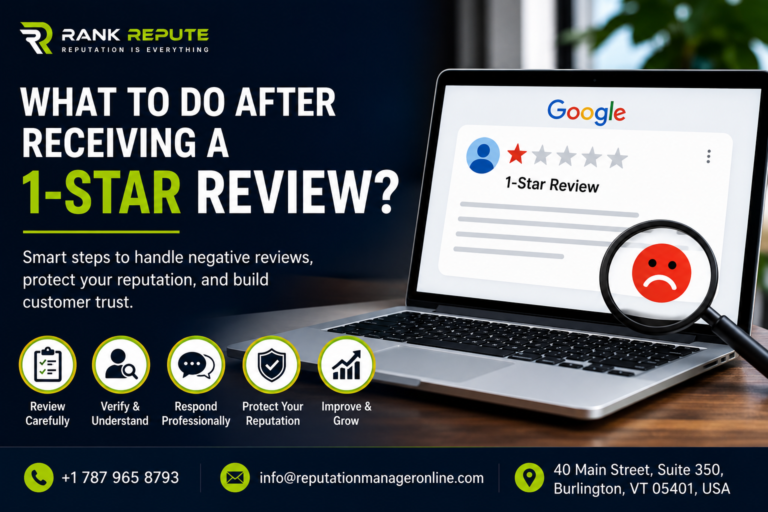
No business can eliminate negative reviews completely. Even highly rated companies occasionally receive criticism. The goal is not to achieve perfection. The goal is to reduce avoidable complaints and improve customer experiences. When negative feedback does occur, understanding how to handle a 1-star review can help businesses respond professionally, protect customer trust, and minimize potential reputation damage.
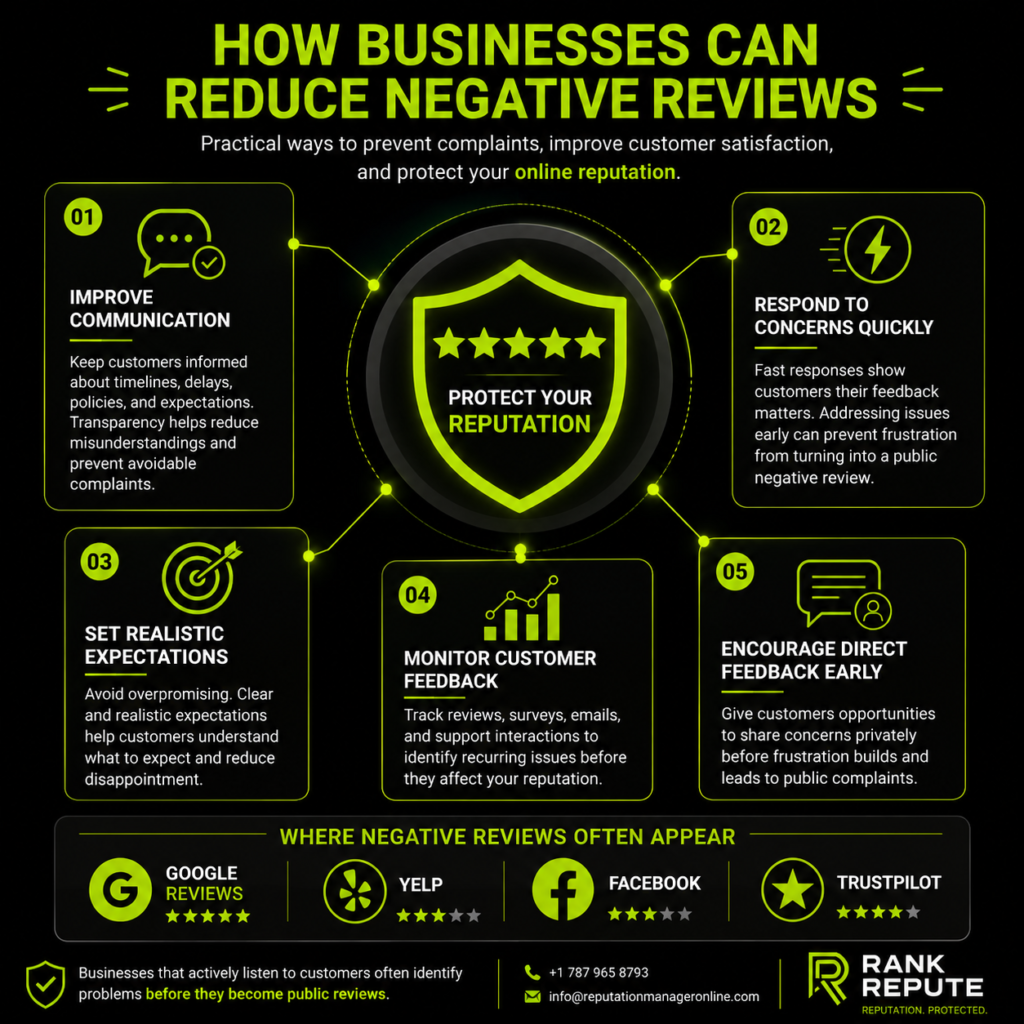
Improve Communication
Customers appreciate transparency. Keeping customers informed about delays, policies, timelines, and expectations can prevent many common complaints.
Respond To Customer Concerns Quickly
Fast responses often prevent minor issues from becoming larger problems. Customers are generally more understanding when businesses acknowledge concerns promptly.
Set Realistic Expectations
Avoid making promises that cannot be delivered consistently. Clear expectations help reduce disappointment and misunderstandings.
Monitor Customer Feedback
Reviews, surveys, emails, support tickets, and customer conversations can reveal patterns before they become reputation issues.
Encourage Feedback Before Frustration Builds
Providing customers with opportunities to share concerns directly can help businesses identify problems early.
Businesses that actively listen to customers often discover issues before they appear publicly on Google Reviews, Yelp, Facebook, Trustpilot, or other review platforms.
What Businesses Can Learn From Negative Reviews?
Negative reviews are often viewed as reputation problems, but they can also provide valuable operational insights. Reviews frequently reveal:
- Customer expectations
- Service weaknesses
- Communication gaps
- Training opportunities
- Process inefficiencies
- Recurring customer concerns
When multiple reviews mention similar issues, businesses gain clear evidence about where improvements may be needed. Rather than focusing solely on removing or responding to negative reviews, businesses should also examine what those reviews reveal about customer experiences. This approach helps improve both customer satisfaction and long-term reputation management.
Frequently Asked Questions
Why Do Customers Leave Negative Reviews?
Customers usually leave negative reviews when they feel their expectations were not met. Common reasons include poor communication, customer service issues, long wait times, billing disputes, product quality concerns, and unresolved complaints. In many cases, the review is the result of ongoing frustration rather than a single isolated issue.
What Is The Most Common Cause Of Negative Customer Feedback?
Poor communication is one of the most common causes of negative customer feedback. Customers often become frustrated when calls go unanswered, emails are ignored, appointments are missed, or important information is not communicated clearly. Even small issues can escalate when customers feel they are being ignored.
Why Do Happy Customers Rarely Leave Reviews?
Many satisfied customers simply move on after receiving the service they expected. Psychologists often refer to this as negativity bias, where people are more motivated to share frustrating experiences than positive ones. This is why businesses should actively encourage satisfied customers to leave reviews instead of relying on spontaneous feedback.
Why Do Customers Post Reviews Instead Of Contacting The Business?
Some customers leave reviews because they believe previous attempts to contact the business were unsuccessful. Others feel a public review is the fastest way to get attention. In some situations, customers never contact the business directly and use review platforms as their first opportunity to share feedback.
Do Negative Reviews Always Mean A Business Provides Poor Service?
No. Even excellent businesses occasionally receive criticism. Customer expectations, misunderstandings, communication issues, and isolated incidents can all lead to unfavorable reviews. Most consumers look for overall patterns rather than judging a business based on a single complaint.
What Industries Receive The Most Customer Complaints?
Industries that frequently receive complaints include restaurants, healthcare providers, dental practices, law firms, home service companies, contractors, automotive businesses, hotels, and real estate services. These industries involve frequent customer interactions where trust, communication, and service quality play a significant role.
Can Negative Reviews Help A Business Improve?
Yes. Critical feedback often highlights operational issues, communication gaps, customer service concerns, or recurring problems that may not be visible internally. Businesses that analyze customer feedback carefully can identify opportunities to improve processes and customer experiences.
What Warning Signs Usually Appear Before A Negative Review?
Warning signs often include repeated customer complaints, delayed responses, refund requests, missed appointments, unresolved service issues, and increasing customer frustration. Identifying these signals early can help businesses resolve concerns before they become public reviews.
How Can Businesses Reduce Negative Reviews?
Businesses can reduce complaints by improving communication, responding quickly to concerns, setting realistic expectations, maintaining service quality, and monitoring customer feedback consistently. While no business can eliminate criticism entirely, proactive customer service can significantly reduce avoidable complaints.
Do Negative Reviews Affect Customer Trust?
They can, especially when multiple reviews mention the same issue. However, many customers expect businesses to have occasional criticism. What often matters more is whether the business addresses concerns professionally and demonstrates a commitment to customer satisfaction.
Conclusion
Businesses that understand why customers leave negative reviews are often better positioned to improve customer experiences and protect their online reputation. Most negative reviews are not random. They are usually connected to communication issues, unmet expectations, customer service concerns, pricing disputes, quality problems, or unresolved complaints.
The businesses that perform best online are often those that view customer feedback as a source of insight rather than simply a source of criticism. By identifying recurring concerns, improving communication, setting realistic expectations, and responding professionally to feedback, businesses can reduce customer frustration and create stronger experiences over time.
For businesses focused on improving review management and online reputation, understanding why customers leave negative reviews is often the first step toward preventing them.