Review ROI Calculator: What Are Your Reviews Actually Worth?
Quick Answer
The value of your reviews comes down to a simple relationship: a higher star rating brings more customers, and more customers mean more revenue. Harvard Business School research found that a one-star increase in rating can lift revenue by 5% to 9%. The calculator below estimates how much extra revenue a better rating could earn your business, using your own customer value and volume. In short, reviews are not a vanity metric. They are a measurable driver of revenue.
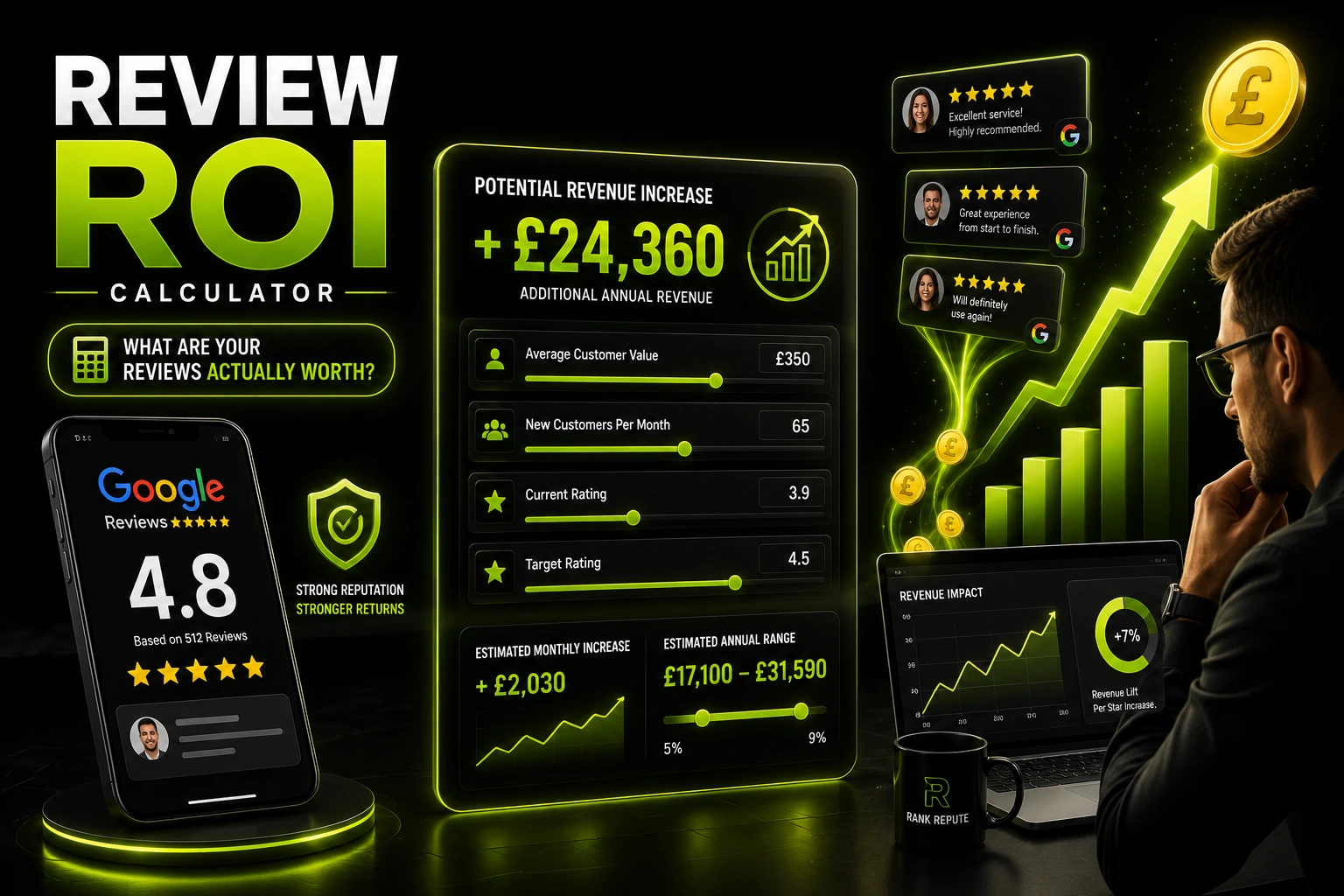
Review ROI Calculator
Review ROI Calculator
Estimate how much more revenue a higher rating could earn your business.
Enter your average customer value, how many new customers you win each month, your current rating, and the rating you want to reach. The calculator estimates the additional annual and monthly revenue that improvement could unlock, based on established research linking ratings to revenue.
What Is Review ROI?
Review ROI is the financial return a business gets from improving its online reviews and ratings. It measures the revenue gained from a stronger reputation against the effort or cost of building it. Put simply, it answers the question every owner asks: is it worth investing in reviews?
The answer is almost always yes, and the reason is that ratings directly influence buying decisions. When your rating rises, more of the people who find you choose you instead of a competitor. That lift in conversion, multiplied across every prospect who checks your reviews, is your review ROI. Unlike most marketing, the effect is measurable because the link between ratings and revenue has been studied and quantified.
How the Review ROI Calculator Works
The calculator turns a research-backed relationship into a number for your business. It uses four simple inputs and one well-established multiplier.
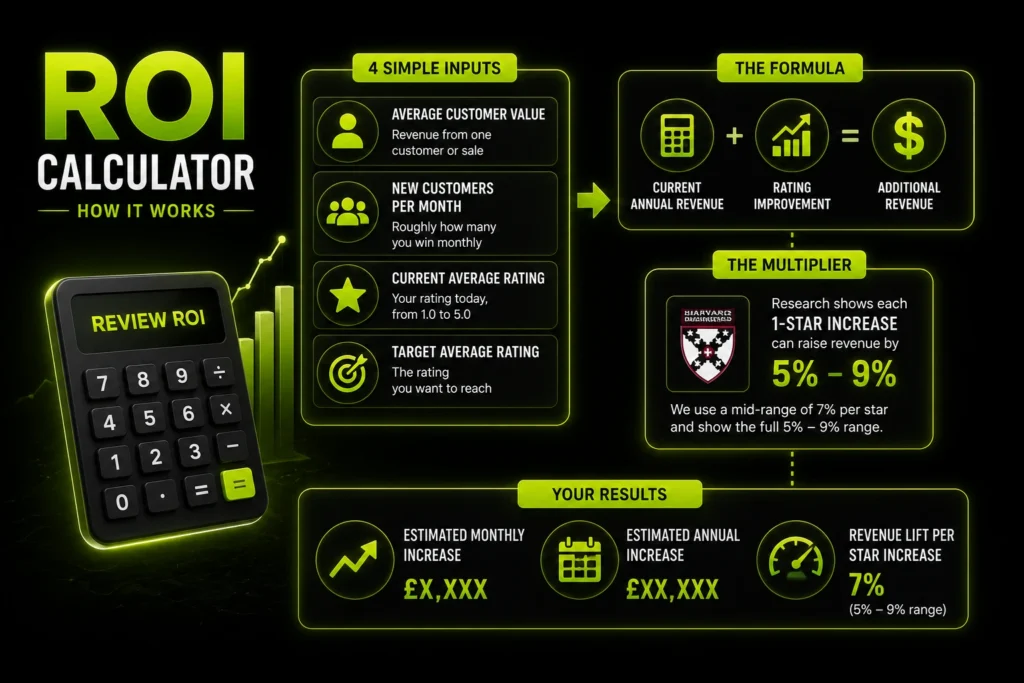
The inputs are your average customer value, your new customers per month, your current average rating, and your target rating. From these, it works out your current annual revenue, then applies the revenue lift associated with the rating improvement you want.
The multiplier comes from Harvard Business School research, which found that each one-star increase in rating can raise revenue by 5% to 9%. The calculator uses a mid-range of 7% per star for its main figure and shows the 5% to 9% span as a range, so you see a conservative and an optimistic estimate side by side.
| Input | What it means |
|---|---|
| Average customer value | Revenue from one customer or sale |
| New customers per month | Roughly how many you win monthly |
| Current average rating | Your rating today, from 1.0 to 5.0 |
| Target average rating | The rating you want to reach |
How to Use the Calculator
Getting a useful estimate takes less than a minute. Follow these steps:
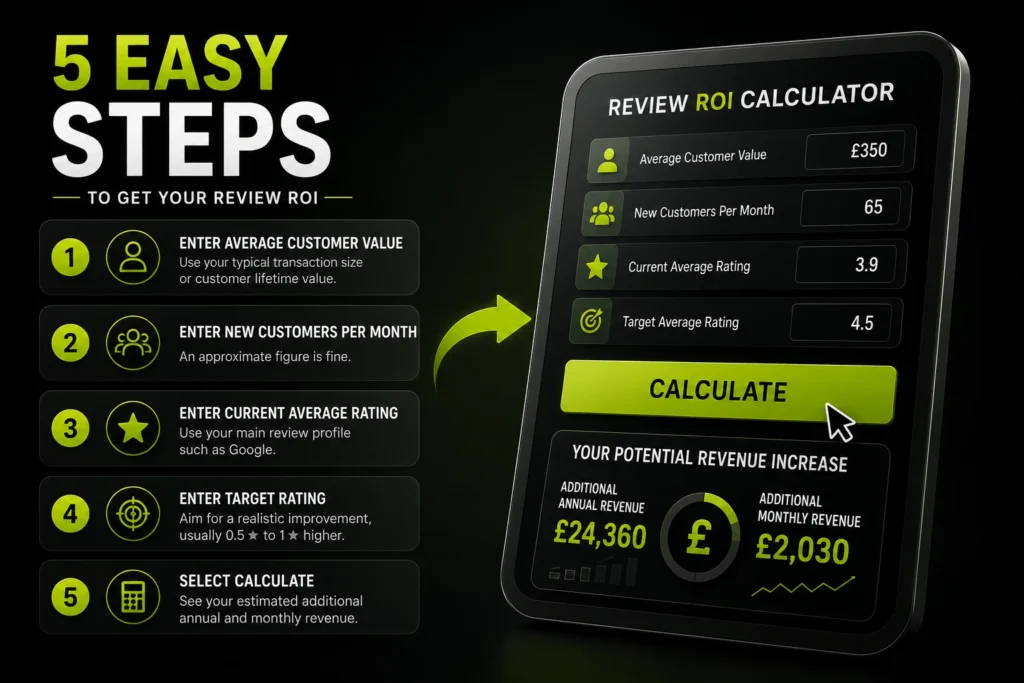
- Enter your average customer value. Use your typical transaction size, or your customer lifetime value if you want a fuller picture.
- Enter your new customers per month. An approximate figure is fine.
- Enter your current average rating, taken from your main review profile such as Google.
- Enter a realistic target rating, usually half a star to a full star higher.
- Select calculate to see your estimated additional annual and monthly revenue.
The result is an estimate, not a guarantee, because real outcomes depend on your market and visibility. But it gives you a grounded sense of what a better reputation is worth, which is far more useful than guessing.
The Data Behind the Numbers
The calculator is built on credible research, not marketing claims. The core finding comes from Harvard Business School, whose study of Yelp ratings showed that a one-star increase leads to a 5% to 9% rise in revenue. That single, well-cited figure is what makes review ROI measurable in the first place.
The effect is also threshold-based, which amplifies the value of improvement. Around a third of consumers avoid businesses rated below four stars, so moving from 3.8 to 4.2 does not just add a fraction of a star. It moves you across the line where a large group of buyers will finally consider you at all. That is why even a small rating gain can produce an outsized revenue jump for businesses sitting just below four stars.
Worked Example: Review ROI in Action
A quick example shows how the numbers come together. Imagine a home services business with a $300 average job value that wins 60 new customers a month, sitting at a 3.9 rating and aiming for 4.5.
Its current annual revenue from new customers is $300 multiplied by 60, multiplied by 12, which comes to $216,000. The target is 0.6 stars higher. Applying the mid-range 7% revenue lift per star, that improvement is worth about 0.6 times 7%, or roughly 4.2% more revenue. On a $216,000 base, that is around $9,000 in additional annual revenue, with a conservative-to-optimistic range of roughly $6,500 to $11,700.
| Figure | Value |
|---|---|
| Average job value | $300 |
| New customers per month | 60 |
| Current annual revenue | $216,000 |
| Rating gain targeted | 0.6 stars |
| Estimated extra annual revenue | ~$9,000 (range $6,500 to $11,700) |
That is the return from a rating gain most businesses could reach in a few months of consistent review generation. The cost of earning those reviews is a fraction of the revenue they unlock, which is the whole point of measuring review ROI.
What Is a Single Review Worth?
A single review has no fixed price, but you can estimate its value through its effect on your rating and trust. Each genuine positive review nudges your average upward, protects you against the occasional negative one, and adds to the volume that makes your profile credible. It takes roughly a dozen positive reviews to offset one negative, which shows how much weight each review carries.
The practical way to value one review is to look at the whole. If lifting your rating by half a star is worth thousands in annual revenue, and it takes a certain number of reviews to get there, then each review is worth a share of that gain. Viewed this way, asking a happy customer for a review is one of the highest-return, lowest-cost actions a local business can take. A consistent review generation habit compounds that value month after month.
Positive vs Negative Review ROI
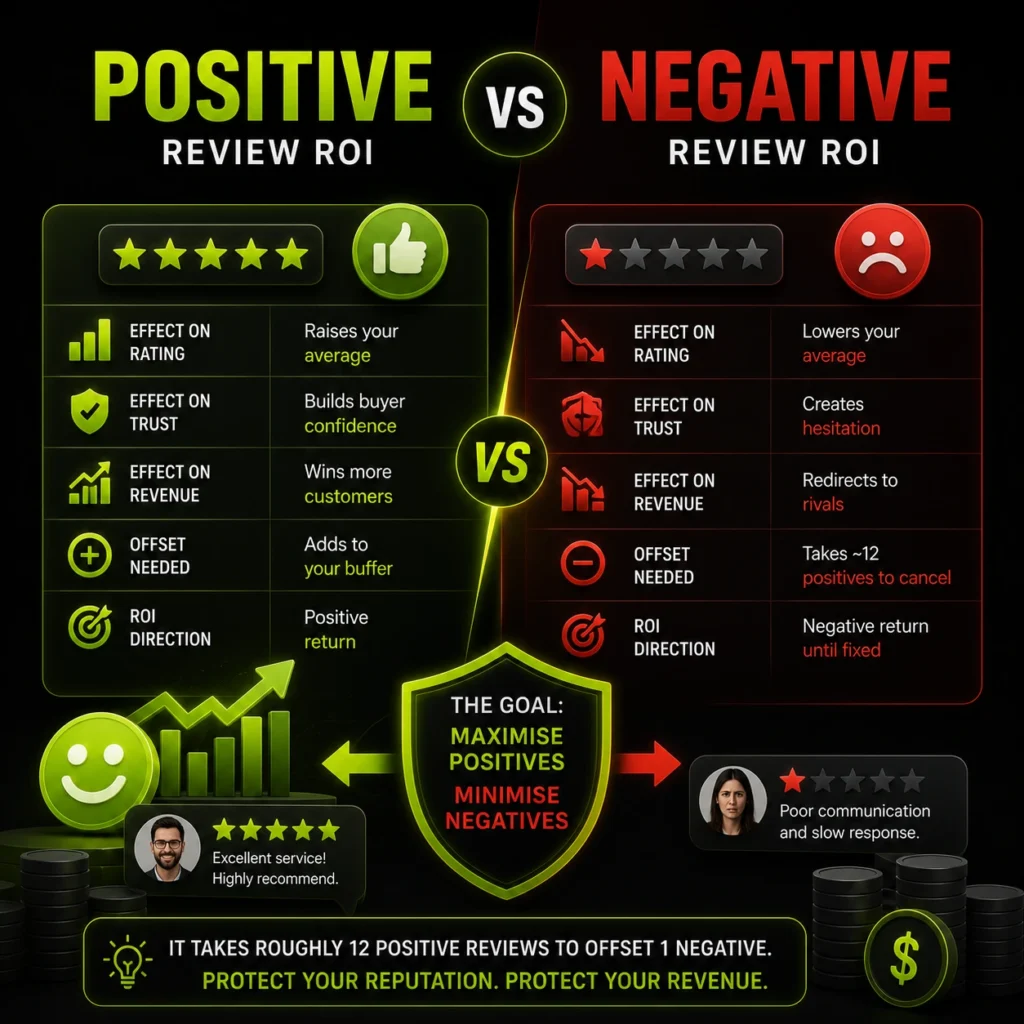
Reviews cut both ways, and understanding both sides sharpens the ROI picture. A positive review adds value by lifting your rating and trust, while a negative one subtracts it by driving prospects to competitors. The return on managing reviews comes from maximising one and minimising the other.
| Positive review | Negative review | |
|---|---|---|
| Effect on rating | Raises your average | Lowers your average |
| Effect on trust | Builds buyer confidence | Creates hesitation |
| Effect on revenue | Wins more customers | Redirects them to rivals |
| Offset needed | Adds to your buffer | Takes ~12 positives to cancel |
| ROI direction | Positive return | Negative return until fixed |
The imbalance is the key insight. Because it takes roughly a dozen positive reviews to offset one negative, preventing and resolving negatives protects far more value than it might seem. The strongest review ROI comes from doing both at once: generating positives consistently while responding to and resolving negatives fast.
Factors That Change Your Review ROI
Two businesses with the same rating can see very different returns from improving it. Several factors shape your review ROI:
- Average customer value. The higher your transaction size or lifetime value, the more each retained customer is worth, so the same rating gain returns more.
- Customer volume. More monthly customers means the percentage uplift applies to a larger base, multiplying the effect.
- Starting rating. Businesses just below the four-star line often see the biggest jump, because they cross the threshold where buyers start considering them.
- Industry sensitivity. In high-trust fields like healthcare, hospitality, and professional services, ratings weigh more heavily on decisions, so the ROI is larger.
- Search visibility. Reviews influence local rankings, so a better rating can also bring more traffic, not just better conversion, as covered in how reviews affect local SEO.
Understanding your own factors helps you read the calculator’s estimate with the right context.
Review ROI by Industry
The return on a better rating is not the same everywhere. In sectors where trust drives the decision, each star is worth more, so the ROI of improving reviews is highest.
| Industry | Why the ROI is high | Return level |
|---|---|---|
| Restaurants and hospitality | Fast decisions made on ratings alone | Very high |
| Healthcare and dental | Patients avoid providers below four stars | Very high |
| Legal and professional services | High-value, trust-led commitments | High |
| Home services and contractors | Big-ticket jobs chosen on reviews | High |
| Retail and e-commerce | Easy to compare and switch instantly | Moderate to high |
Restaurants show the effect clearly, since Harvard Business School research tied a single Yelp star to a 5% to 9% revenue swing. Healthcare carries an even higher return because most patients will not consider a provider rated below four stars, so crossing that line unlocks a large pool of buyers. In these fields, investing in reviews returns more per star, which is why industry-focused review management pays off fastest here.
Beyond Revenue: The Full Return on Reviews
Direct sales are only part of your review ROI. A stronger rating pays off across several channels at once, which most calculators never capture:
- More organic visibility. Reviews influence local rankings, so a better rating can lift you in the map pack and local results, bringing more traffic before any conversion gain.
- Lower advertising costs. When your reputation converts better, every click and ad pound works harder, cutting your effective cost per acquisition.
- Higher AI visibility. AI tools increasingly summarise reputation to answer buyer questions, so strong, recent reviews help you appear in AI-generated recommendations.
- Stronger conversion everywhere. A trusted rating lifts response across your website, listings, and social profiles, not just your review page.
- Easier hiring. A good public reputation widens your talent pool, reducing recruiting costs.
Added together, these mean the true return on reviews is larger than the revenue figure alone. Better reviews win more of the customers who see you, and help more customers see you in the first place. Keeping that momentum is what ongoing reputation monitoring protects.
How to Improve Your Review ROI
Once you know what a better rating is worth, the next step is earning it. The highest-return actions are also the simplest:
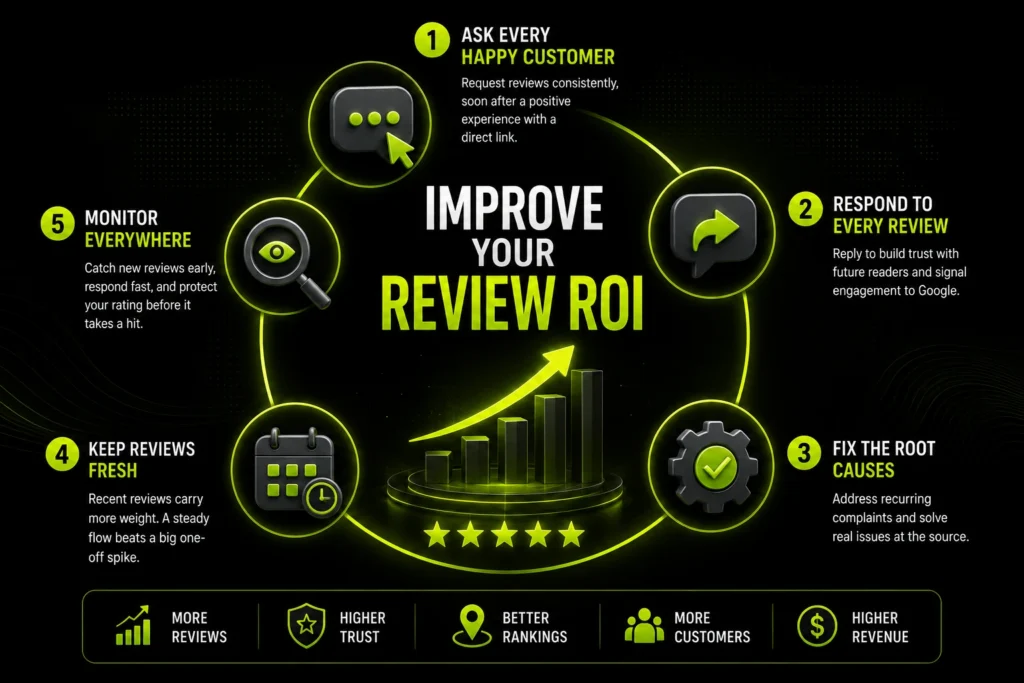
- Ask every happy customer. The biggest lever on review volume is simply requesting reviews consistently, soon after a positive experience, with a direct link.
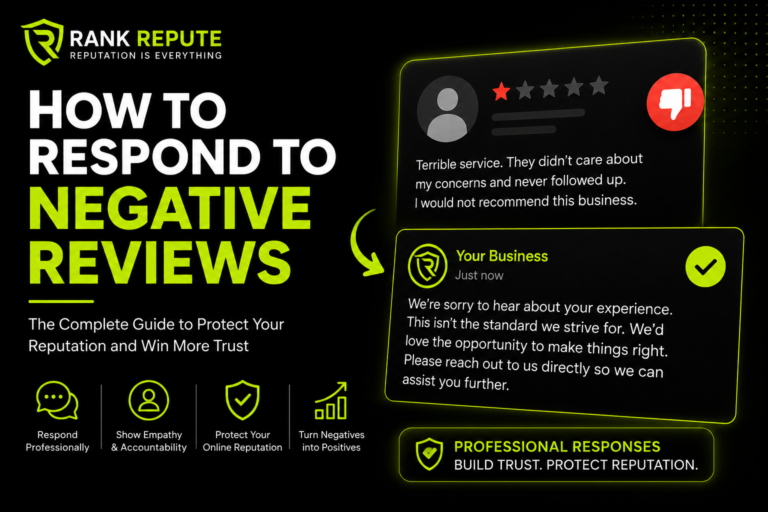
- Respond to every review. Replying builds trust with future readers and signals engagement to Google, supporting both conversion and ranking.
- Fix the root causes of negatives. Recurring complaints point to real issues, and solving them lifts your rating at the source.
- Keep reviews fresh. Recent reviews carry more weight, so a steady flow beats a big one-off batch that then goes quiet.
- Monitor everywhere. Catching new reviews early lets you respond fast and protect your rating before it slips.
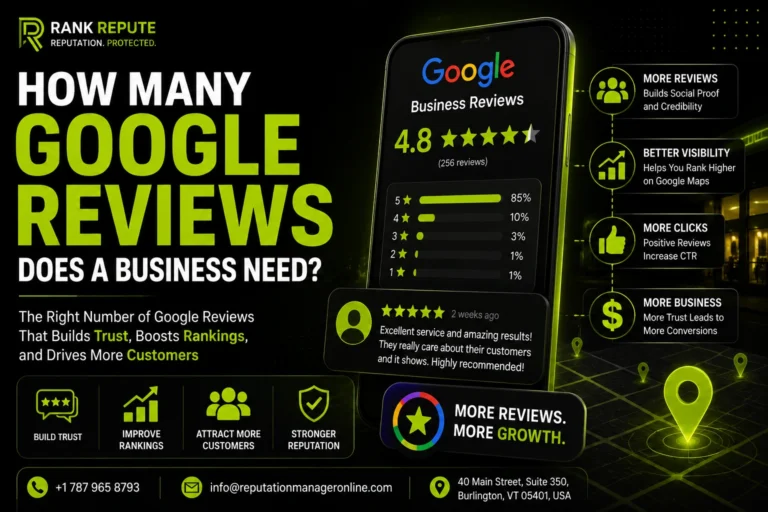
For a fuller view of how many reviews you need to move the needle, see our guide on how many Google reviews a business needs. Managed review management can run this whole cycle for you.
Why Review ROI Matters for Search and AI
Reviews now shape more than human decisions. They influence how search engines rank you and how AI tools describe you. A strong rating and recent, detailed reviews help you appear in local search, the map pack, and increasingly in AI-generated recommendations, where tools summarise reputation to answer buyer questions.
This widens your review ROI beyond direct conversion. A better reputation earns more visibility across Google and AI assistants, which brings more prospects into view in the first place. In other words, the return on reviews compounds: better ratings win more of the customers who see you, and also help more customers see you at all.
Frequently Asked Questions
How do you calculate the ROI of reviews?
Estimate your current annual revenue from average customer value and volume, then apply the revenue lift from a higher rating. Harvard Business School research links each one-star increase to a 5% to 9% revenue rise, so multiply your revenue base by the stars gained and that percentage. The calculator above does this automatically.
What is a single Google review worth?
There is no fixed figure, but each review adds to your rating, trust, and volume, which together drive revenue. Since it takes roughly a dozen positive reviews to offset one negative, and lifting your rating can be worth thousands a year, each review carries a meaningful share of that value.
How much can improving my rating increase revenue?
Between 5% and 9% for each full star gained, based on Harvard Business School research. The exact figure depends on your customer value, volume, industry, and starting rating. Businesses just below four stars often see the largest jump, because they cross the threshold where many buyers start considering them.
Is investing in reviews worth it?
Almost always. Generating reviews is low-cost, and the revenue return from a higher rating is significant and measurable. When a single star can move revenue by up to 9%, consistent review generation is one of the highest-return activities a local business can invest in.
Do reviews affect more than direct sales?
Yes. Reviews also influence local search rankings and how AI tools describe your business, so a stronger rating brings more visibility, not just better conversion. This means your true review ROI includes extra prospects who discover you, on top of the ones you convert.
How is review ROI different from review cost?
Review ROI measures the revenue you gain from a better rating, while review cost measures what a bad rating loses you. They are two sides of the same relationship. The calculator focuses on the upside: how much extra revenue a higher rating could earn, based on the 5% to 9% lift per star from Harvard Business School research.
How many reviews do I need to improve my rating?
It depends on your current rating and how many reviews you already have. A business with few reviews moves its average quickly, while one with hundreds needs more to shift. The reliable path is steady generation: ask every happy customer, and your rating climbs as genuine positive reviews accumulate.
Does review ROI apply to service businesses?
Yes, and often strongly. Service businesses like clinics, law firms, and contractors involve high-trust, high-value decisions, so ratings weigh heavily on whether a prospect chooses you. Because each customer is worth more, even a small rating gain can produce a significant return.
Can I measure the ROI of responding to reviews?
Partly. Responding lifts trust and signals engagement to Google, which supports both conversion and ranking, though the effect is harder to isolate than a rating change. Since around 80% of consumers view a business more favourably when it responds, the return shows up as higher conversion and a stronger profile over time.
Do reviews on Google matter more than other platforms for ROI?
Usually, yes. Google is where most consumers read reviews and where local search visibility is decided, so Google reviews tend to carry the highest ROI for local businesses. That said, reviews on the platforms your specific customers use, such as industry sites, also contribute and should not be ignored.
Conclusion
Reviews are one of the few marketing investments with a return you can actually calculate. A higher rating wins more of the customers who find you, and research puts that lift at 5% to 9% per star. Use the calculator above to see what a better rating is worth for your own numbers, then focus on the simple actions that earn it: ask every happy customer, respond to every review, and keep your profile fresh. If you would rather have that whole cycle handled for you, a done-for-you review generation service turns review ROI from a calculation into results. A reputation audit is a good place to start.