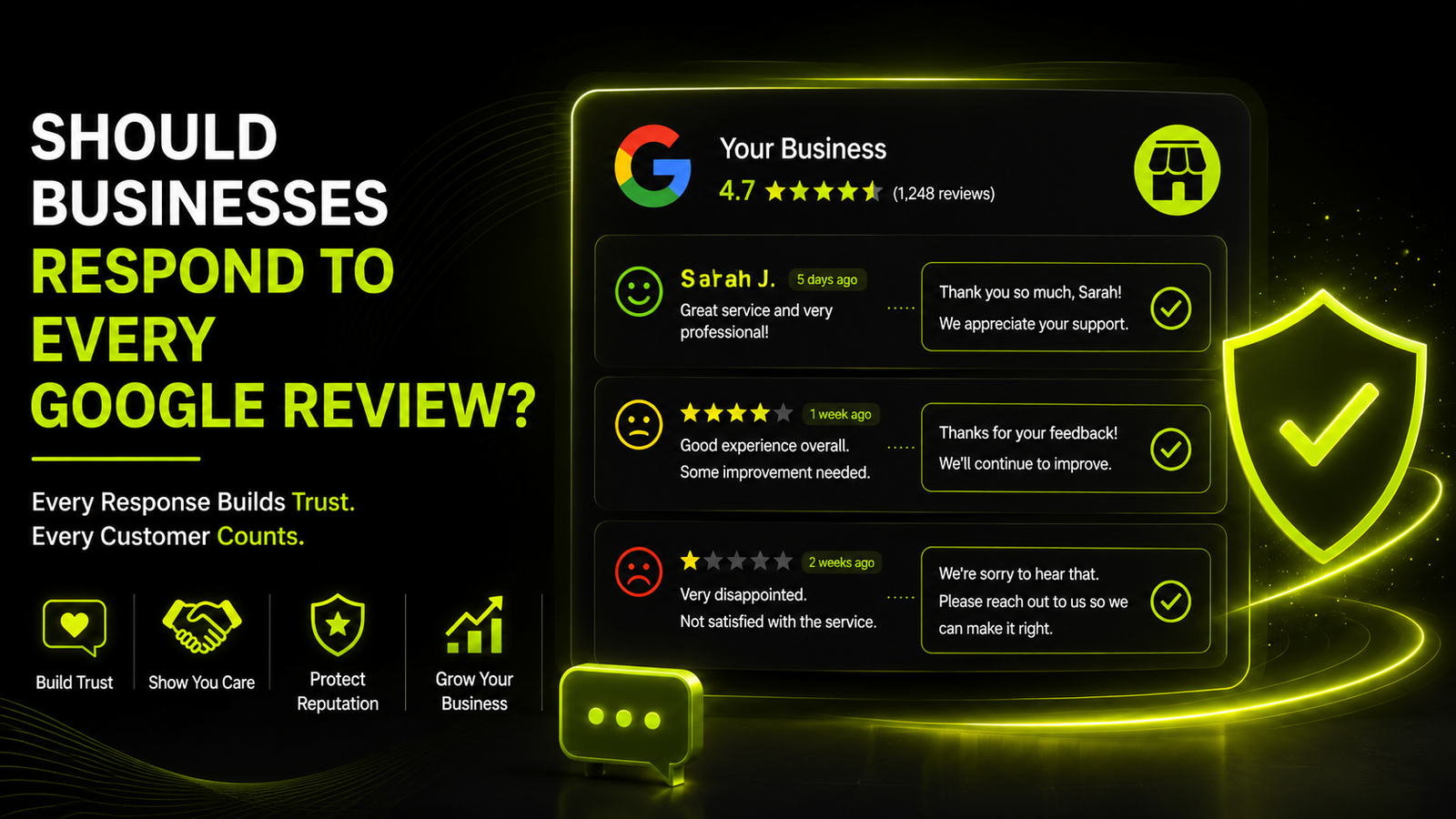
Should Businesses Respond To Every Google Review?
Quick Answer
Yes, businesses should respond to most Google reviews whenever possible. Responding to reviews demonstrates professionalism, shows customers their feedback matters, and helps build trust with future customers. While some reviews may require different approaches, maintaining a consistent review response strategy is generally considered a best practice for reputation management and customer service.
Google Reviews have become one of the most influential factors in how customers evaluate businesses online. Before contacting a company, scheduling an appointment, or making a purchase, many consumers read reviews to understand the experiences of previous customers.
However, customers do not only read reviews. They also read the responses. A thoughtful review response can strengthen trust, demonstrate professionalism, and show potential customers that a business values feedback. On the other hand, unanswered reviews can create the impression that customer concerns are being ignored.
This raises an important question for business owners: Should businesses respond to every Google review? For most businesses, the answer is yes. However, understanding how and when to respond is equally important. At Rank Repute, we help businesses build stronger customer relationships through professional review management and review generation services that support long-term reputation growth.
Why Google Review Responses Matter?
Many business owners focus on collecting reviews but overlook the importance of responding to them. Every review response becomes public content attached to your Google Business Profile. Potential customers often evaluate these interactions when deciding whether to trust a business. A review response demonstrates:
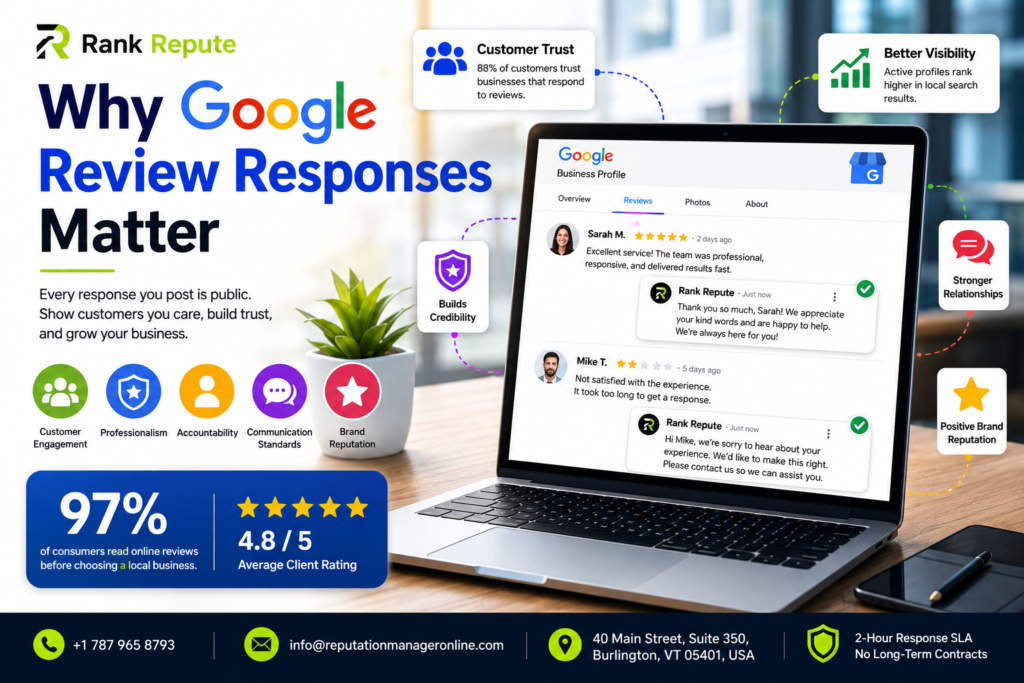
- Customer engagement
- Professionalism
- Accountability
- Communication standards
- Brand reputation
When businesses consistently respond to reviews, they show customers that feedback is valued. This is especially important in industries where trust plays a major role, including healthcare, legal services, home services, restaurants, dental practices, financial services, and professional consulting. A review response is not only directed at the reviewer. It is also directed at every future customer who may read the review. As part of a broader online reputation management strategy, consistent review engagement helps businesses strengthen trust, improve customer perception, and maintain a positive online presence.
Why Many Businesses Ignore Reviews?
Despite the importance of review management, many businesses fail to respond consistently. Common reasons include:
Lack Of Time
Small business owners often manage multiple responsibilities and may not have a dedicated process for monitoring customer feedback.
Fear Of Negative Feedback
Some businesses worry that responding to negative reviews will draw additional attention to complaints. In reality, future customers often notice the absence of a response more than the complaint itself.
Uncertainty About What To Say
Business owners frequently struggle to find the right words when responding to criticism. This uncertainty often results in delayed responses or no response at all.
No Review Management Process
Businesses without a structured review management system often miss new reviews entirely. Monitoring customer feedback regularly is essential for maintaining a strong online reputation.
Benefits Of Responding To Every Google Review
A consistent response strategy offers several advantages.
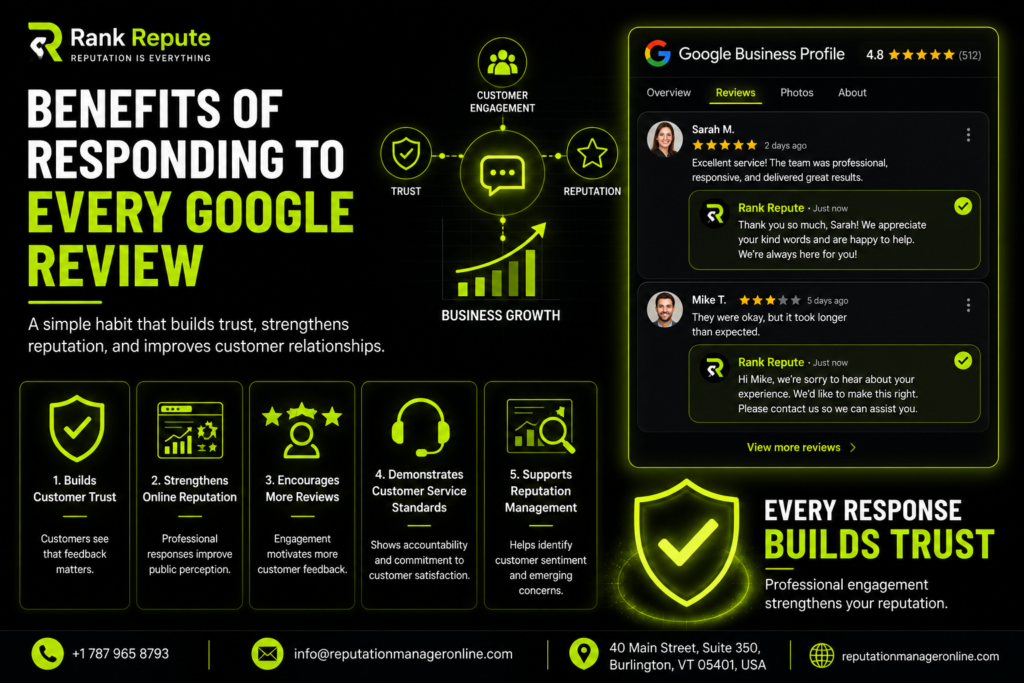
Builds Customer Trust
Customers want to know that businesses listen. When potential customers see thoughtful responses, they often view the business as more trustworthy than competitors that ignore feedback. Trust is one of the most important factors influencing purchasing decisions.
Strengthens Online Reputation
Review responses become part of a business’s public image. A profile filled with professional responses creates a stronger impression than a profile containing unanswered reviews. Over time, this contributes to a healthier online reputation.
Encourages More Reviews
Customers are often more willing to leave feedback when they see that businesses actively engage with reviewers. Review responses signal that customer opinions matter. This can encourage future customers to share their experiences.
Demonstrates Customer Service Standards
How a business responds to feedback often reveals more about the company than the review itself. Professional responses demonstrate respect, accountability, and commitment to customer satisfaction.
Supports Reputation Management Efforts
Review responses play an important role in broader reputation management strategies. Businesses that actively monitor and respond to reviews generally have greater visibility into customer sentiment and emerging concerns.
Should Businesses Respond To Positive Google Reviews?
Yes. Many businesses focus exclusively on negative reviews while ignoring positive feedback. This is a missed opportunity. Positive reviews deserve recognition because customers have invested time to share their experiences. A simple response can strengthen customer relationships and encourage repeat business.
Benefits Of Responding To Positive Reviews
- Shows appreciation
- Reinforces positive experiences
- Encourages customer loyalty
- Strengthens brand perception
- Encourages future engagement
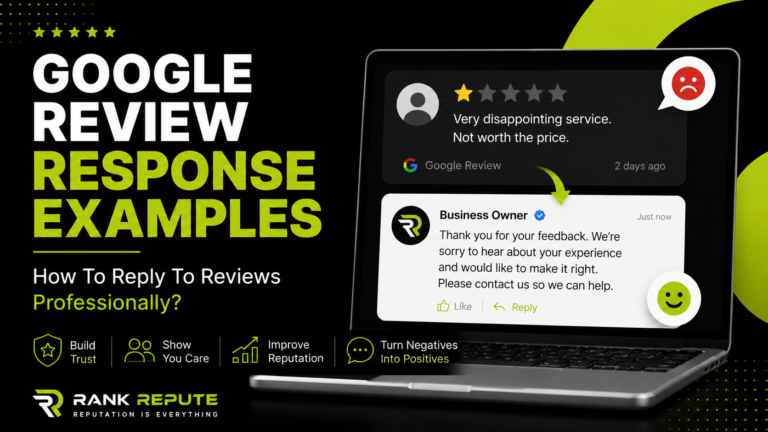
Example: “Thank you for taking the time to leave a review. We’re pleased to hear you had a positive experience and appreciate your support.”
A short, sincere response is often enough. A short, sincere response is often enough. Consistently acknowledging positive feedback also supports long-term brand reputation building by reinforcing trust, customer loyalty, and positive customer perception.
Should Businesses Respond To Negative Google Reviews?
Absolutely. Negative reviews often receive the most attention from prospective customers. Ignoring criticism can create the impression that concerns are not taken seriously. Understanding why customers leave negative reviews can help businesses address underlying issues more effectively, improve customer experiences, and demonstrate a commitment to resolving concerns professionally. A professional response demonstrates:
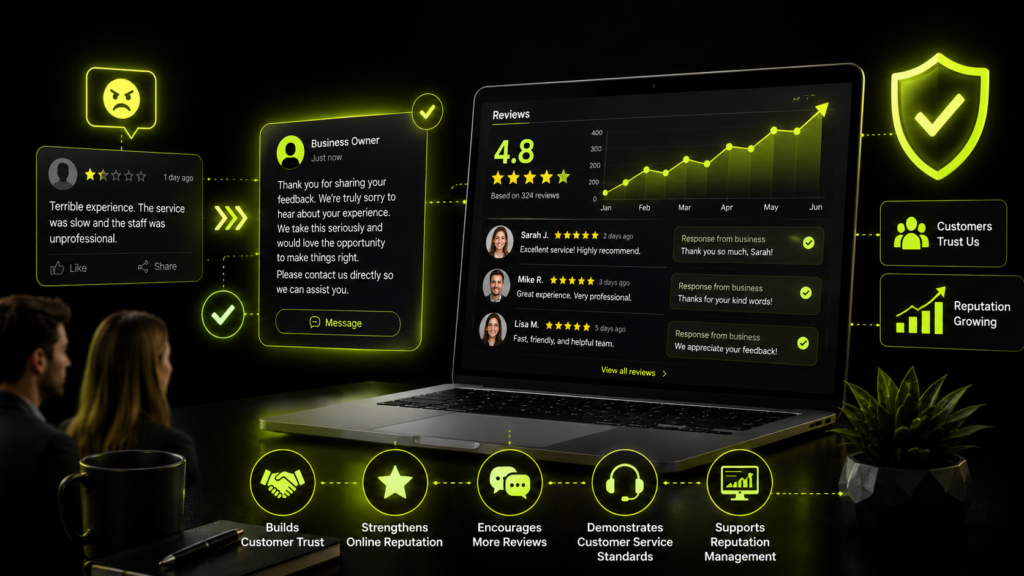
- Accountability
- Professionalism
- Willingness to improve
- Customer focus
The objective is not to win an argument. The objective is to show potential customers that the business responds respectfully and responsibly.
What A Negative Review Response Should Include
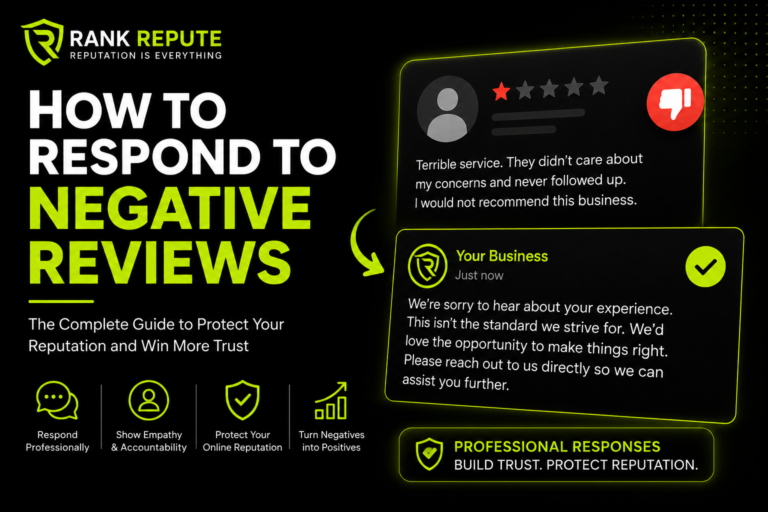
A strong response typically includes:
- Acknowledgement of the concern
- Empathy
- Professional communication
- Invitation to continue offline
- Commitment to addressing issues
These elements help demonstrate that the business takes customer feedback seriously and is willing to resolve concerns constructively. Businesses looking to improve their approach can review proven strategies for responding to negative reviews to ensure their responses build trust rather than create additional conflict. Even if the reviewer never responds, future customers will see how the situation was handled.
Reviews Businesses Should Always Respond To
Some reviews require a response more than others.
| Review Type | Response Recommended? | Reason |
|---|---|---|
| Positive Reviews | Yes | Shows appreciation |
| Negative Reviews | Yes | Demonstrates accountability |
| 1-Star Reviews | Yes | Protects reputation |
| Detailed Reviews | Yes | Encourages engagement |
| Service Complaints | Yes | Addresses concerns |
| Customer Praise | Yes | Reinforces trust |
| Constructive Feedback | Yes | Shows willingness to improve |
| Updated Reviews | Yes | Acknowledges customer effort |
Businesses that consistently engage with these reviews often create a stronger impression than businesses that respond selectively.
When A Response May Not Be Necessary?
Although responding to reviews is generally recommended, there are situations where a different approach may be appropriate.
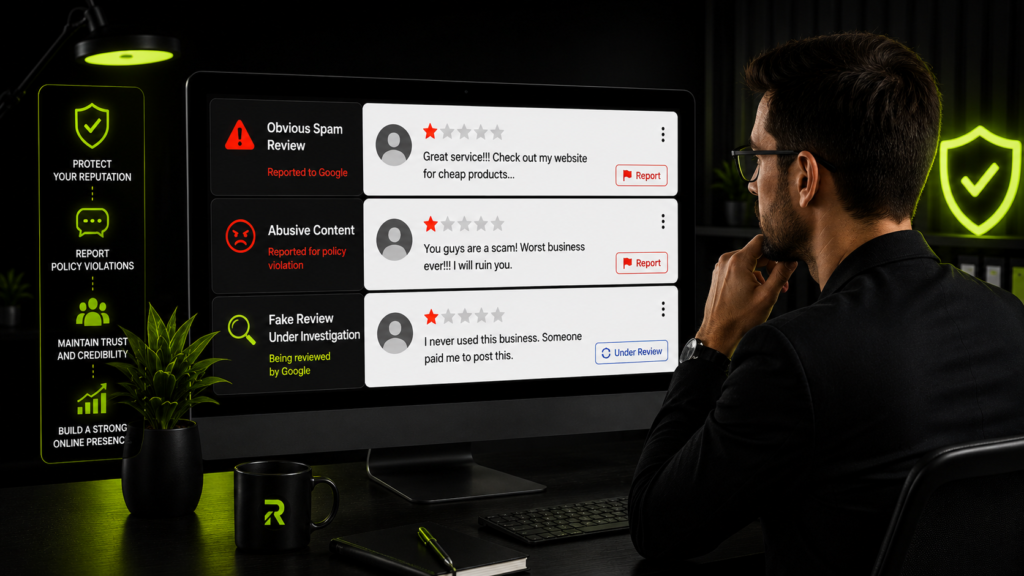
Obvious Spam Reviews
Spam reviews that clearly violate Google’s policies may be reported rather than engaged with.
Abusive Content
Reviews containing threats, harassment, hate speech, or inappropriate content should typically be reported.
Fake Reviews Under Investigation
If a review is being disputed through Google’s reporting process, businesses may choose to respond carefully while the investigation is ongoing. However, even in these situations, a professional response can still be beneficial.
Impact Of Responding vs Ignoring Google Reviews
| Customer Action | If The Business Responds | If The Business Ignores The Review |
|---|---|---|
| Leaves A Positive Review | Customer feels appreciated and valued | Customer engagement opportunity is missed |
| Leaves A Negative Review | Business can provide context and demonstrate professionalism | Potential customers only see the complaint |
| Reports A Service Issue | Opportunity to resolve the problem and improve trust | Concern may appear unresolved |
| Shares Detailed Feedback | Business gains valuable customer insights | Feedback may be overlooked |
| Compare Businesses Online | Active engagement helps build credibility | Competitors may appear more responsive |
| The customer engagement opportunity is missed | Responses show accountability and customer care | Lack of responses may create uncertainty |
| Evaluates Customer Service | Professional replies demonstrate service standards | Customers may question responsiveness |
| Considers Contacting The Business | Stronger trust and confidence in the business | Lower confidence and reduced engagement |
Key Takeaway: Customers often read review responses before making a decision. A professional response helps demonstrate accountability, customer service, and trustworthiness, while unanswered reviews can leave important questions unresolved.
How Quickly Should Businesses Respond To Google Reviews?
Response timing matters. Customers generally expect businesses to acknowledge feedback within a reasonable timeframe. While not every review requires an immediate reply, waiting several weeks can make a business appear disengaged. Following best practices outlined in Google review guidelines can help businesses respond appropriately, maintain professionalism, and build stronger customer trust through consistent review management.
A practical goal for most businesses is:
- Positive reviews: Within 2–5 days
- Negative reviews: Within 24–48 hours
- Urgent complaints: As soon as possible
Fast responses demonstrate attentiveness and help prevent customer frustration from escalating. Businesses that actively monitor reviews through a structured review management process are usually better equipped to maintain consistent response times. When negative feedback occurs, understanding the best practices for handling a 1-star review can help businesses respond quickly and professionally.
Common Mistakes Businesses Make When Responding To Reviews
Responding to reviews can strengthen trust, but poor responses can create additional problems.
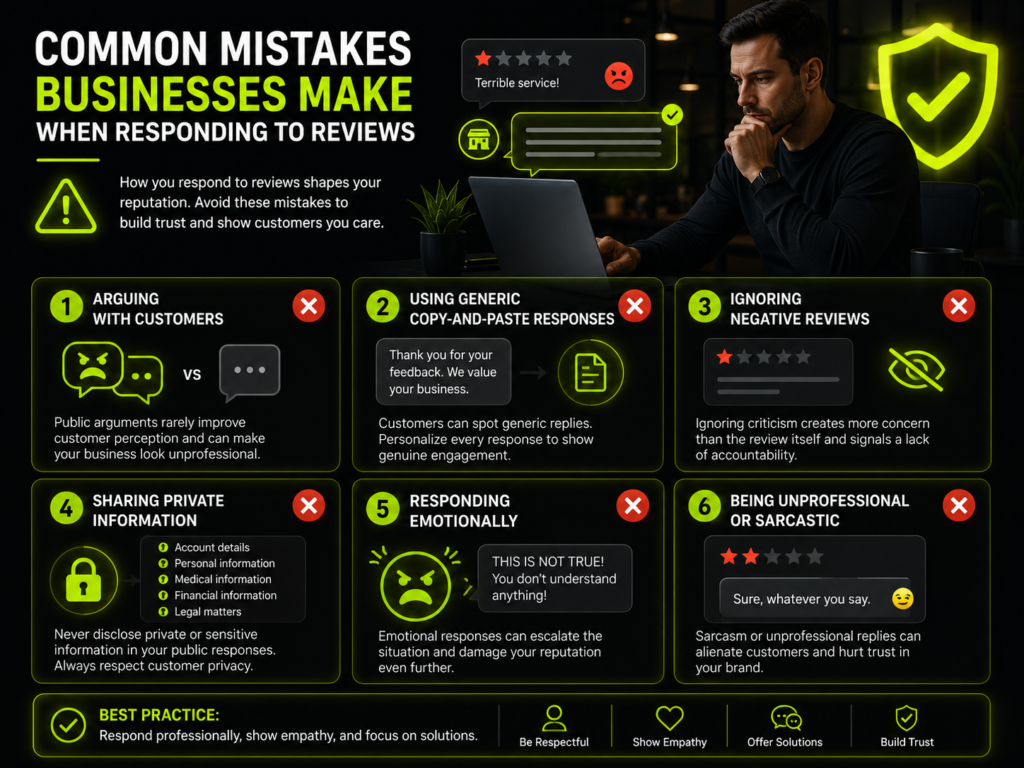
Arguing With Customers
Public arguments rarely improve customer perception. Even if the business believes the reviewer is incorrect, future customers often focus more on the tone of the response than the details of the complaint. A defensive response can make a business appear unprofessional.
Using Generic Copy-And-Paste Responses
Customers can usually recognize generic templates. While response templates can help maintain consistency, every review should feel acknowledged individually. Personalized responses demonstrate genuine engagement.
Ignoring Negative Reviews
Ignoring criticism often creates more concern than the criticism itself. Potential customers may assume:
- The issue remains unresolved.
- Customer concerns are not taken seriously.
- The business lacks accountability.
A professional response provides important context.
Sharing Private Information
Businesses should never disclose:
- Customer account details
- Personal information
- Medical information
- Financial information
- Legal matters
Privacy should always be respected.
Responding Emotionally
Negative reviews can feel personal, especially for business owners. However, emotional responses frequently cause additional reputation damage. Professional communication should always remain the priority.
How Review Responses Influence Customer Decisions?
Modern consumers conduct extensive research before making purchasing decisions. A potential customer may read:
- Google Reviews
- Yelp Reviews
- Facebook Reviews
- Trustpilot Reviews
- Google Business Profiles
- Business websites
before contacting a company. Review responses help customers evaluate:
Professionalism
How does the business communicate?
Accountability
Does the company acknowledge concerns?
Customer Service
Is the business willing to help?
Transparency
Does the business engage openly with feedback? These factors often influence purchasing decisions more than a single review rating. Many consumers expect businesses to have occasional negative reviews. What matters is how those reviews are handled, especially when dealing with fake Google reviews.
Does Responding To Reviews Help Local SEO?
Review responses are not a direct ranking factor in the same way that relevance, proximity, and business authority are. However, review management supports several important local SEO signals. Benefits may include:
- Increased customer engagement
- Improved profile activity
- Stronger customer trust
- More review participation
- Better user experience
Google Business Profiles that remain active and well-maintained often create stronger impressions than neglected profiles. Review responses should therefore be viewed as part of a broader local SEO and reputation management strategy.
Creating A Review Response Process
Businesses that respond consistently typically follow a structured process.
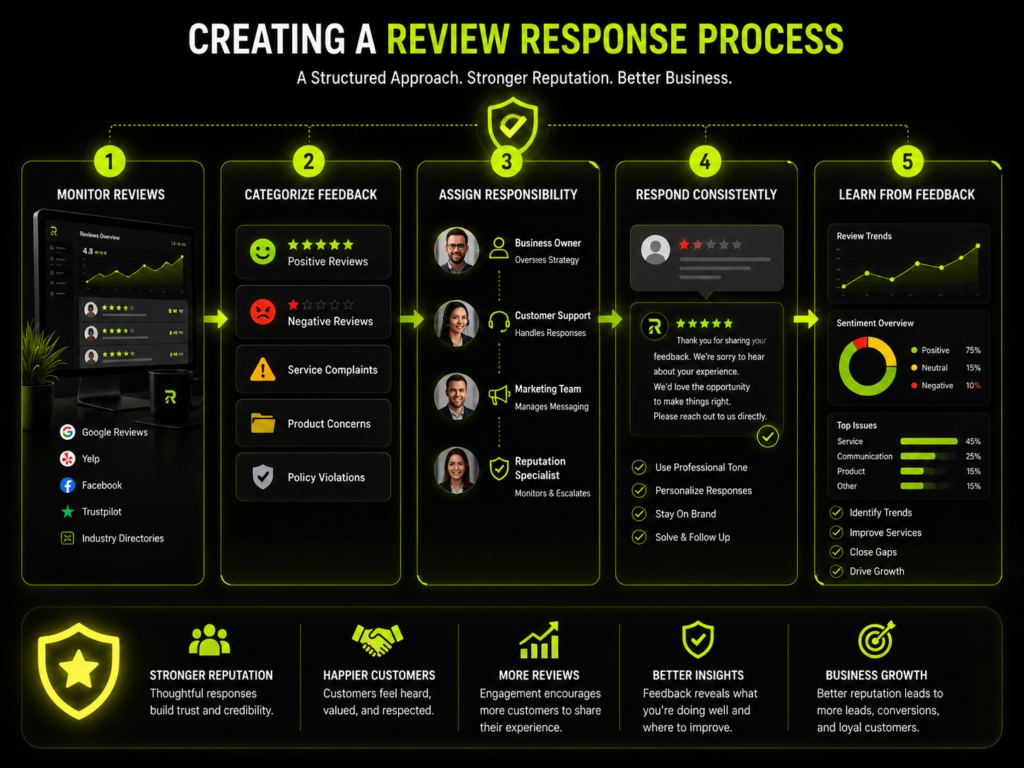
Step 1: Monitor Reviews
Track reviews across:
- Google Reviews
- Yelp
- Trustpilot
- Industry directories
Step 2: Categorize Feedback
Identify:
- Positive reviews
- Negative reviews
- Service complaints
- Product concerns
- Potential policy violations
Step 3: Assign Responsibility
Determine who is responsible for responding.
This may include:
- Business owners
- Customer service teams
- Marketing teams
- Reputation management providers
Step 4: Respond Consistently
Create response guidelines that maintain professionalism while allowing personalization.
Step 5: Learn From Feedback
Review trends often reveal:
- Customer concerns
- Service issues
- Communication gaps
- Operational improvements
The most successful businesses treat reviews as a source of customer insight rather than simply a reputation challenge.
When Professional Review Management May Help
As businesses grow, managing reviews can become increasingly time-consuming. Professional review monitoring services may be useful when businesses experience:
- High review volume
- Multiple locations
- Frequent customer feedback
- Reputation challenges
- Limited internal resources
Professional review management services often assist with:
- Review monitoring
- Review response support
- Reputation reporting
- Review generation
- Google Business Profile management
- Customer sentiment analysis
Industries That Benefit Most From Review Responses
Almost every business benefits from responding to Google reviews, but review management is particularly important for industries where trust strongly influences customer decisions. These industries include:
- Dental Practices
- Healthcare Providers
- Law Firms
- Restaurants
- Home Service Businesses
- Contractors
- Real Estate Professionals
- Financial Services
- Automotive Businesses
- Hospitality & Hotels
For these businesses, customers often compare reviews, ratings, and business responses before making contact. A consistent review response strategy can help demonstrate professionalism, strengthen trust, and improve the overall customer experience.
Conclusion
So, should businesses respond to every Google review? In most cases, yes. Responding to reviews demonstrates professionalism, customer engagement, and accountability. It shows customers that feedback is valued and helps create a stronger online reputation.
Positive reviews deserve appreciation, while negative reviews deserve thoughtful attention. Even when criticism is unfair, a professional response often creates a better impression than silence. Customers rarely judge a business solely by its ratings. They also evaluate how the business communicates, handles concerns, and interacts with customers publicly.
A consistent review response strategy helps businesses strengthen trust, improve customer perception, and maintain a healthier online presence over time. Businesses looking to evaluate the effectiveness of their review management and overall online presence can benefit from a professional reputation audit to identify opportunities for improvement and long-term growth.
Frequently Asked Questions
Should Businesses Respond To Every Google Review?
In most situations, yes. Responding to reviews demonstrates professionalism and shows customers that their feedback matters. Positive reviews deserve appreciation, while negative reviews provide an opportunity to address concerns and demonstrate accountability. Businesses that consistently engage with reviews often create stronger trust signals than businesses that leave reviews unanswered.
Is It Okay To Ignore Positive Google Reviews?
While it is not harmful to miss an occasional positive review, consistently ignoring positive feedback means missing opportunities to strengthen customer relationships. Customers who leave positive reviews have taken time to share their experience, and a simple thank-you response helps reinforce goodwill and encourage future engagement.
How Long Should A Google Review Response Be?
Most review responses should be concise and relevant. Positive review responses are often between 30 and 100 words, while negative review responses may require slightly more detail. The goal is to acknowledge the review, address concerns appropriately, and maintain professionalism without creating lengthy public discussions.
Can Responding To Reviews Improve Customer Trust?
Yes. Customers often read responses before making purchasing decisions. A professional response demonstrates that a business values feedback and is willing to engage with customers. In many cases, potential customers pay more attention to how a business responds than to the review itself.
Should Businesses Respond To Fake Google Reviews?
Yes, but carefully. If a review appears fake, businesses should investigate the situation, gather evidence, and submit a report through Google’s review dispute process if appropriate. A professional public response can also help provide context while the review is being reviewed by Google.
Do Customers Read Review Responses?
Absolutely. Many consumers read both reviews and responses before choosing a business. Responses help customers evaluate professionalism, communication standards, and customer service quality. This is one reason why review responses play an important role in online reputation management.
What Happens If A Business Never Responds To Reviews?
Businesses that never respond to reviews may appear disengaged or uninterested in customer feedback. While occasional missed reviews are not usually a major issue, consistently ignoring reviews can weaken customer trust and create a less favorable impression compared to businesses that actively engage with customers.
Can Review Responses Help Reputation Management?
Yes. Review responses are an important part of reputation management because they provide an opportunity to address concerns, reinforce positive experiences, and demonstrate professionalism publicly. Consistent engagement helps businesses maintain a stronger reputation across review platforms and search results.