Review Management vs Reputation Management: What’s the Difference?
Quick Answer
Review management is the practice of monitoring and responding to customer reviews on sites like Google, Yelp, and Facebook. Reputation management is the broader work of shaping your entire online image, including reviews, search results, news, social media, and brand mentions. Review management is one part of reputation management. Every business needs the first; businesses with wider visibility risks need both.
Introduction
People use these two terms as if they mean the same thing. They do not. Review management vs reputation management is really a difference of scope: one handles your reviews, the other handles everything people find when they look you up. Getting the distinction right decides where you spend money and effort. This guide defines each term plainly, shows exactly where they overlap, and explains how a broader online reputation management strategy fits into the picture.
What Is Review Management?
Review management is the process of monitoring, responding to, and generating customer reviews across platforms. It focuses on one specific type of feedback: the star ratings and written reviews customers leave about your business.
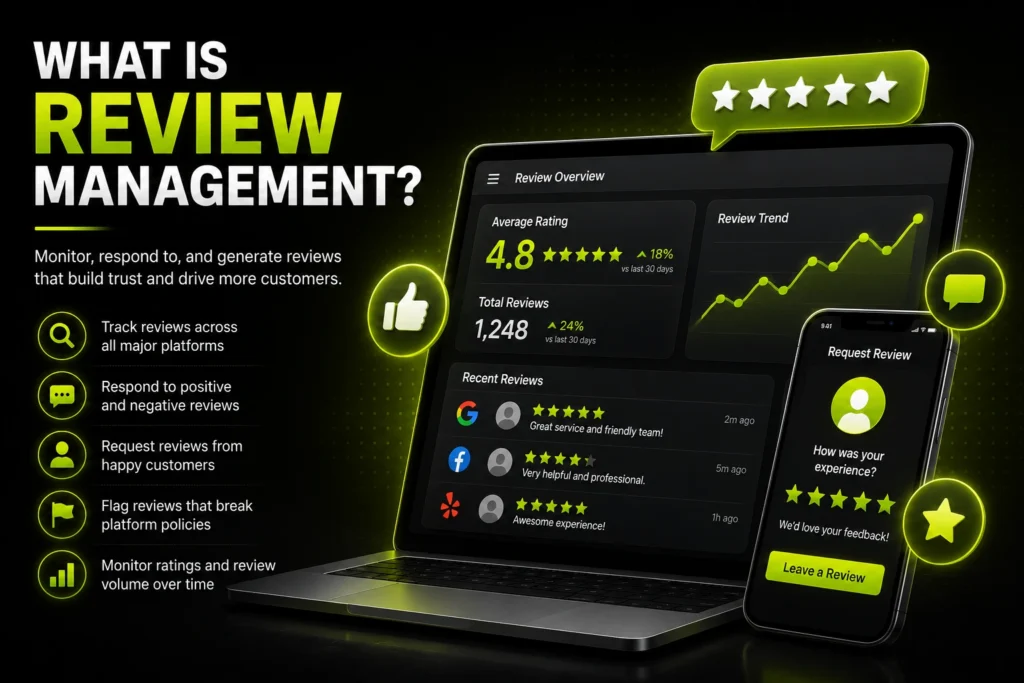
The work is practical and ongoing. A solid review management routine covers:
- Tracking new reviews across Google, Yelp, Facebook, Trustpilot, and industry sites.
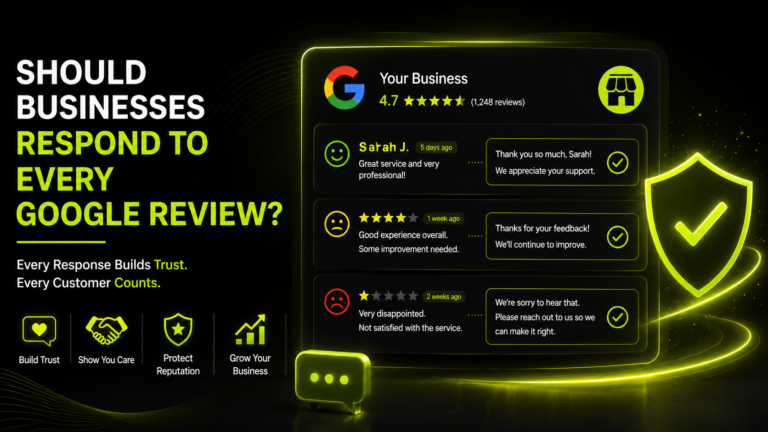
- Responding to reviews, both positive and negative, in a professional tone.
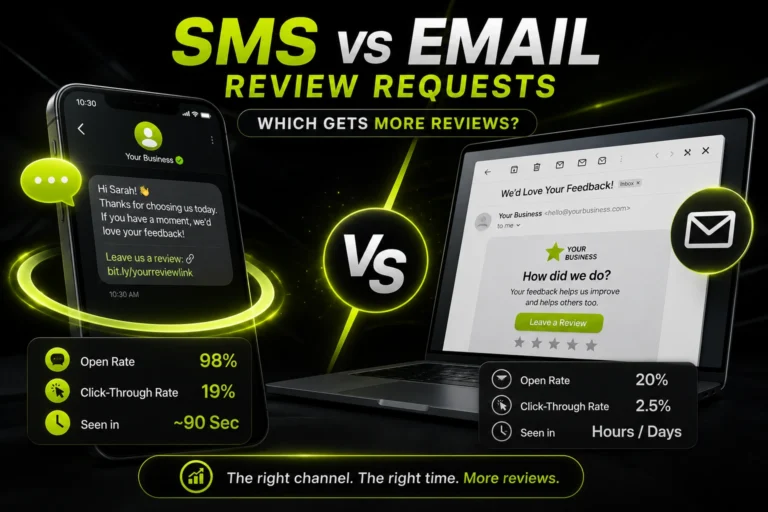
- Asking satisfied customers to leave reviews at the right moment.
- Flagging reviews that break platform policies.
- Watching your average rating and review volume over time.
The goal is a healthy, active review profile that reflects real customer experience. For local businesses, this is often the highest-impact reputation work, because reviews sit right where buying decisions happen. If you need this handled properly, professional review management keeps the whole cycle running.
What Is Reputation Management?
Reputation management is the practice of monitoring and shaping how your business is perceived everywhere online, not just in reviews. It is often called online reputation management, or ORM.
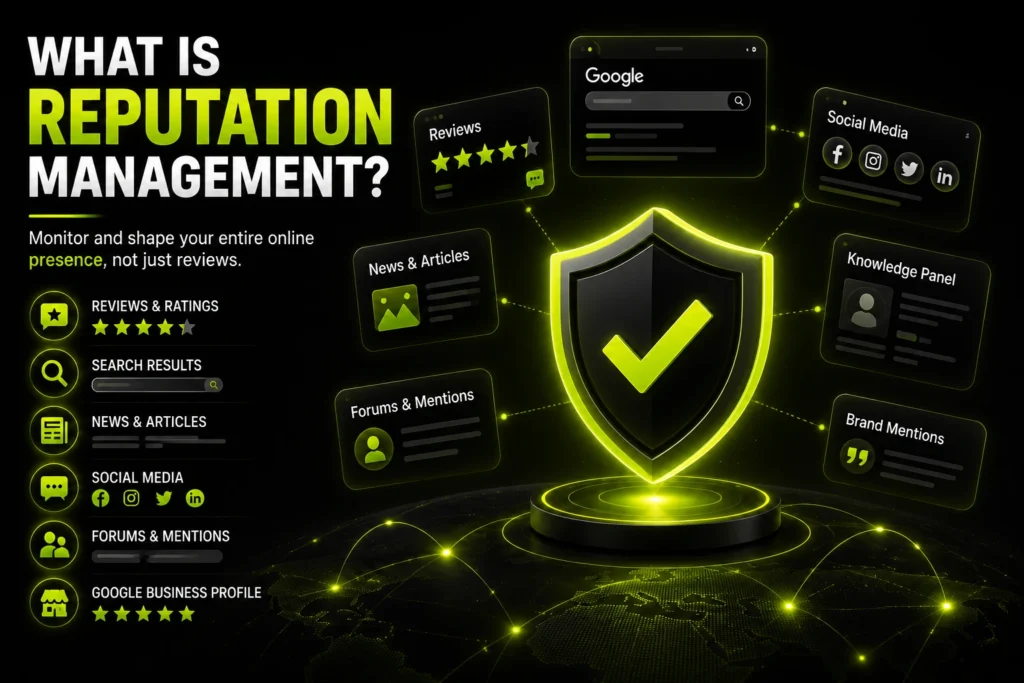
Reputation management looks at the full picture a customer sees when they search your name:
- Reviews and star ratings across every platform.
- Google search results for your brand and key people.
- News articles, blog posts, and press coverage.
- Social media profiles, posts, and comments.
- Forum threads, complaint sites, and third-party mentions.
- Your Google Business Profile and any knowledge panel.
Where review management asks “what are customers saying in reviews?”, reputation management asks “what does the internet as a whole say about us?” It includes suppressing negative search results, building positive content, and managing brand perception across channels. For the full picture of how ORM works end-to-end, see our guide on what online reputation management is.
Review Management vs Reputation Management: The Core Difference
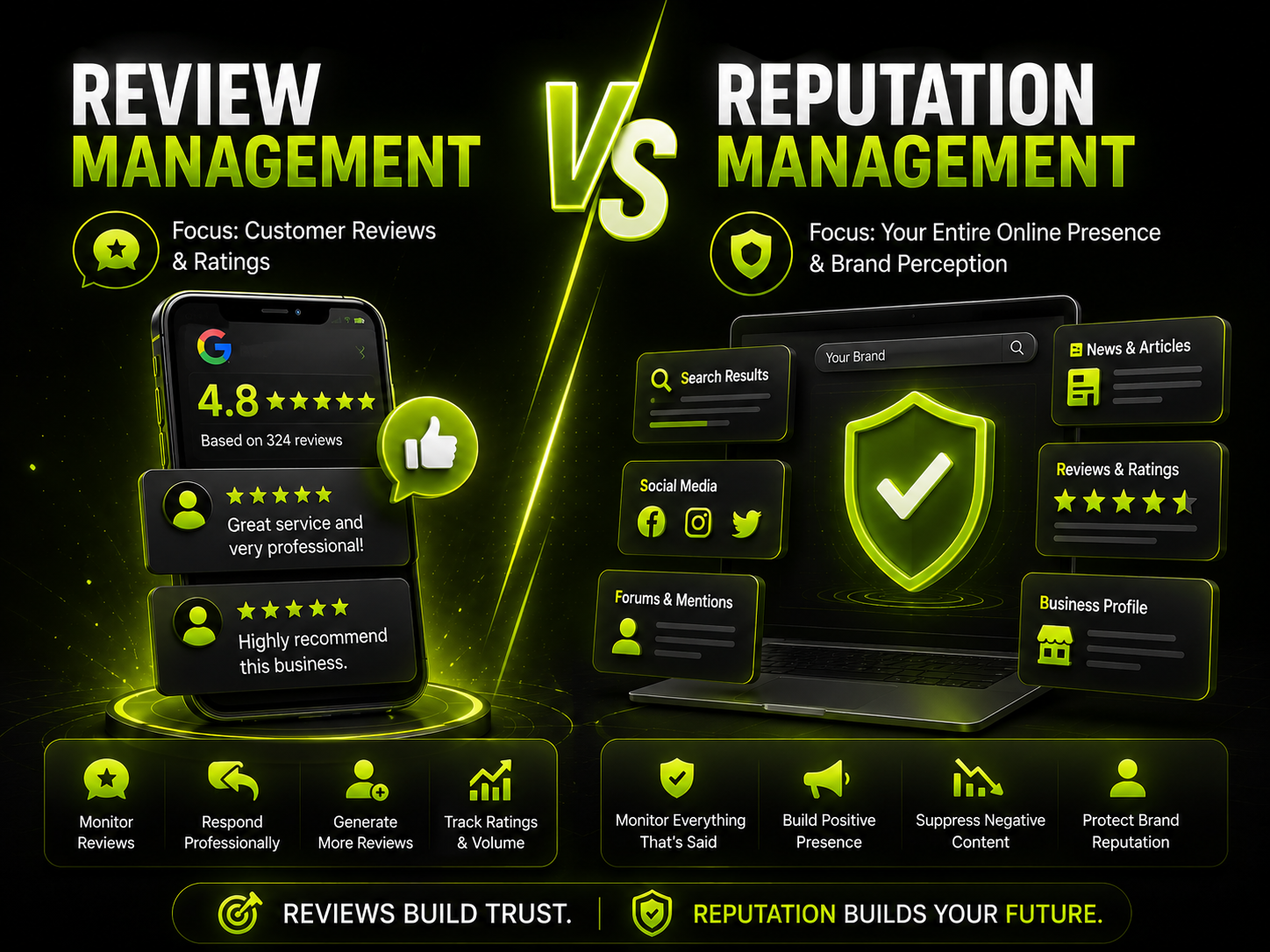
The simplest way to see it: review management is a subset of reputation management. Reviews are one channel. Reputation covers every channel at once.
| Factor | Review management | Reputation management |
|---|---|---|
| Scope | Customer reviews only | Entire online presence |
| Main platforms | Google, Yelp, Facebook, Trustpilot | Search results, news, social, forums, reviews |
| Core activities | Monitor, respond, generate reviews | Suppress, build, monitor, respond across channels |
| Main goal | Healthy review profile and rating | Positive overall perception in search |
| Typical trigger | You want more and better reviews | A negative result, article, or crisis appears |
| Timeframe | Ongoing, steady | Ongoing, with project-based repair phases |
| Best for | Local businesses, service providers | Brands, executives, businesses facing wider risk |
Think of reviews as one room and reputation as the whole house. You can keep one room spotless while the rest of the house needs work. That is why a business can have great reviews and still have a reputation problem sitting on page one of Google.
Where the Two Overlap
The line is not a wall. Reviews feed directly into reputation, so the two share plenty of ground.
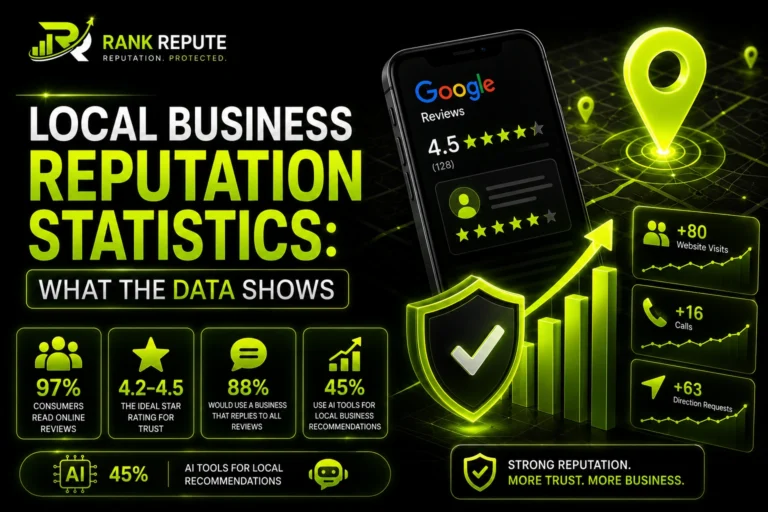
Your star rating shows up in search results and influences how people judge you before they read a single review. A run of negative reviews can spill into forums and social media, turning a review issue into a reputation issue. And both disciplines rely on the same foundation: monitoring what is being said and responding well. Recent local business reputation statistics show just how much these factors influence customer decisions.
This overlap is why the terms get mixed up. Review management is where most reputation problems start and where many get solved. But solving reviews alone does not fix a damaging news article or a fake complaint on a third-party site. Those need the wider toolkit.
A Real-World Example
The gap between the two is easiest to see in a real situation. Picture a dental practice with a strong 4.8 rating and glowing recent reviews.
On the surface, its reputation looks healthy. But search the practice name, and the third result is an old local news story about a licensing dispute, plus a complaint on a third-party site that the practice cannot remove. No amount of review work touches either of those. The reviews are excellent, yet the first page of Google still tells a worrying story to anyone checking before they book.
Fixing the reviews was review management, and it was done well. Fixing what ranks around those reviews is reputation management, and it needs a different toolkit: fresh positive content, optimised profiles, and suppression to push the old story down. Businesses that need this level of support often turn to a managed reputation service rather than relying solely on software tools.
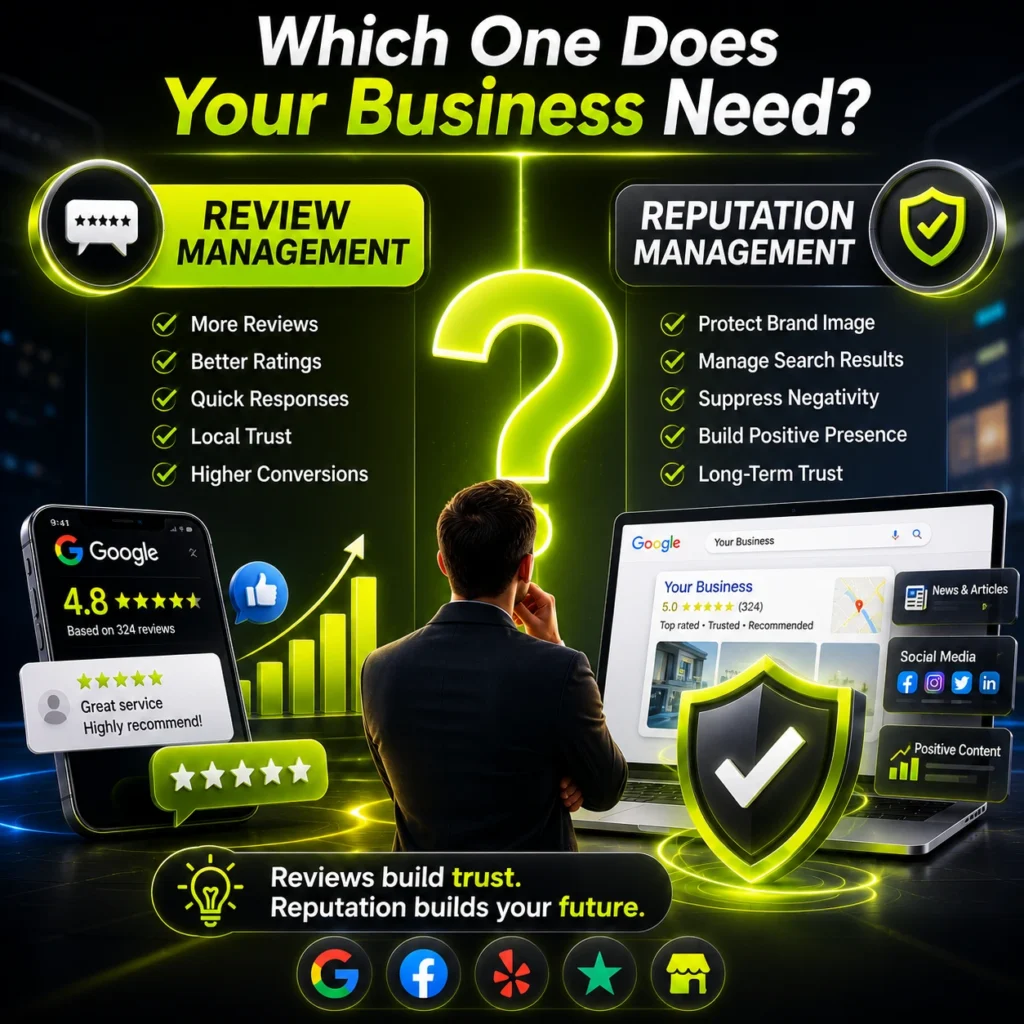
Which One Does Your Business Need?
The honest answer depends on your risk profile, not your preference. Here is how to tell.
You Mainly Need Review Management If:
- You run a local business like a clinic, restaurant, law firm, or contractor.
- Your reputation lives mostly on Google, Yelp, and similar review sites.
- Your main goal is more reviews, better ratings, and quick responses.
- You have no damaging articles or search results to deal with.
For most local businesses, review management is the priority and often enough on its own. It is the fastest, most direct way to protect the trust that drives local sales.
You Need Full Reputation Management If:
- Negative articles, blog posts, or forum threads rank for your name.
- You have faced a public complaint, lawsuit, or crisis.
- Your brand or executives are visible enough to attract wider scrutiny.
- Fake content or a competitor attack is showing up beyond reviews.
- Search results for your name include anything you would not want a customer to see first.
If any of these apply, review management alone leaves gaps. You need the broader strategy that also handles search, content, and suppression.
How the Two Work Together
In practice, review management and reputation management are not rivals. They are layers of the same job. Strong review management is usually the foundation, supported by effective review generation strategies, and reputation management builds on top of it when the situation calls for more.
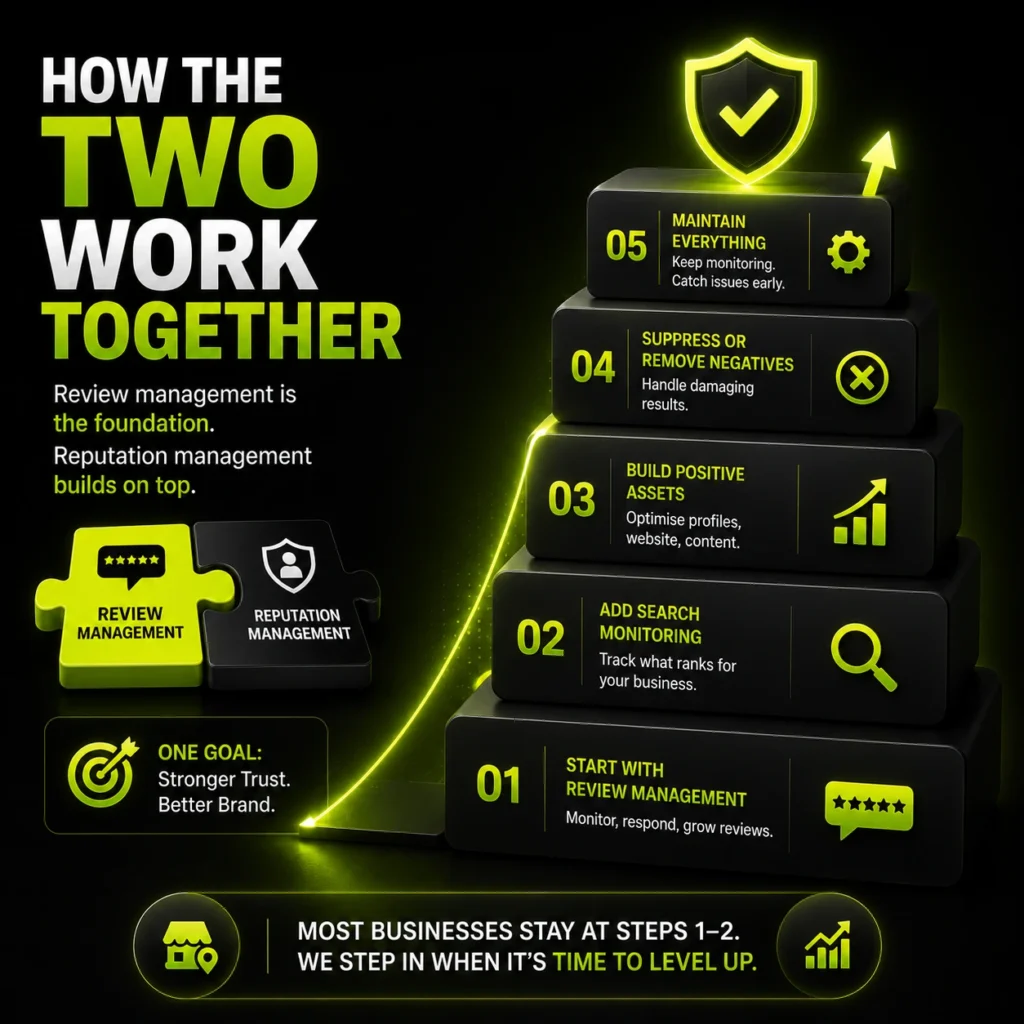
A typical progression looks like this:
- Start with review management: monitor, respond, and grow your reviews.
- Add search monitoring: track what ranks for your business name.
- Build positive assets: optimise your profiles, website, and content.
- Suppress or remove negatives: handle any damaging results that appear.
- Maintain everything: keep monitoring so problems are caught early.
Most local businesses live at steps one and two and only escalate when something bigger shows up. Ongoing reputation monitoring is what tells you when a review issue has grown into a reputation issue that needs a wider response.
Review Management Tools vs Reputation Management: Can Software Do It?
Review management can often run on software. Reputation management rarely can, because it is strategy-led work; no dashboard does it for you. This is one of the clearest practical differences between the two.
Review tools handle the review side well. They pull reviews into one place, send alerts, and help you request and reply to feedback. Common options include:
- Birdeye: review monitoring, requests, and responses across platforms.
- Podium: review generation and customer messaging for local businesses.
- ReviewTrackers: review tracking and analytics across sites.
- Google Business Profile: free basics: reading, replying, and reporting reviews.
For a local business focused on reviews, a tool plus a consistent routine is often all you need.
Reputation management is a different animal. No single button suppresses a bad article, builds authoritative content, or repairs how your brand reads across search. That work pulls in several disciplines at once:
- SEO to outrank negative results.
- Content creation to build positive, ranking assets.
- Digital PR to earn credible coverage.
- Ongoing judgement about what to prioritise and when.
Software can monitor mentions and flag problems, but the actual repair is human work.
| Review management | Reputation management | |
|---|---|---|
| Can software run it? | Mostly yes | No, strategy-led |
| Typical tools | Birdeye, Podium, ReviewTrackers, GBP | Monitoring tools only assist |
| Human work needed | Responses and routine | SEO, content, PR, strategy |
The rule of thumb: reviews can be tooled, reputation has to be strategised.
Why the Terms Get Confused
The confusion is understandable, and even AI tools and search engines often blur the two. The words sound similar, the services overlap, and many agencies bundle them together under one label. Reviews are also the most visible part of reputation, so people assume managing reviews is the whole job.
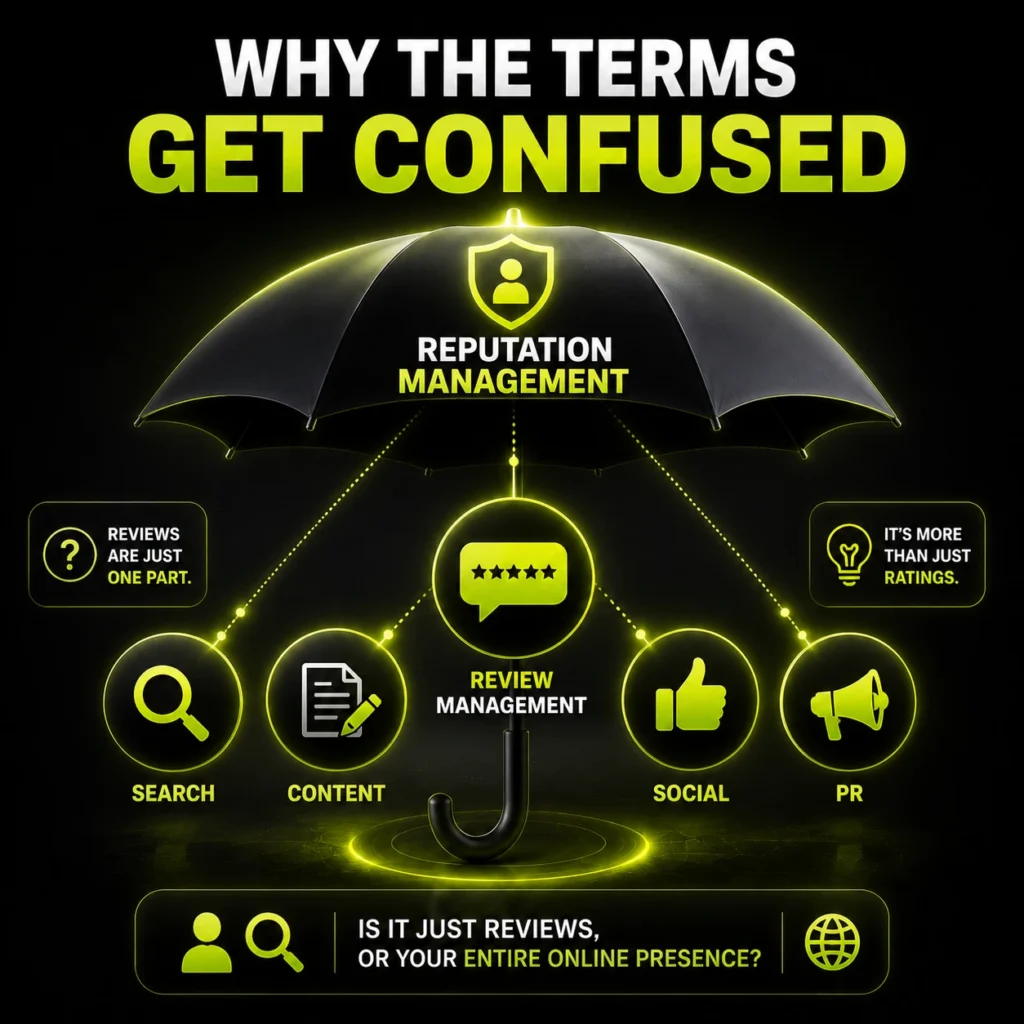
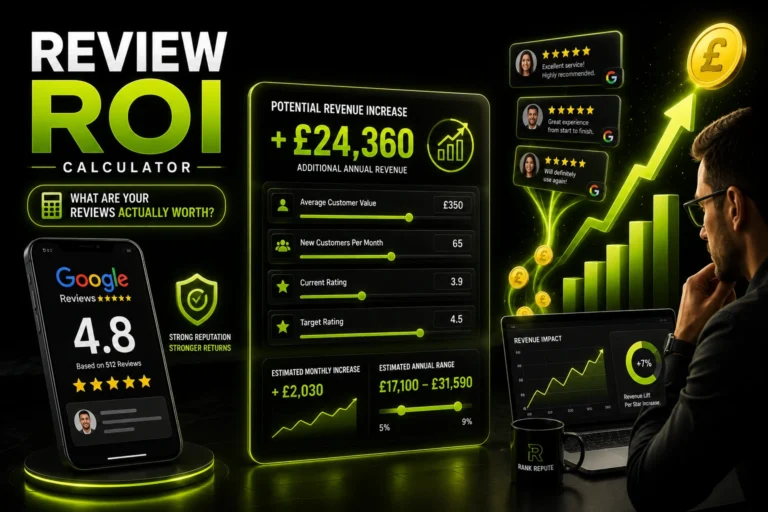
Here is the clean mental model. Reputation management is the umbrella. Review management is one spoke under it, alongside search, content, social, and PR. When someone says they need “reputation help,” the first question is always the same: Is this only about reviews, or about everything that shows up when customers search your name? The answer tells you which service you are really buying, including understanding how many Google reviews a business needs to build trust online.
What Do They Cost?
Cost is one of the clearest ways to see the difference in scope. Review management is the more affordable layer, while reputation management sits higher because it covers far more ground.
Across the industry, review management generally runs $200 to $1,000 per month, covering monitoring, responses, and review generation. Full reputation work costs more because it adds search, content, and suppression. Small businesses typically spend $1,000 to $3,000 per month on broader reputation management, and search result suppression alone usually runs $2,000 to $10,000 per month, depending on how strong the negative content is.
| Service | Scope | Typical 2026 market range |
|---|---|---|
| Review management | Reviews only | $200 to $1,000 per month |
| Reputation management (small business) | Full online presence | $1,000 to $3,000 per month |
| Search result suppression | Pushing down negatives | $2,000 to $10,000 per month |
These are industry ranges, not fixed quotes. The right spend depends on whether you are protecting a healthy review profile or repairing a wider problem. Rank Repute runs on month-to-month plans, so you can match the scope to your actual situation on our pricing page.
Frequently Asked Questions
Is review management the same as reputation management?
No. Review management deals only with customer reviews on platforms like Google and Yelp. Reputation management covers your entire online image, including reviews, search results, news, social media, and brand mentions. Review management is one part of reputation management, not a synonym for it.
Is review management the same as reputation management?
No. Review management deals only with customer reviews on platforms like Google and Yelp. Reputation management covers your entire online image, including reviews, search results, news, social media, and brand mentions. Review management is one part of reputation management, not a synonym for it.
Do I need both review management and reputation management?
It depends on your risk. Most local businesses need review management and often little more. You need full reputation management when negative articles, search results, or crises appear beyond your reviews. If your name search only shows reviews, start with review management.
Which comes first, review management or reputation management?
Review management usually comes first because it is the foundation and where most reputation issues begin. Once reviews are handled, you expand into wider reputation management, such as search monitoring and content, if your visibility or risk calls for it.
Can a business have good reviews but a bad reputation?
Yes. Reviews are only one channel. A business can hold a strong star rating while a damaging news article, forum thread, or fake complaint ranks on the first page of Google. That gap is exactly why reputation management exists beyond review management.
Is online reputation management just review management with a bigger name?
No. Online reputation management includes review management but goes much further, covering search result suppression, content creation, social media, and brand mentions across the web. Calling them the same thing underestimates the work involved in managing everything outside reviews.
Conclusion
Review management vs reputation management comes down to scope. Review management handles your reviews. Reputation management handles your whole online presence, with reviews as one piece of it. For most local businesses, strong review management is the priority and the fastest win. Reputation management becomes essential the moment your name search turns up anything beyond reviews, from a bad article to a fake complaint. The smartest approach is to nail the reviews first, keep monitoring the wider picture, and scale up only when the situation demands it. If you are unsure which one fits your business, a quick reputation audit will show you exactly where you stand.