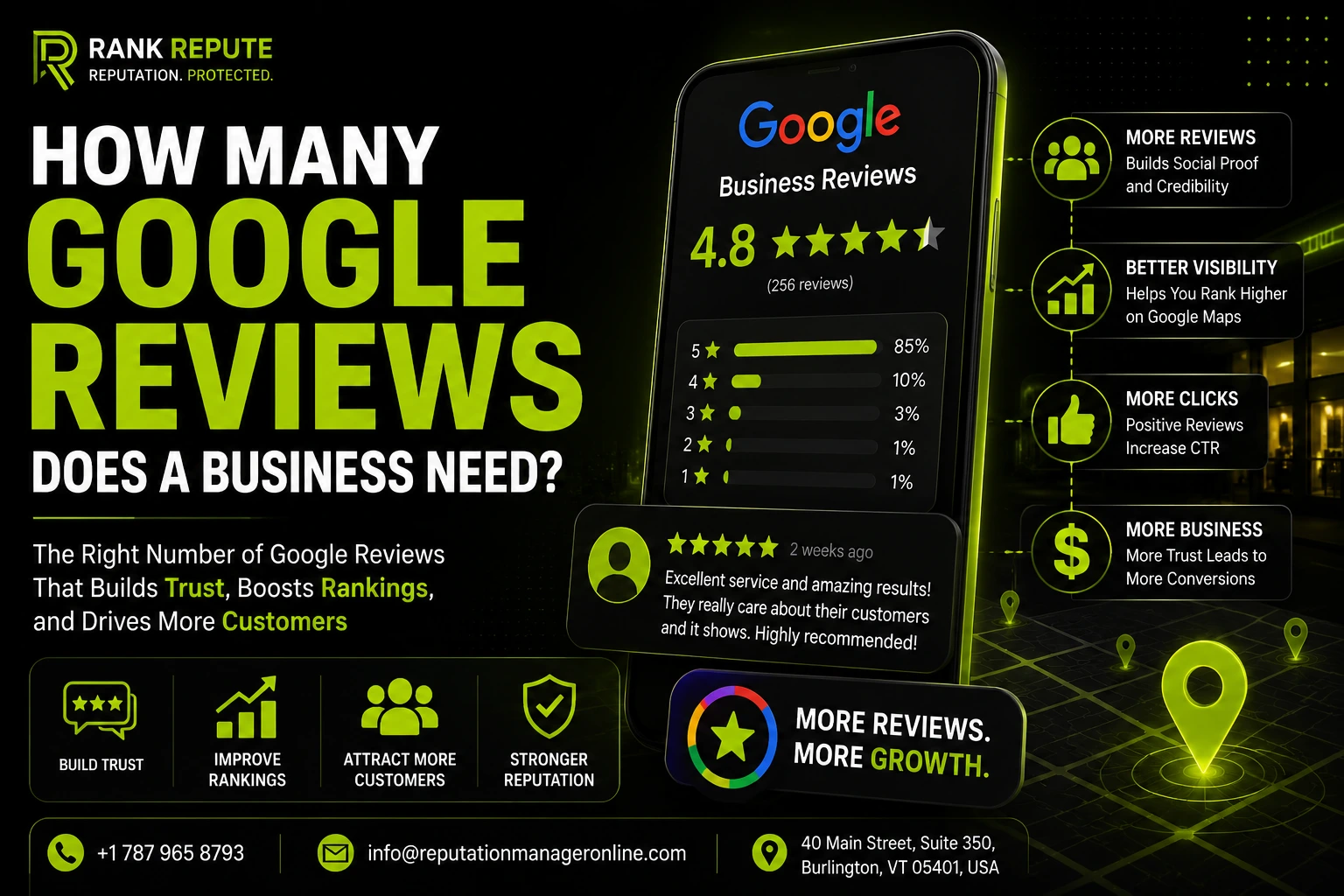
How Many Google Reviews Does A Business Need?
Quick Answer
There is no fixed number of Google reviews that guarantees success. The number of reviews a business needs depends on factors such as industry, location, competition, customer expectations, and local market conditions. Instead of chasing a specific number, businesses should focus on consistently earning authentic customer reviews, maintaining a strong average rating, and building a review profile that reflects ongoing customer experiences.
Google Reviews have become one of the most influential trust signals in local search. Whether customers are looking for a dentist, healthcare provider, law firm, restaurant, contractor, real estate agent, hotel, financial advisor, or local service company, reviews often influence which businesses receive attention and which are overlooked.
One of the most common questions business owners ask is: “How many Google reviews does my business need?”
The answer is more complex than a simple number. A business with 50 reviews may outperform a competitor with 500 reviews. Likewise, a business with 20 high-quality reviews may generate more customer trust than a business with hundreds of outdated reviews.
Review quantity matters, but it is only one piece of a much larger picture.
Why Businesses Focus On Review Counts?
Consumers use reviews to evaluate trustworthiness. Before contacting a business, many customers compare:

- Star ratings
- Review quantity
- Review recency
- Customer feedback
- Business responses
A profile with only a few reviews may create uncertainty, especially when competitors have significantly larger review profiles. For this reason, review count often becomes a visible measure of credibility. However, customers rarely evaluate review quantity in isolation. Most people consider the entire review profile before making a decision. Businesses that implement a consistent review generation strategy are often better positioned to build a stronger, more representative collection of customer feedback over time.
Is There A Minimum Number Of Google Reviews A Business Needs?
There is no official minimum. Google does not require businesses to have a specific number of reviews in order to appear in Google Search or Google Maps. However, businesses with very few reviews may face challenges. For example:
New Businesses
A new business with only one or two reviews often lacks sufficient social proof. Potential customers may hesitate because there is limited evidence of customer experiences.
Established Businesses
Customers generally expect established businesses to have a larger volume of reviews. A company operating for several years with only a handful of reviews may appear less active than competitors.
Competitive Markets
In highly competitive industries, businesses often need stronger review profiles simply to remain competitive.
The required review count varies significantly depending on the market.
Why Review Quality Matters More Than Review Quantity?
Many businesses become obsessed with collecting large numbers of reviews. While quantity has value, quality often matters more. Customers are increasingly sophisticated. They look beyond the review count and evaluate:
- Review details
- Customer experiences
- Business responses
- Review recency
- Review authenticity
For example:
A business with:
- 40 detailed reviews
- 4.8-star rating
- Recent customer feedback
may appear more trustworthy than a business with:
- 300 reviews
- Outdated feedback
- Generic comments
- Declining ratings
Review quality provides context that review quantity alone cannot provide. Even a small number of negative reviews can offer valuable insights, which is why businesses should understand how to handle a 1-star review professionally while continuing to focus on delivering positive customer experiences.
What Customers Look For In A Review Profile?
Customers often evaluate several factors simultaneously.
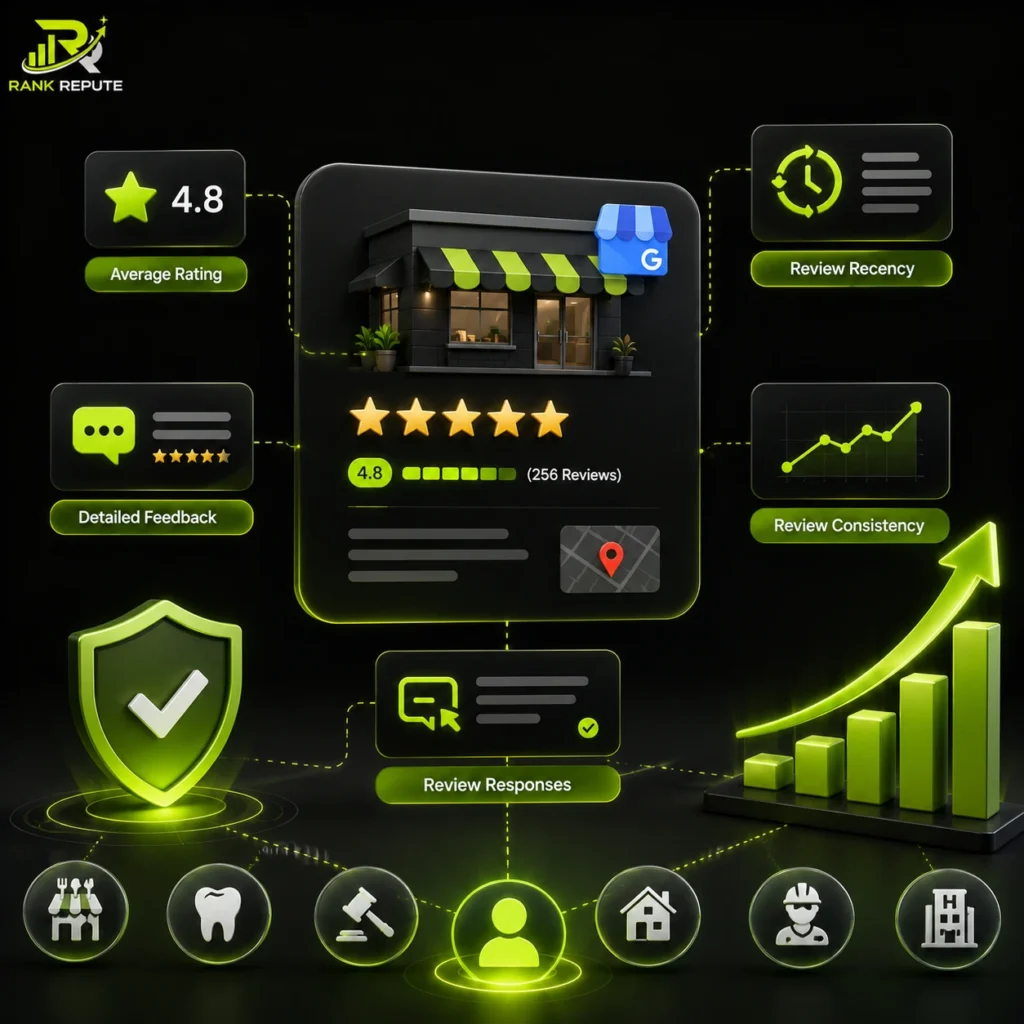
Average Rating
Star ratings influence first impressions. Many consumers begin evaluating businesses by reviewing ratings before reading individual comments.
Review Recency
Recent reviews indicate current customer experiences. Feedback from three years ago may carry less weight than feedback posted last week.
Review Consistency
A steady flow of reviews often appears more natural than large review spikes.
Detailed Feedback
Specific comments help customers understand what to expect.
Review Responses
Professional responses demonstrate customer engagement and accountability. This is one reason why businesses should prioritize responding to Google reviews consistently.
Together, these elements create a stronger review profile than review count alone.
How Many Reviews Do Customers Expect?
Customer expectations vary by industry.
For example: “A local coffee shop may naturally accumulate hundreds of reviews.”, “A specialized law firm may receive significantly fewer reviews because customer interactions occur less frequently.”
This is why businesses should compare themselves to direct competitors rather than relying on generic benchmarks.
General Expectations By Business Type
| Business Type | Typical Review Expectations |
|---|---|
| Restaurants | Often 100+ Reviews |
| Coffee Shops | Often 100+ Reviews |
| Hotels | Often Hundreds Of Reviews |
| Dental Practices | Often 30–100+ Reviews |
| Healthcare Providers | Often 20–100+ Reviews |
| Law Firms | Often 20–75+ Reviews |
| Contractors | Often 20–100+ Reviews |
| Real Estate Agents | Often 20–100+ Reviews |
| Home Service Companies | Often 30–150+ Reviews |
| Financial Advisors | Often Lower Review Volumes |
These are not requirements. They simply reflect common customer expectations in many markets.
How Reviews Influence Customer Trust?
Reviews function as social proof. Potential customers often view customer feedback as independent validation of a business’s reputation. When consumers compare multiple businesses, they frequently ask:

- How many people have used this company?
- Are customers satisfied?
- Are reviews recent?
- Are concerns addressed professionally?
A strong review profile helps answer these questions. Trust remains one of the most important factors influencing local purchasing decisions. This is particularly important in industries such as:
- Healthcare
- Dental Services
- Legal Services
- Home Services
- Financial Services
- Hospitality
- Real Estate
In these sectors, customers often conduct extensive research before making contact.
Do More Reviews Improve Local SEO?
Reviews contribute to local SEO, but more reviews do not automatically produce better rankings. Google evaluates many local search factors, including:
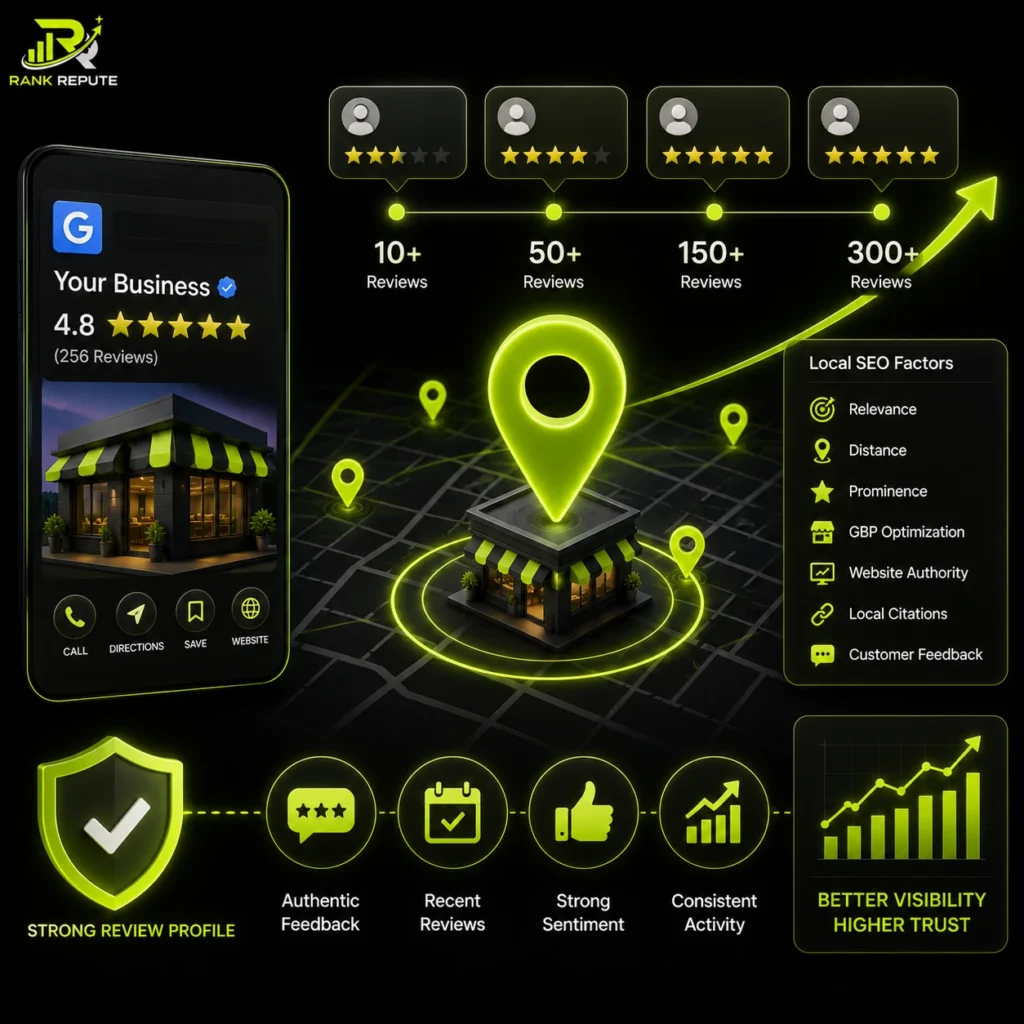
- Relevance
- Distance
- Prominence
- Google Business Profile optimization
- Website authority
- Local citations
- Customer feedback
Review quantity can contribute to prominence signals. However, businesses should avoid viewing review count as the sole ranking factor. A balanced review profile containing:
- Authentic feedback
- Recent reviews
- Strong customer sentiment
- Consistent activity
often provides more value than simply pursuing larger numbers.
Why A Consistent Flow Of Reviews Matters?
One of the biggest mistakes businesses make is focusing entirely on total review count. Customers and search engines often pay greater attention to ongoing activity. A business that receives:
- 5 reviews every month
may appear more active than a business that collects:
- 200 reviews several years ago
- and receives no new feedback today
Review recency helps demonstrate ongoing customer engagement and current business activity. For this reason, businesses should focus on building a sustainable review acquisition process rather than chasing review milestones.
Should Businesses Compare Their Review Count To Competitors?
Yes, but carefully. One of the most effective ways to evaluate a review profile is to compare it with direct competitors operating in the same market.

For example: “A dental practice with 75 Google reviews may appear strong in one city but below average in another.”
Similarly, a contractor with 40 reviews may outperform competitors in a smaller market while appearing less established in a larger metropolitan area. Businesses should compare:
- Total review count
- Average rating
- Review recency
- Review quality
- Customer sentiment
- Review response activity
The goal is not necessarily to have the highest number of reviews. The goal is to maintain a competitive and trustworthy review profile within the local market. Understanding current local business reputation statistics can also help businesses benchmark their performance against competitors more effectively.
What Is More Important: Reviews Or Star Ratings?
This is one of the most common questions business owners ask. The answer is both. Review quantity and star ratings work together.
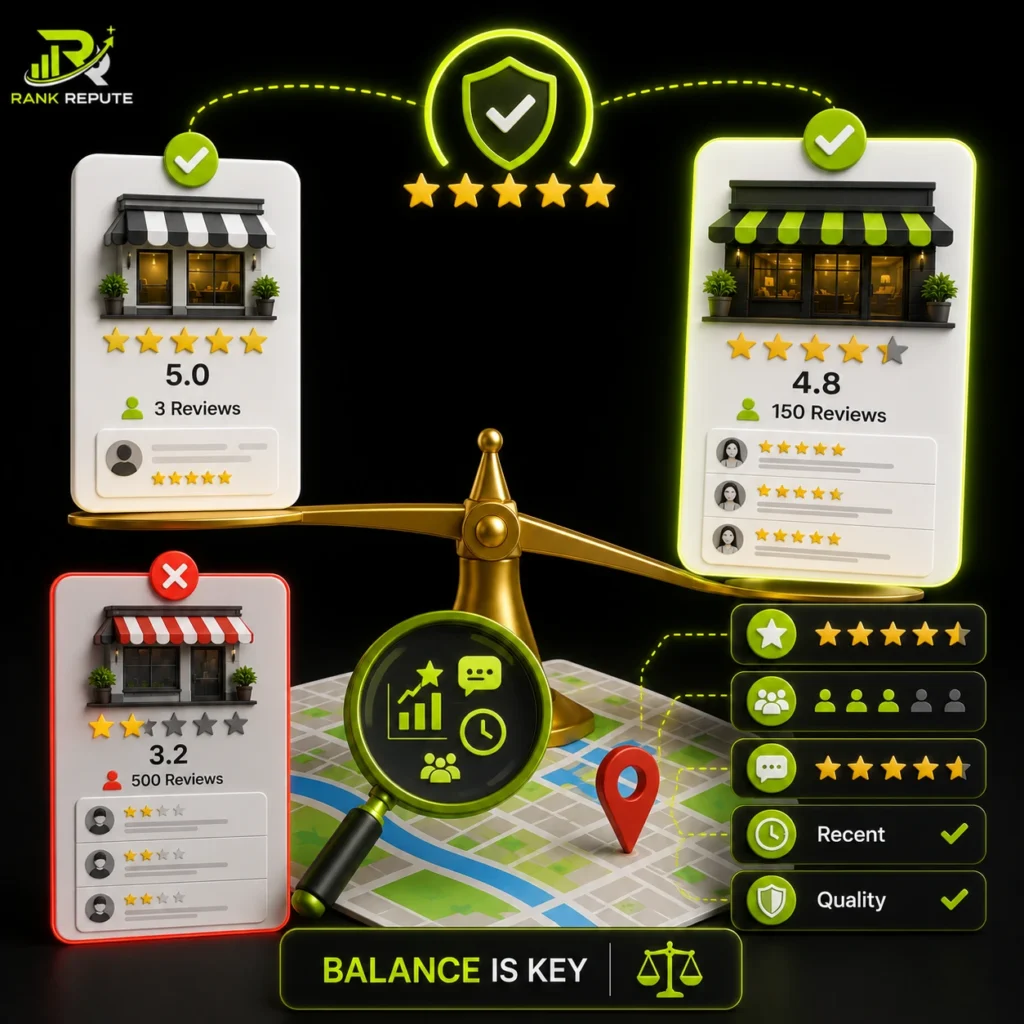
A business with:
- 5.0 stars
- 3 reviews
may not appear as trustworthy as a business with:
- 4.8 stars
- 150 reviews
Similarly, a business with:
- 500 reviews
- 3.2 stars
may struggle to build customer confidence despite having a large review volume. Consumers generally evaluate:
- Rating
- Review count
- Review quality
- Review recency
as a combined package rather than individual metrics.
Why Authentic Reviews Matter More Than High Review Counts?
Many businesses are tempted to focus solely on increasing review numbers. However, authenticity remains critical. Google actively monitors review activity and discourages:
- Fake reviews
- Purchased reviews
- Review manipulation
- Incentivized reviews
- Review gating
Customers are also becoming better at identifying suspicious review patterns. Authentic customer feedback helps businesses:
- Build credibility
- Improve customer trust
- Maintain compliance with Google policies
- Strengthen reputation signals
A smaller collection of genuine customer reviews often provides greater long-term value than a large volume of questionable reviews.
How Businesses Can Increase Google Reviews Naturally?
The most effective review profiles are built through consistent customer engagement.
Ask Customers At The Right Time
Review requests are often most successful shortly after a positive customer interaction.
Make The Process Easy
Provide direct Google review links through:
- SMS
- Follow-up messages
- Thank-you pages
Deliver Excellent Customer Experiences
Strong customer experiences naturally create more opportunities for positive feedback.
Respond To Existing Reviews
Customers often notice when businesses actively engage with reviewers.
Maintain Consistent Review Requests
A steady review acquisition process is generally more effective than occasional campaigns.
Businesses interested in building sustainable review profiles often benefit from structured review generation strategies:
Common Review Goals For Local Businesses
Instead of focusing on a universal target, businesses often benefit from milestone-based goals.
| Business Stage | Suggested Review Focus |
|---|---|
| New Business | Build initial customer feedback and credibility |
| Growing Business | Establish a steady flow of reviews |
| Established Business | Maintain review recency and consistency |
| Competitive Market | Match or exceed local competitor activity |
| Multi-Location Business | Build reviews for each individual location |
| Service-Based Business | Focus on detailed customer experiences |
| Professional Services | Emphasize trust and credibility signals |
| Local Retail Business | Encourage ongoing customer engagement |
The objective is not to reach a specific number and stop. The objective is to maintain a healthy review profile over time.
How Reviews Influence Google Maps Performance?
Google Maps remains one of the most important discovery channels for local businesses. When customers compare businesses on Google Maps, they often evaluate:

- Star ratings
- Review volume
- Review recency
- Customer feedback
- Business responses
Businesses with stronger review profiles often appear more credible to potential customers. While reviews are only one factor influencing Maps visibility, they contribute important trust and engagement signals. This is one reason reviews are frequently discussed alongside:
- Google Business Profile optimization
- Local SEO
- Reputation management
- Customer engagement strategies
Conclusion
There is no single number of Google reviews that guarantees success. The number of reviews a business needs depends on its industry, location, competition, customer expectations, and market conditions.
Rather than focusing solely on review count, businesses should prioritize authentic customer feedback, strong ratings, review recency, and consistent customer engagement. A profile with recent, detailed, and trustworthy reviews often provides more value than a profile built around large review numbers alone.
Google Reviews remain an important trust signal for customers evaluating businesses through Google Search, Google Maps, and Google Business Profiles. Businesses that consistently earn genuine reviews and maintain active review profiles are generally better positioned to strengthen customer trust, improve local visibility, and support broader reputation management efforts over time.
Frequently Asked Questions
How Many Google Reviews Does A Business Need To Build Trust?
There is no universal number that applies to every business. Customer expectations vary by industry, location, and competition. In many cases, a business with 30 recent, detailed reviews may appear more trustworthy than a business with hundreds of outdated reviews. Most customers evaluate review quality, review recency, and overall ratings alongside review count when making decisions.
Is 10 Google Reviews Enough For A Local Business?
For a new business, 10 Google reviews can provide an important foundation of social proof. However, whether 10 reviews are enough depends on the local market and competitors. In highly competitive industries such as restaurants, dental practices, and home services, customers often expect to see significantly more reviews before making a decision.
What Matters More: Review Count Or Star Rating?
Both factors influence customer trust. A high star rating with only a few reviews may not provide enough confidence for potential customers, while a large number of reviews with a low rating may raise concerns. Most consumers evaluate review count, star ratings, customer feedback, and review recency together rather than focusing on a single metric.
Does Having More Google Reviews Improve Local SEO?
Google reviews can contribute to local SEO by supporting prominence and trust signals. However, review quantity alone does not guarantee better rankings. Google also considers factors such as relevance, distance, Google Business Profile optimization, website authority, local citations, and customer engagement. A consistent flow of authentic reviews is generally more valuable than simply having a large review count.
How Often Should Businesses Get New Google Reviews?
There is no ideal number per month, but consistency is important. Businesses that receive reviews regularly often appear more active than businesses that collect large numbers of reviews during short periods and then remain inactive. Recent customer feedback helps demonstrate ongoing business activity and current customer experiences.
Can A Business Rank In Google Maps With Only A Few Reviews?
Yes. Businesses can appear in Google Maps with a relatively small number of reviews, especially in less competitive markets. However, customers frequently compare review profiles before choosing a business. As competition increases, having a stronger review profile may help improve visibility, credibility, and customer engagement.
How Many Reviews Should A Business Have Compared To Competitors?
The best benchmark is usually direct competitors within the same industry and geographic area. If the top businesses in a market have 100–200 reviews, a business with only a handful of reviews may appear less established. Comparing review count, review quality, ratings, and review recency provides a more accurate picture than focusing on numbers alone.
How Can Businesses Get More Google Reviews Without Violating Policies?
Businesses should focus on requesting reviews from genuine customers after legitimate interactions. Review requests can be sent through email, SMS, follow-up communications, or direct Google review links. Businesses should avoid purchasing reviews, offering incentives, creating fake reviews, or using review-gating practices, as these may violate Google’s review policies and damage credibility.