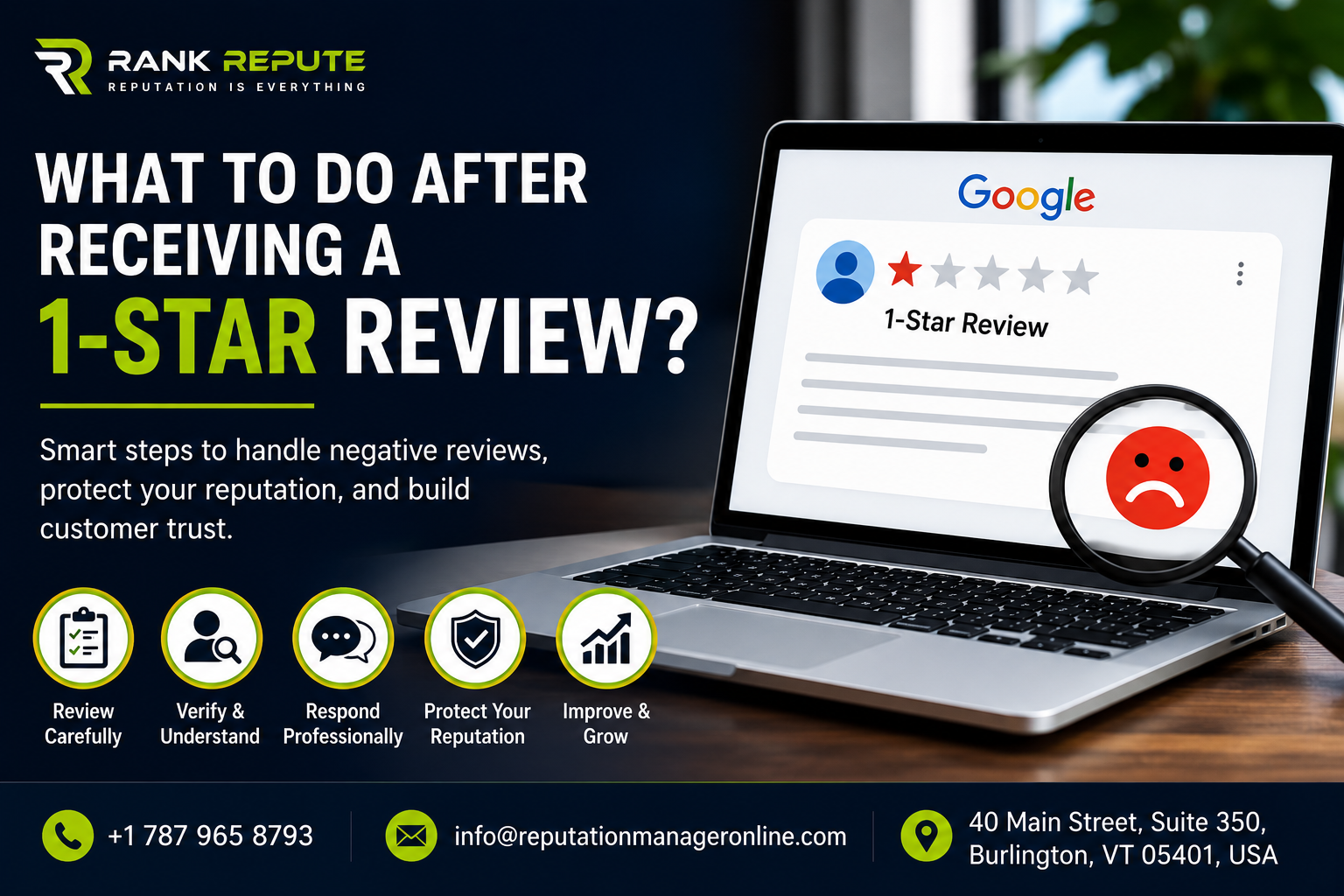
What To Do After Receiving A 1-Star Review?
Quick Answer
A 1-star review should be reviewed carefully before responding. Verify whether the review is genuine, understand the customer’s concern, and reply professionally without becoming defensive. If the review violates platform guidelines, report it for review. A calm, helpful response protects your reputation and shows potential customers that you take feedback seriously.
A 1-star review can feel frustrating, especially when you have invested time, money, and effort into providing a good customer experience. Many business owners react emotionally when they see a negative review appear on their Google Business Profile, Yelp listing, Facebook page, Trustpilot profile, or another review platform. However, the actions taken immediately after receiving a negative review often have a greater impact than the review itself.
Customers expect businesses to receive occasional criticism. What they pay attention to is how the business responds. A professional response demonstrates accountability, customer service standards, and a willingness to address concerns. An aggressive response, a defensive argument, or complete silence can damage trust far more than the original review.
For local businesses, reviews influence purchasing decisions, online reputation, and local search visibility. A single negative review is rarely a crisis, but mishandling it can become one. Understanding what to do after receiving a 1-star review helps businesses protect their reputation while maintaining customer confidence. At Rank Repute, we help businesses manage negative reviews, strengthen customer trust, and build a stronger online reputation through professional reputation management strategies.
Why A 1-Star Review Should Not Be Ignored?
Many business owners hope a negative review will disappear if they simply leave it alone. Unfortunately, online reviews are public content. Potential customers often read negative reviews before reading positive ones because they want to understand possible risks before making a purchase decision.
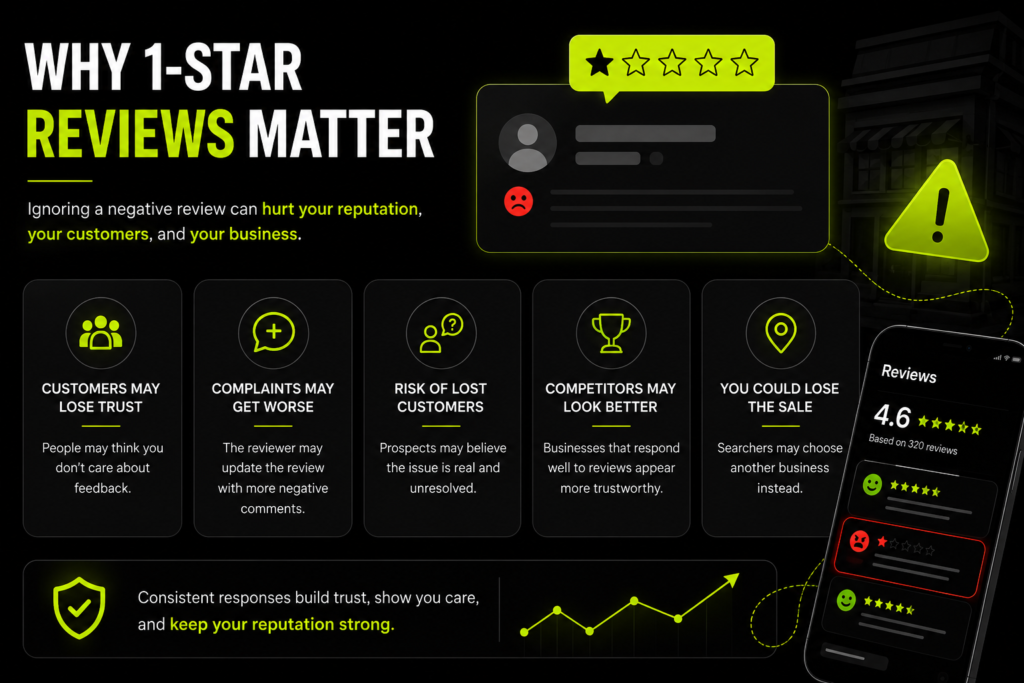
Ignoring a review can create several problems:
- Customers may assume the business does not care about feedback.
- The reviewer may continue updating the review with additional complaints.
- Prospective customers may believe the complaint is accurate and unresolved.
- Competitors with stronger review management processes may appear more trustworthy.
- Searchers evaluating multiple businesses may choose another option.
A single negative review usually does not damage a business significantly. However, a pattern of unanswered reviews can create concerns about customer service, professionalism, and reliability. Businesses that respond consistently and maintain a steady flow of customer feedback through a proactive review generation strategy demonstrate engagement and accountability, which are important trust signals for consumers researching products and services online.
The First Thing To Do After Receiving A 1-Star Review?
Before writing a response, take time to evaluate the situation carefully. The biggest mistake businesses make is responding emotionally. Negative reviews often trigger frustration because business owners feel the review is unfair, inaccurate, or exaggerated. Instead of reacting immediately:
- Read the review carefully.
- Identify the specific complaint.
- Check internal records.
- Speak with relevant staff members.
- Verify whether the reviewer was actually a customer.
- Determine whether the complaint involves a genuine service issue.
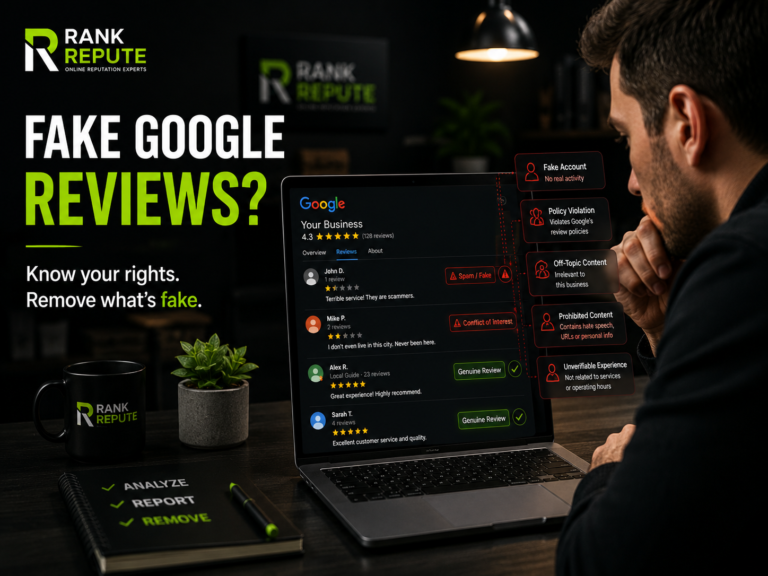
Many negative reviews contain valuable feedback that can highlight operational problems. Even if the review feels unfair, there may be useful information hidden within the complaint. The goal is to understand the situation fully before deciding how to respond. If the review appears fake, misleading, or violates platform guidelines, businesses may also consider professional negative content removal services to determine whether removal options are available.
Determine Whether The Review Is Genuine
Not every 1-star review comes from a legitimate customer. Businesses occasionally encounter reviews from:
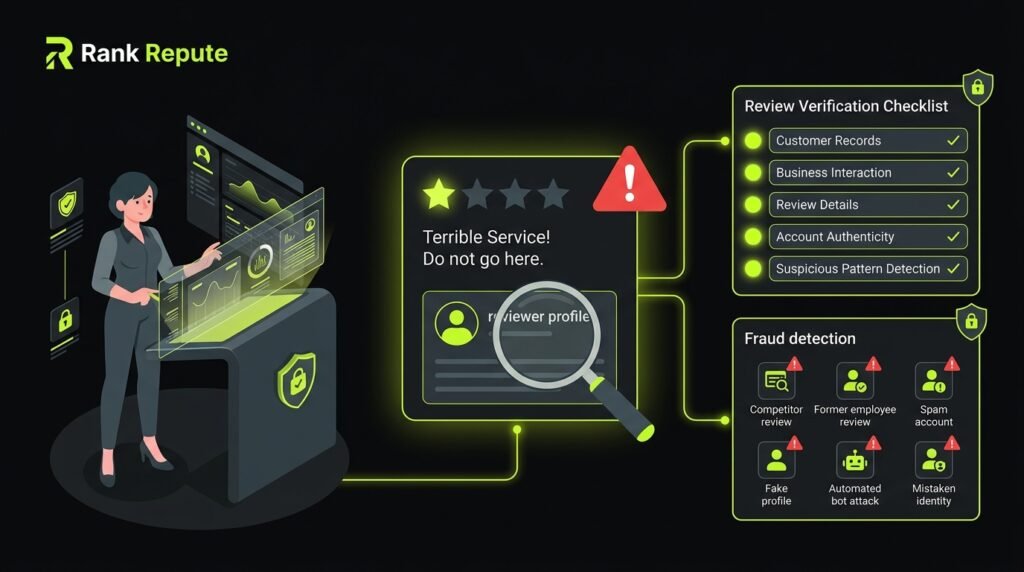
- Competitors
- Former employees
- Spam accounts
- Individuals who have never used the service
- Mistaken identity situations
- Automated review attacks
Before responding, verify whether the reviewer appears in your customer records. Questions to ask include:
| Verification Question | Why It Matters |
|---|---|
| Does the reviewer appear in customer records? | Confirms legitimacy |
| Did the reviewer interact with your business? | Validates experience |
| Does the review mention specific details? | Indicates authenticity |
| Does the account appear genuine? | Helps identify spam |
| Are there multiple suspicious reviews? | May indicate coordinated activity |
If the review appears fake or violates platform policies, the next step may involve reporting the review rather than responding immediately.
Understand Whether The Review Violates Platform Guidelines
Google, Yelp, Facebook, Trustpilot, and other review platforms have policies governing review content. Reviews may qualify for removal when they involve:
- Spam
- Fake engagement
- Hate speech
- Harassment
- Threats
- Impersonation
- Conflicts of interest
- Competitor manipulation
- Inappropriate content
However, businesses often misunderstand review removal policies. A review does not qualify for removal simply because:
- It is negative.
- The reviewer was unhappy.
- The customer was rude.
- The review affects ratings.
Review platforms generally allow customers to share negative experiences if those experiences relate to legitimate interactions with the business. Before filing a removal request, carefully compare the review against the platform’s published policies.
How To Respond To A Genuine 1-Star Review?
If the review comes from a real customer and does not violate platform guidelines, responding professionally is usually the best approach. A strong response generally includes four components:
Acknowledgement
Start by recognizing the customer’s experience. Customers want to know they have been heard. Acknowledging the issue demonstrates professionalism and maturity.
Example: “Thank you for sharing your feedback. We’re sorry to hear that your experience did not meet expectations.”
This simple statement immediately lowers tension and shows that the business takes concerns seriously.
Empathy
Even when you disagree with the review, empathy is important. Customers often leave reviews because they feel frustrated, ignored, disappointed, or misunderstood. A response that demonstrates empathy helps future readers see that the business values customer experiences.
Example: “We understand how frustrating this situation must have been and appreciate you bringing it to our attention.”
Empathy does not mean admitting fault. It means recognizing the customer’s perspective.
Clarification
If necessary, provide context without becoming defensive. The purpose is not to win an argument. The purpose is to help readers understand that the business takes concerns seriously while remaining professional. Keep explanations brief and factual. Avoid:
- Personal attacks
- Emotional language
- Public disputes
- Sharing private customer information
- Arguing point by point
Professional clarification protects credibility while maintaining respect.
Invitation To Continue Offline
Whenever possible, move the conversation offline. Provide a direct contact method so the customer can discuss the issue privately.
Example: “We would appreciate the opportunity to learn more about your experience. Please contact our team directly so we can discuss your concerns and work toward a resolution.”
This shows willingness to address the issue without turning the review section into an ongoing dispute.
What Not To Do After Receiving A 1-Star Review?
Many businesses cause additional damage through poor responses. Avoid these common mistakes:
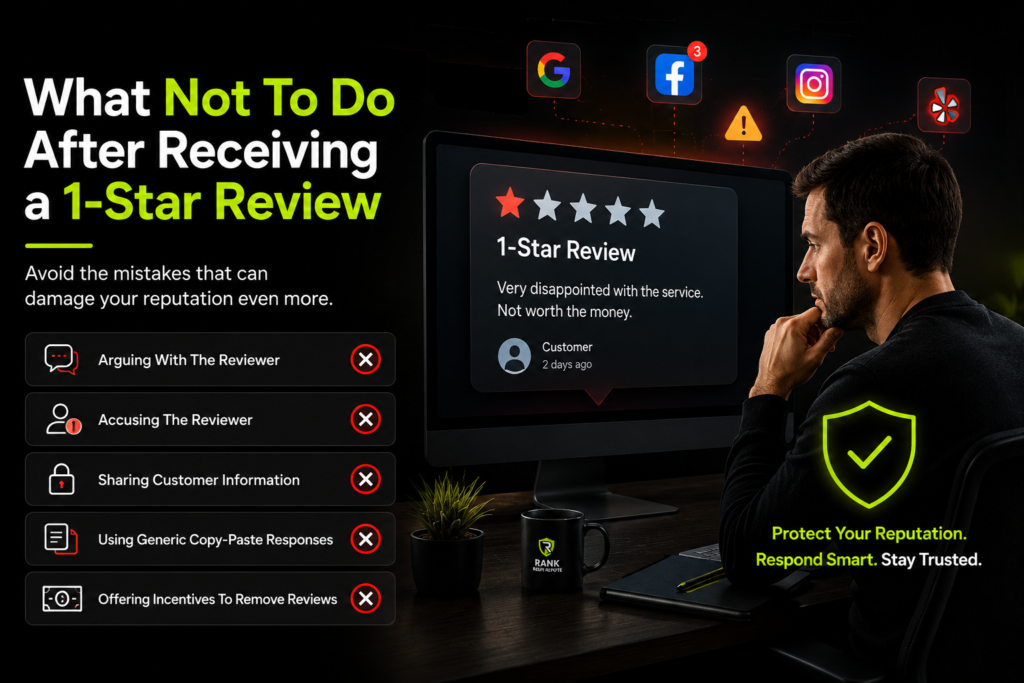
Arguing With The Reviewer
Public arguments rarely improve customer perception. Even if the business is correct, aggressive responses often make the company appear defensive. Future customers evaluate the business response as much as the original review.
Accusing The Reviewer
Publicly accusing someone of lying, exaggerating, or acting maliciously can escalate the situation. If fraud is suspected, use platform reporting channels instead of public accusations.
Sharing Customer Information
Businesses should never disclose:
- Personal details
- Account information
- Order information
- Medical information
- Legal information
Privacy violations can create legal and reputational risks.
Using Generic Copy-Paste Responses
Customers quickly recognize automated responses. Every review deserves a response that reflects the specific concern being raised. A personalized response demonstrates genuine engagement.
Offering Incentives To Remove Reviews
Most review platforms prohibit offering compensation in exchange for review removal. This can violate platform policies and damage trust if discovered.
These mistakes can also spread beyond review platforms and influence conversations on social media. Businesses that maintain professional communication across reviews and social channels through effective social media management are better positioned to protect their reputation and maintain customer trust.
How Businesses Should Handle A 1-Star Review?
| Situation | Recommended Action | Avoid Doing |
|---|---|---|
| Genuine Customer Complaint | Acknowledge the concern and respond professionally | Arguing with the customer |
| Service Mistake | Accept responsibility and explain how the issue will be addressed | Blaming employees publicly |
| Communication Problem | Apologize and offer to discuss the issue offline | Ignoring the review |
| Fake Review | Gather evidence and submit a removal request | Accusing the reviewer without proof |
| Competitor Review | Remain calm and focus on the resolution | Starting a public dispute |
| Angry Customer | Remain calm and focus on resolution | Responding emotionally |
| Policy Violation Review | Document the violation and report it | Assuming the review will be removed automatically |
| Repeated Negative Feedback | Investigate internal processes and identify patterns | Treating every complaint as an isolated issue |
This approach helps businesses protect their online reputation while demonstrating professionalism to both existing and potential customers.
When Should You Report A 1-Star Review?
Reporting may be appropriate when a review clearly violates platform guidelines. Potential reasons include:
- Fake reviews
- Competitor reviews
- Spam content
- Harassment
- Hate speech
- Threatening language
- Impersonation
However, businesses should understand that removal is not guaranteed. Review platforms typically require evidence that a policy violation has occurred. Document relevant information before submitting a report and maintain records of any communications related to the review. As part of a broader review management strategy, businesses should carefully evaluate whether a review should be reported, responded to, or escalated through the appropriate platform channels.
How A 1-Star Review Affects Local SEO?
Business owners often ask whether a single 1-star review can hurt rankings in Google Search or Google Maps.
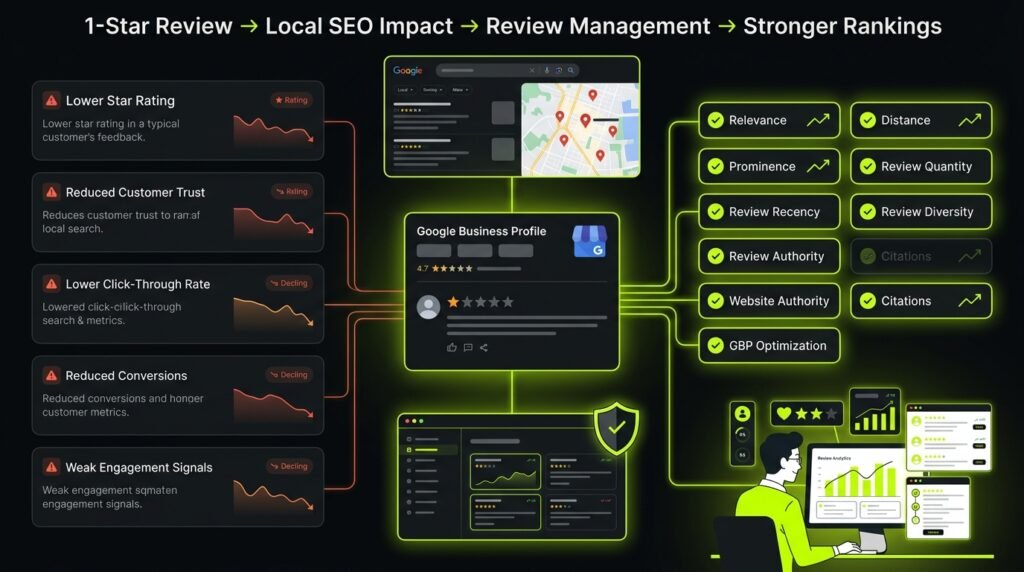
In most cases, one negative review will not significantly impact rankings by itself. Google evaluates many local ranking factors, including relevance, distance, prominence, review quantity, review recency, review diversity, website authority, citations, and Google Business Profile optimization. However, reviews do influence local visibility over time. A business that receives a consistent stream of negative reviews may experience:
- Lower average star ratings
- Reduced click-through rates
- Lower customer trust
- Reduced conversion rates
- Decreased engagement signals
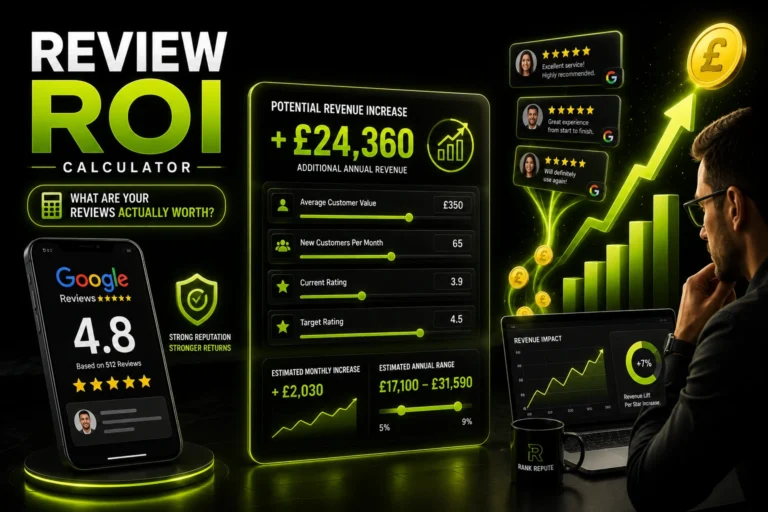
On the other hand, businesses that actively manage reviews often maintain stronger profiles because customers see ongoing engagement and responsiveness. This is why review management should be viewed as part of a broader local SEO strategy rather than a standalone activity.
Can A Negative Review Be Turned Into A Positive Outcome?
Yes. Many businesses have successfully converted unhappy customers into loyal customers after addressing concerns properly. In some situations, customers update or remove negative reviews after:
- Receiving a sincere apology
- Having an issue resolved
- Receiving missing information
- Experiencing better communication
- Seeing genuine effort from the business
The goal should never be forcing review removal. Instead, focus on improving the customer’s experience. When businesses demonstrate accountability and professionalism, customers often become more understanding. Even when a review remains published, future customers can see that the business handled the situation responsibly. In cases where a review appears fraudulent or policy-violating, businesses may also explore options for removing fake Google reviews through the appropriate reporting process. That alone can help strengthen trust and protect online reputation.
How To Prevent Future 1-Star Reviews?
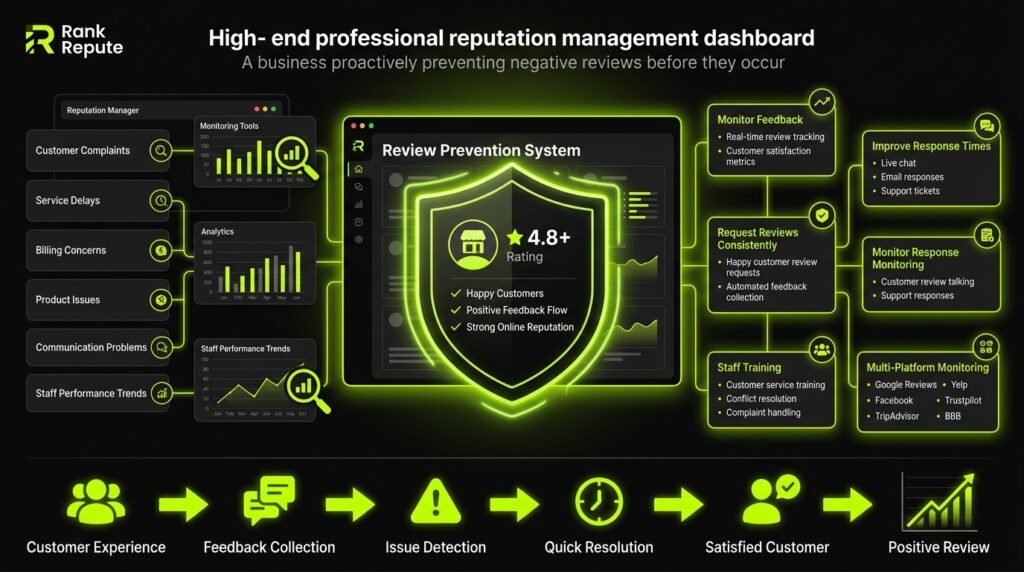
The best review management strategy starts before a negative review is ever posted. Businesses that consistently collect customer feedback can often identify problems before they become public complaints. Several preventative measures can reduce the likelihood of future negative reviews. Businesses can also learn from proven Google review response examples to understand how effective communication helps address concerns, strengthen customer relationships, and protect online reputation before issues escalate.
Monitor Customer Feedback Regularly
Feedback should be reviewed continuously rather than occasionally. Businesses should track:
- Customer complaints
- Service delays
- Billing concerns
- Product issues
- Communication problems
- Staff performance trends
Recurring complaints often reveal operational issues that require attention.
Improve Response Times
Many negative reviews are caused by poor communication rather than poor service. Customers become frustrated when:
- Calls are ignored
- Emails go unanswered
- Support requests are delayed
- Problems remain unresolved
Improving response times often reduces review-related complaints significantly.
Request Reviews Consistently
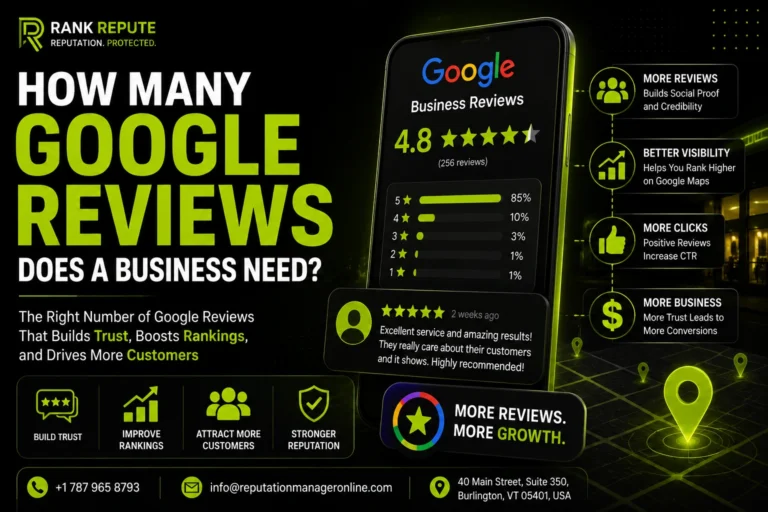
Businesses that actively generate reviews generally maintain healthier review profiles. A steady flow of positive reviews helps create a balanced representation of customer experiences. This approach also reduces the impact of occasional negative feedback. If your business is looking to increase review volume naturally, see:
Train Customer-Facing Staff
Front-line employees have a direct influence on customer satisfaction. Staff training should include:
- Communication skills
- Complaint handling
- Conflict resolution
- Customer service standards
- Escalation procedures
Many reputation issues begin with preventable customer interactions.
Monitor Reviews Across Multiple Platforms
Customers leave reviews on many websites, including:
- Google Reviews
- Yelp
- Trustpilot
- TripAdvisor
- Better Business Bureau (BBB)
- Industry-specific review platforms
Monitoring only Google can leave important feedback unnoticed. Businesses should maintain visibility across all major platforms where customers discuss their experiences.
Signs A 1-Star Review May Become A Larger Reputation Problem
Most negative reviews remain isolated incidents. However, some situations require immediate attention. Warning signs include:
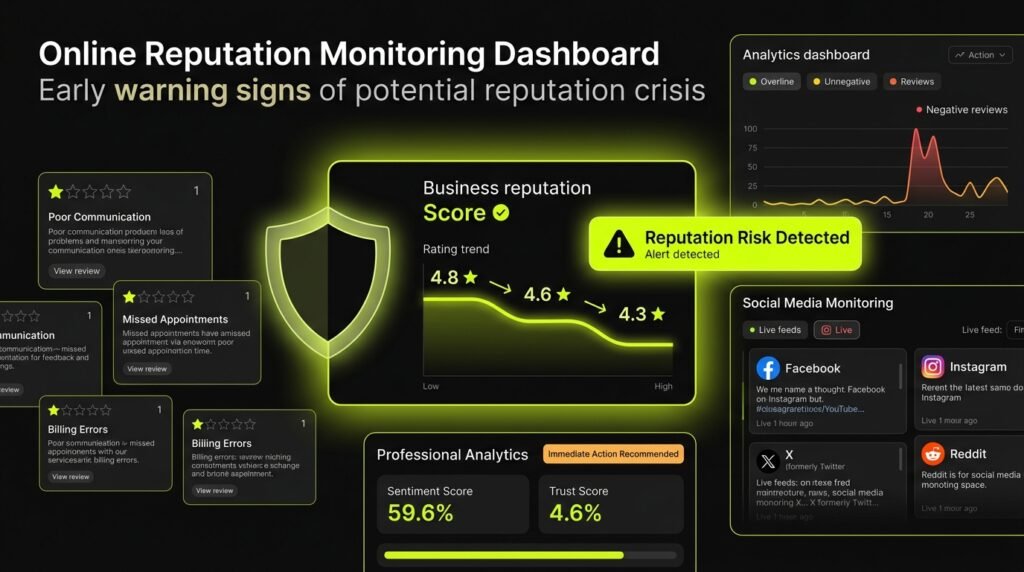
Multiple Similar Complaints
When several customers mention the same issue, a pattern may exist. Examples include:
- Poor communication
- Missed appointments
- Billing errors
- Product quality concerns
- Delivery problems
Patterns often indicate operational issues rather than isolated experiences.
Sudden Review Surges
A sudden increase in negative reviews may indicate:
- Service disruptions
- Public relations issues
- Competitor activity
- Viral social media attention
Monitoring tools can help identify unusual activity quickly.
Negative Social Media Discussions
Reviews sometimes spread beyond review platforms. Customers may share complaints on:
- X (Twitter)
- TikTok
Businesses should monitor brand mentions across multiple channels to identify emerging concerns.
Declining Overall Ratings
If ratings continue to fall over time, immediate corrective action may be necessary. Review trends often provide valuable insight into customer satisfaction levels.
What Businesses Should Learn From Negative Reviews?
Many businesses focus exclusively on removing or responding to negative reviews. A more productive approach is to learn from them. Negative reviews often reveal:
- Customer expectations
- Communication breakdowns
- Service bottlenecks
- Product weaknesses
- Staff training needs
- Process inefficiencies
Review feedback functions as an ongoing source of customer insight. Businesses that analyze feedback carefully can identify opportunities to improve operations and customer experiences. The objective should not be achieving perfection. The objective should be demonstrating responsiveness, accountability, and a commitment to continuous improvement. Businesses can further strengthen this process by following proven strategies for responding to negative reviews in a way that builds trust and improves customer relationships.
When To Seek Professional Reputation Management Help?
Some situations require specialized support. Businesses may benefit from professional reputation management when dealing with:
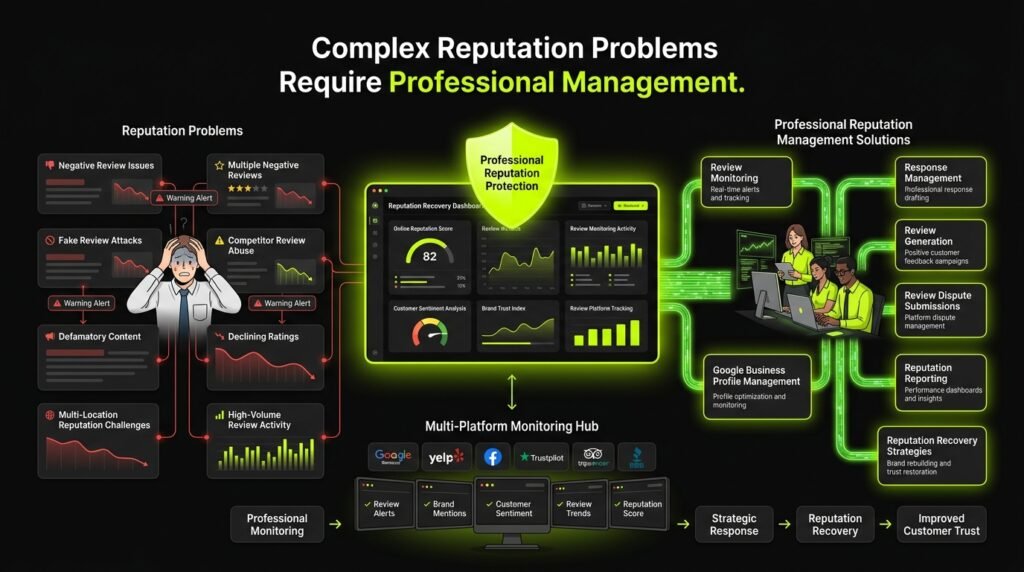
- Multiple negative reviews
- Fake review attacks
- Competitor review abuse
- Defamatory content
- Ongoing reputation issues
- Multi-location reputation management
- High-volume review monitoring
Professional services typically assist with:
- Review monitoring
- Review response management
- Review generation
- Review dispute submissions
- Google Business Profile management
- Reputation reporting
- Reputation recovery strategies
For businesses facing ongoing reputation challenges, professional support can help create a structured process for monitoring and managing customer feedback. A dedicated reputation monitoring service can help identify issues early, track review activity across multiple platforms, and provide better visibility into how customers perceive your business online.
Conclusion
Receiving a 1-star review is never enjoyable, but it does not have to become a reputation crisis.
The most effective response is a professional one. Before reacting, verify whether the review is legitimate, understand the issue being raised, and determine whether the review violates platform guidelines. If the review is genuine, respond respectfully, acknowledge the customer’s experience, and offer to continue the conversation privately.
A single negative review rarely defines a business. Customers understand that no company can satisfy every individual. What matters is how the business responds when criticism appears. Businesses that monitor reviews consistently, respond professionally, and address customer concerns demonstrate credibility and accountability. Over time, these practices help maintain customer trust, strengthen online reputation, and support local search visibility. Businesses that want a clearer understanding of their current reputation strengths and weaknesses can benefit from a comprehensive online reputation audit to identify opportunities for improvement and long-term growth.
Frequently Asked Questions
Should I Respond To A 1-Star Review If The Customer Is Wrong?
Yes. Even if you believe the customer is mistaken, a professional response is usually better than no response at all. Future customers often read review responses before making a decision, and they may judge the business based on its communication style rather than the complaint itself. A calm and respectful response demonstrates professionalism, accountability, and a willingness to address concerns. Avoid arguments, accusations, or emotional language. Focus on acknowledging the feedback and inviting the customer to discuss the issue privately.
Can A 1-Star Review Hurt My Business?
A single 1-star review is unlikely to significantly harm an established business. Most customers expect businesses to receive occasional negative feedback. Problems typically arise when negative reviews become frequent, remain unanswered, or reveal recurring customer complaints. Potential customers often evaluate the overall review profile, average rating, review recency, and business responses rather than focusing on a single review. Consistent review management helps reduce the impact of occasional negative feedback.
Can Google Remove A 1-Star Review?
Google may remove a review if it violates its review policies. Examples include spam, fake engagement, impersonation, harassment, hate speech, conflicts of interest, or inappropriate content. However, Google generally does not remove reviews simply because they are negative or critical. If you believe a review violates policy, document the issue and submit a removal request through your Google Business Profile. Removal decisions are ultimately made by Google.
What Should I Do If The 1-Star Review Is Fake?
If a review appears fake, first verify that the reviewer was not an actual customer. Review your records, gather supporting evidence, and determine whether the review violates platform guidelines. You should report the review through the appropriate platform while maintaining a professional public response if necessary. Avoid publicly accusing the reviewer of fraud unless you have clear evidence. A professional approach protects credibility while the review is being investigated.
How Long Should A Response To A 1-Star Review Be?
Most review responses should be concise, professional, and focused on resolution. In many cases, 75 to 150 words is sufficient. The response should acknowledge the concern, express empathy, provide clarification when appropriate, and invite the customer to continue the discussion privately. Long defensive responses often create additional problems and may discourage future customers.
Do Negative Reviews Affect Local SEO?
Reviews are one of many factors that influence local search visibility. A few negative reviews are normal and unlikely to have a major impact. However, a large number of unresolved complaints, consistently poor ratings, or declining customer sentiment may affect customer trust and engagement. Businesses that actively monitor reviews, respond professionally, and maintain a healthy review profile are generally better positioned to support local SEO efforts.
Can Customers Change Or Update Their Reviews?
Yes. Most review platforms, including Google Reviews, allow customers to edit or update their reviews after posting them. If a business successfully resolves a complaint, some customers choose to revise their rating or update their feedback. Businesses should focus on addressing customer concerns rather than pressuring customers to change reviews. Genuine improvements often lead to more positive outcomes.
How Many Negative Reviews Are Normal For A Business?
There is no exact number because every industry, location, and business size is different. Even highly rated businesses receive occasional complaints. Customers generally look for patterns rather than isolated incidents. A business with hundreds of positive reviews and a few negative ones often appears more authentic than a profile containing only perfect ratings. The way a business responds to criticism frequently matters more than the existence of the criticism itself.
Should I Contact The Customer Privately After A Negative Review?
Yes, when appropriate. A private conversation can often resolve misunderstandings and provide an opportunity to address concerns directly. After posting a public response, businesses can invite customers to contact them by phone or email. Moving detailed discussions offline helps protect privacy and allows both parties to communicate more effectively.
When Should A Business Hire A Reputation Management Company?
Businesses may benefit from professional reputation management when they experience recurring negative reviews, fake review attacks, declining ratings, reputation crises, competitor review abuse, or challenges managing feedback across multiple locations. Professional support can help businesses monitor reviews, improve response processes, identify reputation risks, and maintain a stronger online presence.