Dental Reputation Management: A Guide for Practice Owners
Quick Answer
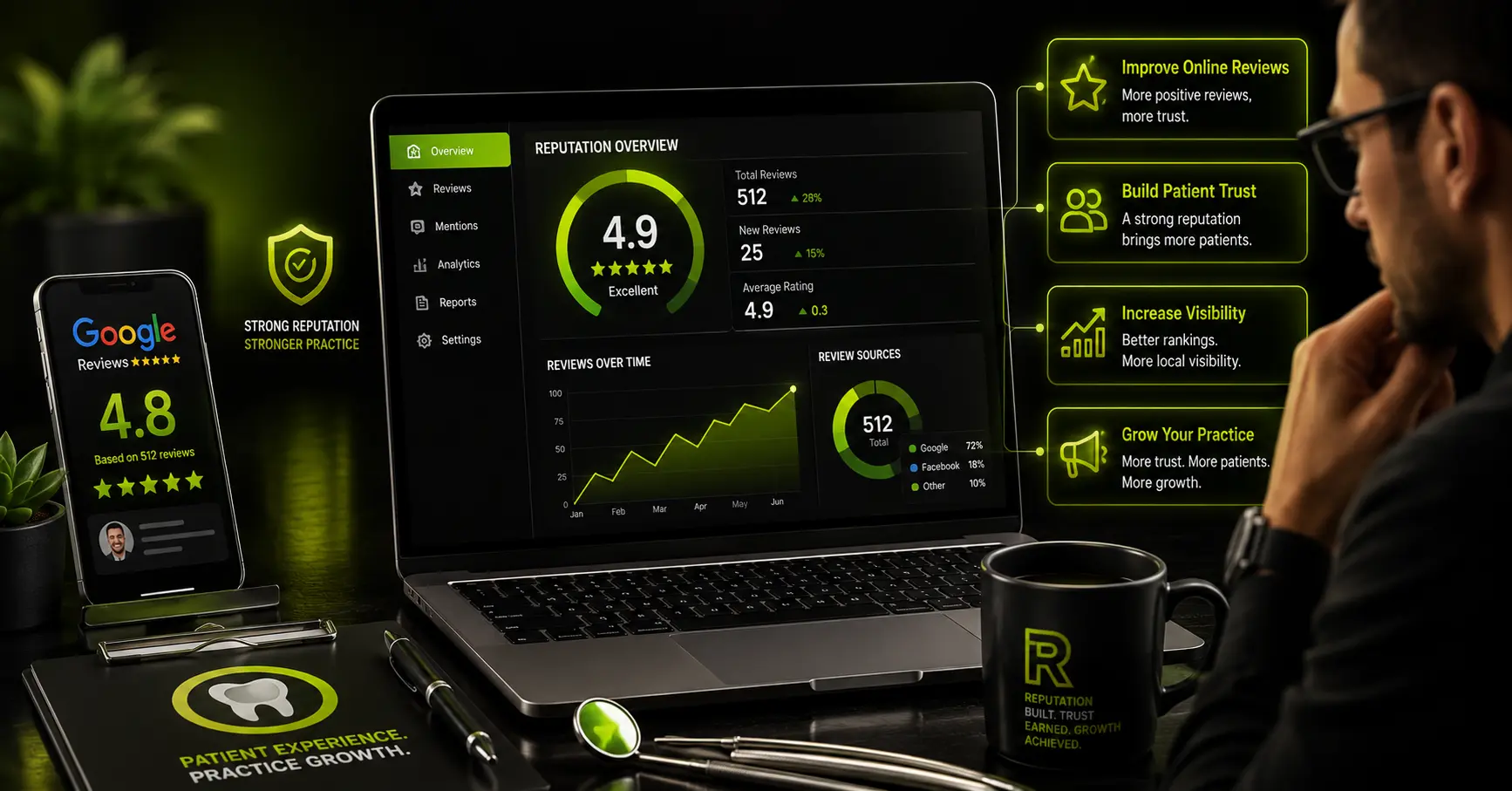
Dental reputation management is the ongoing work of monitoring, generating, and responding to patient reviews across Google, Healthgrades, and Zocdoc to attract new patients and protect the practice. It differs from general reputation management in one key way: dental responses must stay HIPAA-compliant, which limits what a practice can say in public replies.
Introduction
Most patients decide whether to trust your practice before they ever call. They read your Google rating, scan a few reviews, and compare you against the dentist two miles away. A survey of more than 1,000 consumers by Reputation and YouGov found that 72% will only choose a provider with a 4-star rating or higher.
Dental reputation management is how a practice controls that first impression. This guide covers which review platforms matter, how many reviews you need, the HIPAA rules that trip up most dentists, and how to weigh doing it yourself against hiring help. It is written for practice owners and office managers who want new patients, not theory.
Why Reviews Decide Which Dentist a Patient Picks
Online reviews now work like referrals used to. They are the first filter a patient applies before booking, and the numbers back this up.
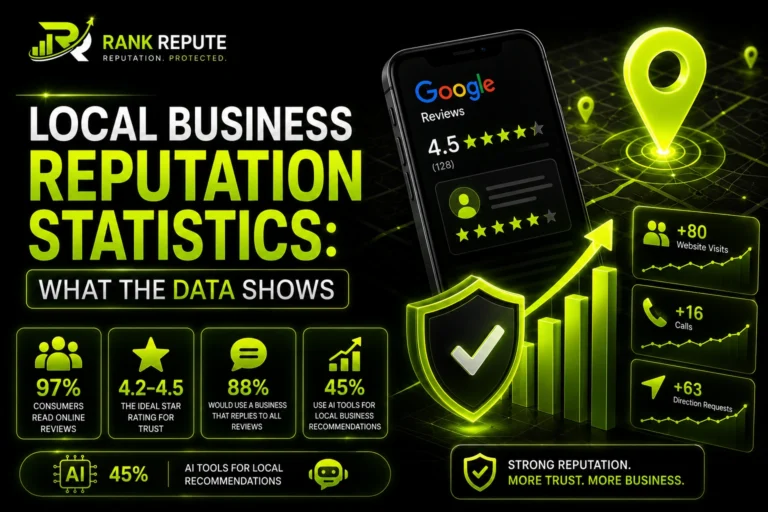
According to Bright Local’s 2024 Local Consumer Review Survey, 97% of consumers read online reviews for local businesses, and 41% say they always read them. For healthcare specifically, the American Dental Association reports that 84% of the public trust online reviews to guide healthcare decisions. A separate survey by the marketing firm IronMonk found that 43% of patients select their dentist based on online reviews.
The pattern is clear. A patient searches “dentist near me,” lands on a short list, and reads reviews to break the tie. If your rating is weak or your reviews are thin, you are quietly removed from that list.
This matters more now because chairs are not always full. The ADA Health Policy Institute reported in early 2026 that about 32% of dentists said they were not busy enough and could treat more patients, up from 26% two years earlier. When capacity exists, the practice with the stronger online reputation wins the patient who is deciding between two options.
Which Review Platforms Matter Most for Dentists
Not every platform deserves equal effort. For dental practices, three carry the most weight: Google, Healthgrades, and Zocdoc. Each behaves differently.
Google is the most important platform for a dental practice. It feeds the local map pack, so your review count and star rating directly affect whether you appear when someone searches “dentist near me.” Reviews here influence both patient trust and local ranking, which is why they matter twice.
Healthgrades
Healthgrades is a healthcare directory with deep provider profiles. It has over 6 million registered users and receives more than 30 million visits per month. Many dentists ignore it, which is the opportunity. If you are optimized here while local competitors are not, you gain ground on a high-intent audience that is already researching providers.
Zocdoc
Zocdoc is different from Google in one important way. Only patients who booked an appointment through the platform and attended can leave a review, so every review comes from a verified patient. Zocdoc emails patients for feedback three hours after the appointment, with reminders after that, and patients can review up to 120 days later. This closed-loop system means you cannot pad your profile with reviews from non-patients, but it also means the reviews you do get carry more credibility.
One rule applies across all three platforms: never ask only happy patients to review while filtering out unhappy ones. This is called review gating, and Google prohibits it. It can get your reviews removed or your profile penalized.
How Many Reviews Does a Dental Practice Need?
There is no single magic number, but patients care about volume, not just your average score. A 4.9 rating with 30 reviews looks weaker than a 4.8 rating with 300, because the larger sample feels more reliable.
The Reputation and YouGov survey found that 80% of patients expect to see 5 or more reviews before they consider a provider trustworthy. That is the floor, not the goal. In competitive urban markets, the practices that dominate the map pack usually hold hundreds of reviews and keep adding them.
The more useful target is a steady rate, not a total. A practice that adds 5 to 10 new Google reviews a month builds momentum that compounds. Recency matters too, since a wall of reviews from three years ago signals a practice that stopped paying attention.
Getting to that steady rate is a process problem, not a luck problem. This is where structured review generation does the heavy lifting, turning satisfied patients into reviewers without relying on the front desk to remember.
How to Respond to Dental Reviews Without Violating HIPAA
This is the section most generic reputation advice gets wrong, and the mistake is expensive. Standard guidance says to respond to every review, thank the patient, and reference their visit. For a dentist, that advice can trigger a federal violation.
HIPAA prohibits confirming that someone is your patient in any public response, even indirectly. Replying with “we’re sorry your cleaning didn’t meet expectations” can confirm patient status and the type of care received. That is protected health information, and disclosing it without authorization breaks the rule.
This is not theoretical. In 2019, Elite Dental Associates, a Dallas practice, paid $10,000 to settle with the Office for Civil Rights at the Department of Health and Human Services after it responded to a Yelp review by disclosing a patient’s last name, treatment plan, insurance, and cost details. The investigation found the practice had done the same in other review responses and had no policy for social media disclosures, and the settlement included a two-year corrective action plan. The OCR director summed it up plainly: social media is not the place for providers to discuss a patient’s care.
The compliant approach is to respond without acknowledging the person is a patient. A safe reply reads like this: “We take all feedback seriously and would welcome the chance to discuss any concerns directly. Please contact our office manager at [number].” It shows future readers you are professional and responsive, without confirming anything about the reviewer.
The same discipline applies to negative and fake reviews. A defamatory or fake review may be removable through the platform’s process, but the response you post while it is live still has to stay compliant.
Reputation Management for Dental Sleep Medicine
Dental sleep medicine sits in an awkward spot, and it changes how patients judge reviews. A patient searching for sleep apnea treatment from a dentist is often skeptical, because they expect a physician, not a dentist, to handle sleep disorders.
That skepticism shifts what your reviews need to prove. General dentistry reviews build trust around comfort and pain. Dental sleep medicine reviews need to build trust around outcomes and credibility, such as reduced snoring, better sleep, and appliance comfort compared to a CPAP machine. Reviews that mention specific results carry more weight here than reviews that only say the staff was friendly.
Insurance also drives sentiment in this specialty. Sleep appliances involve medical billing, coverage questions, and higher costs, so reviews frequently touch on billing clarity. A practice that manages expectations upfront tends to see fewer frustrated reviews about surprise costs.
What One Bad Review Actually Costs
A single 1-star review is not just an ego bruise. It quietly diverts patients before they ever contact you.
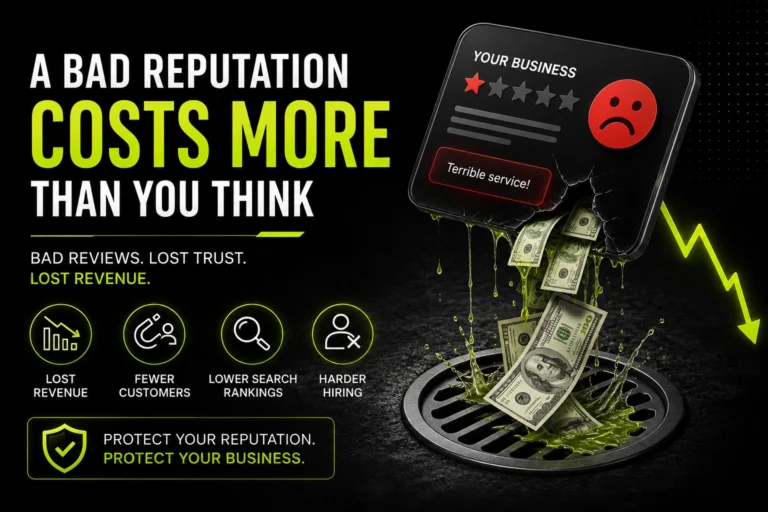
Consider the math. BrightLocal’s 2026 data found that 68% of consumers will not use a business rated under 4 stars. If a run of negative reviews drops you below that line, you are not losing one patient, you are losing a share of everyone who finds you that month. Dental patients also carry high lifetime value, since a single family can mean thousands of dollars in cleanings, fillings, and larger procedures over years. Losing ten prospective patients to a damaged rating compounds into real lost revenue.
There is a newer risk too. BrightLocal found that 45% of consumers now ask AI tools like ChatGPT for local recommendations, up from 6% a year earlier. AI answers pull from the same review signals, so a weak reputation now hurts you in both search results and AI-generated suggestions.
When negative content goes beyond honest reviews into defamation or damaging search results, suppression and removal become their own discipline.
Done-for-You vs Doing It Yourself
Every practice can manage reputation in-house. The question is whether the trade-off is worth it.
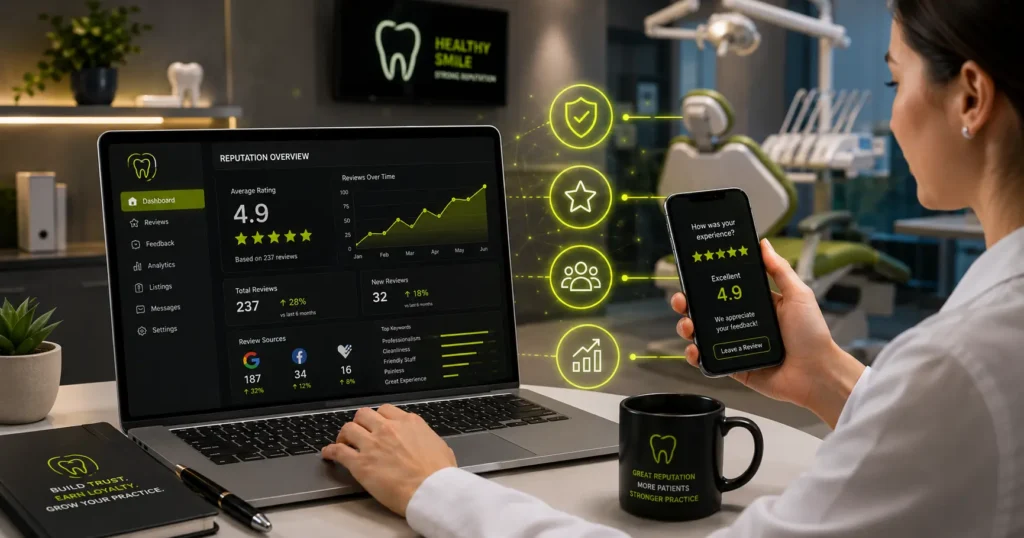
The DIY path works when you have someone on staff with the time and discipline to request reviews after appointments, monitor three or more platforms daily, and write HIPAA-compliant responses without slipping. The cost is not money, it is attention and consistency. Most front desks are busy, and monitoring lapses right when a negative review needs a fast, careful reply.
The done-for-you path makes sense when your time is better spent on patients than on platforms. A managed service handles the review requests, watches the platforms, and drafts compliant responses. The value is not just labor saved, it is the compliance guardrail that keeps you out of an Elite Dental situation.
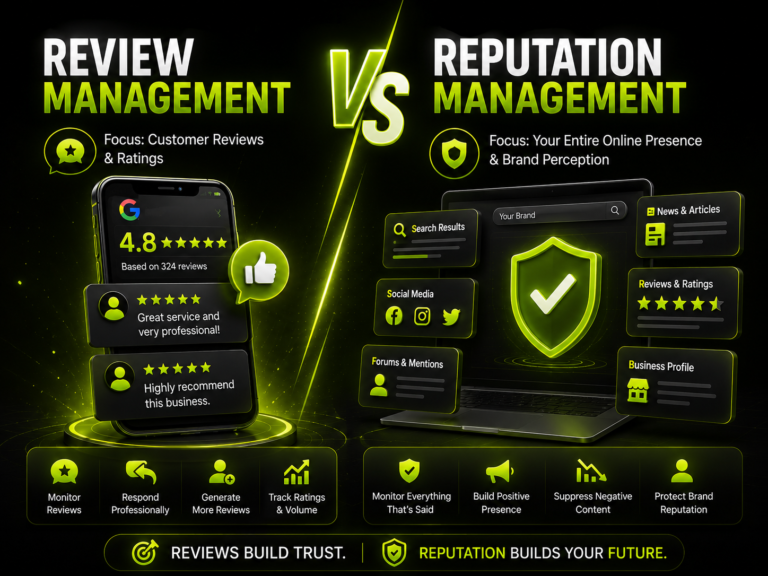
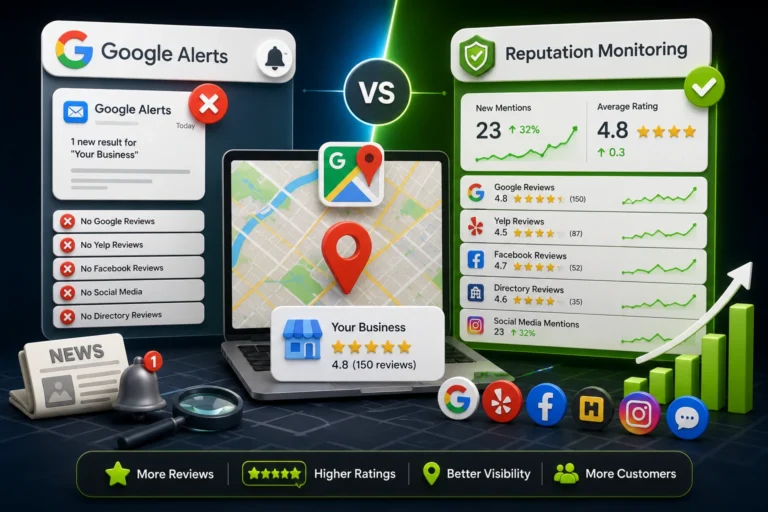
The two functions to look for are review management, which covers responses and platform oversight, and reputation monitoring, which alerts you when something new appears so nothing sits unanswered for days.
FAQ
Can a dentist respond to Google reviews without breaking HIPAA?
Yes, but only if the response never confirms the person is a patient or references their care. Confirming patient status or treatment details in a public reply is a HIPAA violation, even when the reviewer named themselves first. The safe method is a generic reply inviting the person to contact the office directly.
Is Google or Healthgrades more important for dentists?
Google is more important overall because it drives the local map pack and the “dentist near me” searches that produce most new patients. Healthgrades is a strong secondary platform, especially valuable because many competitors neglect it. The best approach is to lead with Google and layer Healthgrades and Zocdoc on top.
How many Google reviews does a dental practice need to compete?
There is no fixed number, but patients expect at least 5 reviews before they trust a provider, and competitive markets often demand hundreds. A more useful target is a steady rate of 5 to 10 new reviews per month, since recency and volume matter as much as your average score.
Why do Zocdoc reviews feel more trustworthy than Google reviews?
Zocdoc uses a closed-loop system where only patients who booked and attended an appointment through the platform can leave a review. That verification blocks reviews from non-patients and competitors, so patients treat Zocdoc feedback as more reliable. The trade-off is that you cannot generate volume as freely as on open platforms.
Can negative or fake reviews be removed from Google?
Reviews that violate platform policy, such as fake reviews, spam, or content from someone who was never a patient, can be reported and sometimes removed. Honest negative reviews usually cannot be removed and are better handled with a compliant public response. Removal is a process, not a guarantee, and it works best when the review clearly breaks Google’s rules.
Conclusion
Dental reputation management is not a one-time cleanup. It is the steady work of earning reviews, watching the platforms that matter, and responding in a way that protects both your image and your patients’ privacy. The practices that treat it as a system, not an afterthought, are the ones that stay full when others have empty chairs. Whether you build the process in-house or hand it off, the goal is the same: be the practice a patient trusts before the first call.