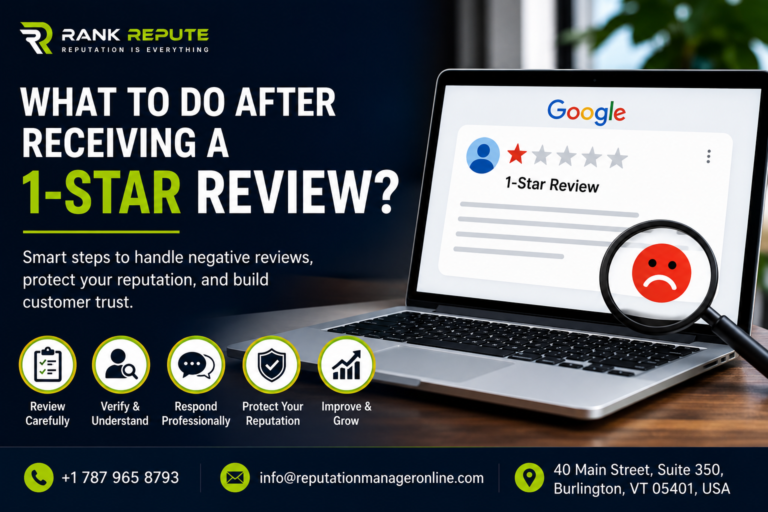
How To Respond To Negative Reviews Professionally?
Quick Answer
Responding to negative reviews professionally means acknowledging the customer’s concerns, showing empathy, remaining respectful, and offering a path toward resolution. A professional response helps protect your online reputation, demonstrates accountability, and shows potential customers that your business values feedback. Even when a review feels unfair, a thoughtful response can strengthen trust and positively influence future purchasing decisions.
Why Responding To Negative Reviews Matters?
Negative reviews are no longer just customer complaints. They have become one of the most visible trust signals consumers evaluate before deciding whether to contact a business.
Whether someone is searching for a dentist, law firm, restaurant, contractor, medical practice, or local service provider, they often spend time reading reviews before making a decision. What many business owners fail to realize is that potential customers frequently read the responses as carefully as they read the reviews themselves.
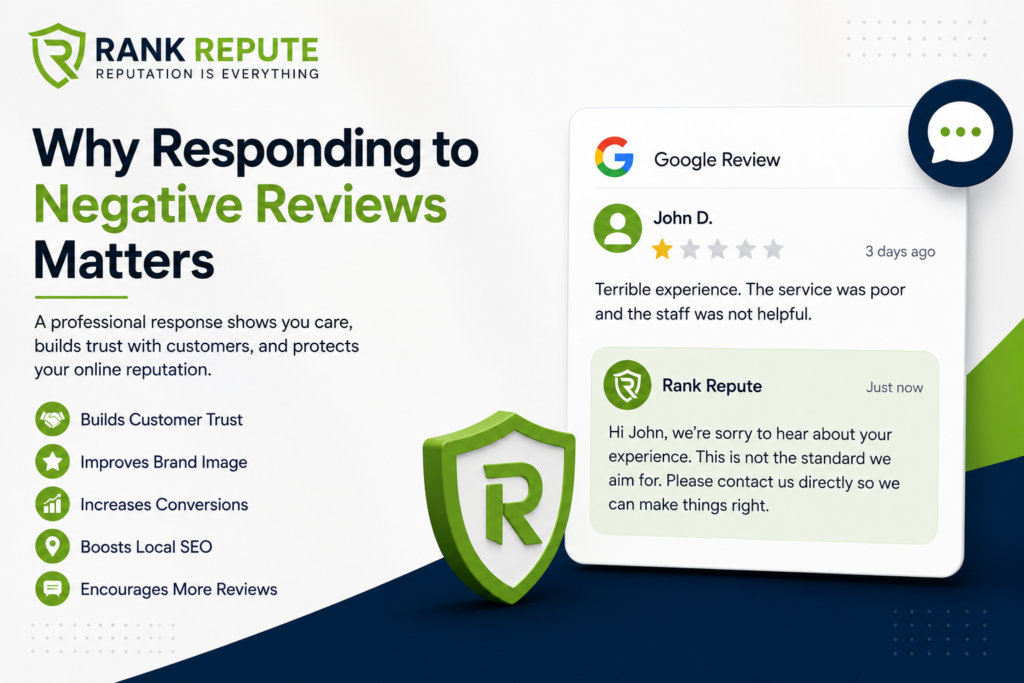
A negative review without a response creates uncertainty. It may suggest that the business is unaware of customer concerns, unwilling to engage with feedback, or simply does not prioritize customer experience. On the other hand, a professional response demonstrates transparency, accountability, and a willingness to improve.
This is why responding to negative reviews has become an essential component of modern review management, reputation management, and customer experience strategies. At Rank Repute, we help businesses protect their online reputation through professional review responses, review monitoring, and reputation management strategies that build trust and strengthen customer confidence.
Customers Expect Businesses To Respond
Consumer expectations have changed significantly over the last decade. Customers no longer view reviews as a one-way communication channel. They expect businesses to actively participate in conversations and address concerns when problems arise.
When a customer leaves feedback, they often want one or more of the following:
- Acknowledgment
- An explanation
- A resolution
- Assure that the problem will not happen again
Even when the original reviewer never updates their opinion, other prospective customers see that your business is actively listening and responding. This visibility creates trust.
Review Responses Influence Buying Decisions
Research consistently shows that consumers trust businesses that engage with reviews more than businesses that remain silent. Imagine two businesses with identical ratings: Business A has dozens of negative reviews that have never received a response. Business B has similar reviews, but each one has received a professional, thoughtful reply. Most customers will choose Business B.
The reason is simple. People understand that mistakes happen. What they want to see is how businesses handle those mistakes. A calm, professional response often has a greater impact on buying decisions than the review itself. Combined with a consistent review response strategy and proactive review collection efforts, businesses can strengthen trust and improve their online reputation over time. Businesses looking to generate more authentic customer feedback can also benefit from a dedicated review generation service that helps increase positive reviews across key platforms.
Negative Reviews Affect More Than Reputation
Many business owners think negative reviews only affect their reputation. In reality, they can influence:
- Customer trust
- Lead generation
- Conversion rates
- Brand perception
- Local search visibility
- Referral activity
- Customer retention
For local businesses, reviews are often one of the first interactions potential customers have with the brand. That makes review management a critical business function rather than a simple customer service task.
What Makes A Professional Review Response?
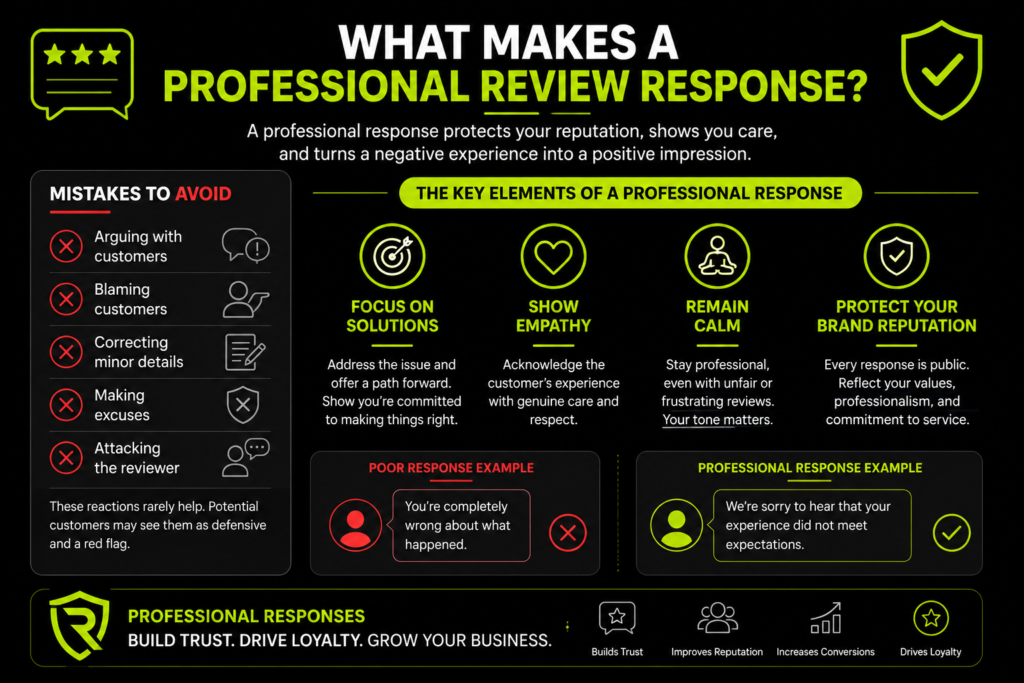
A professional review response is one that addresses customer concerns respectfully while protecting the reputation of the business. The goal is not to win an argument. The goal is to demonstrate professionalism, empathy, and a commitment to customer satisfaction.
Professional Responses Focus On Solutions
One of the biggest mistakes businesses make is focusing on defending themselves. When business owners feel attacked, they often respond emotionally. Examples include:
- Arguing with customers
- Blaming customers
- Correcting minor details
- Making excuses
- Attacking the reviewer
While these reactions may feel justified, they rarely improve the situation. Potential customers reading the exchange often view defensive behavior as a warning sign. Professional responses focus on solutions rather than blame, and businesses that use ongoing reputation monitoring are better equipped to identify issues early and respond appropriately before they escalate.
Professional Responses Show Empathy
Empathy does not mean admitting fault. It means acknowledging that the customer had a negative experience. Consider these two examples:
Poor Response: “You’re completely wrong about what happened.”
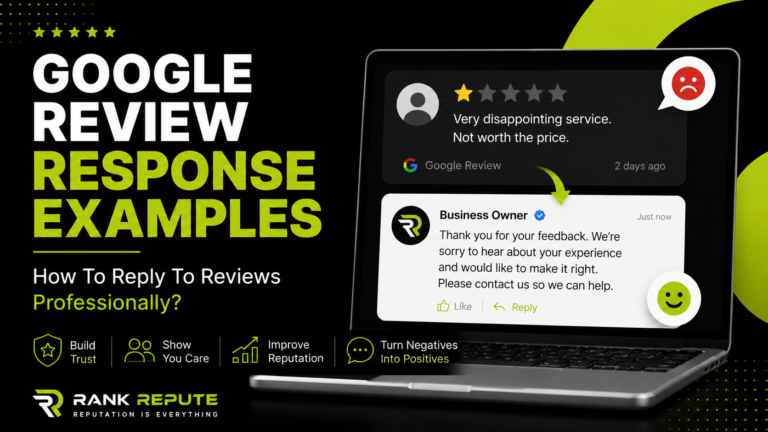
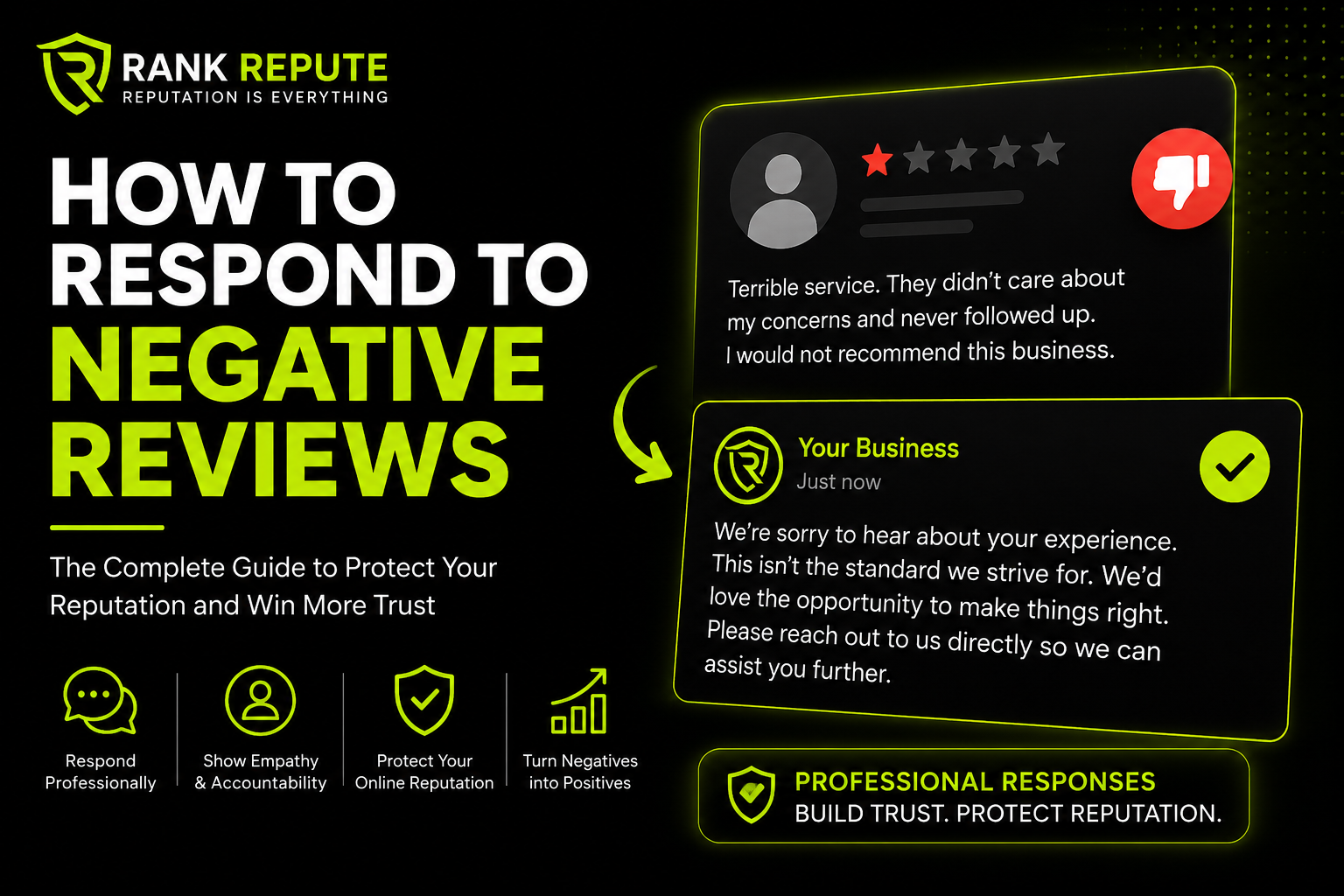
Professional Response: “We’re sorry to hear that your experience did not meet expectations.”
The second response immediately reduces tension and keeps the conversation constructive.
Professional Responses Remain Calm
Some reviews are frustrating. Some are exaggerated. Some are completely unfair. However, professionalism requires consistency. The review response is not written only for the reviewer. It is written for every future customer who reads it. Maintaining a calm tone demonstrates confidence and maturity.
Professional Responses Protect Brand Reputation
Every review response becomes part of your public reputation. Years from now, potential customers may still read that response when evaluating your business. This means every reply should reflect your company’s values, professionalism, and commitment to customer service. Consistent, thoughtful responses not only strengthen trust but also contribute to long-term brand perception, making review management an important part of effective Online rand building and reputation growth.
The Psychology Behind Negative Reviews
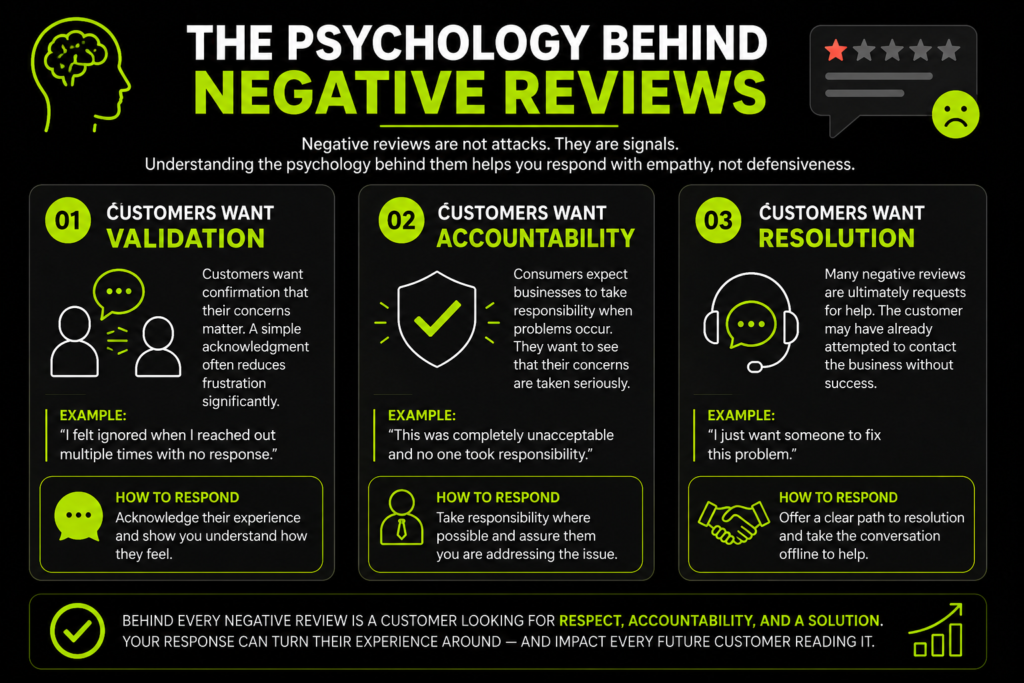
Understanding why customers leave negative reviews helps businesses respond more effectively. Most customers do not leave negative reviews because they want to damage a business. They leave reviews because they feel frustrated, disappointed, ignored, or unheard.
Customers Want Validation
One of the most common motivations behind negative reviews is validation. Customers want confirmation that their concerns matter. A simple acknowledgment often reduces frustration significantly. When customers feel heard, they become more receptive to finding a resolution.
Customers Want Accountability
Consumers expect businesses to take responsibility when problems occur. This does not mean accepting blame for situations outside your control. It means demonstrating that customer concerns are taken seriously. Businesses that avoid accountability often create even greater dissatisfaction.
Customers Want Resolution
Many negative reviews are ultimately requests for help. The customer may have already attempted to contact the business without success. The public review becomes another effort to get attention. Responding professionally creates an opportunity to restart the conversation.
The 5-Step Framework For Responding To Negative Reviews
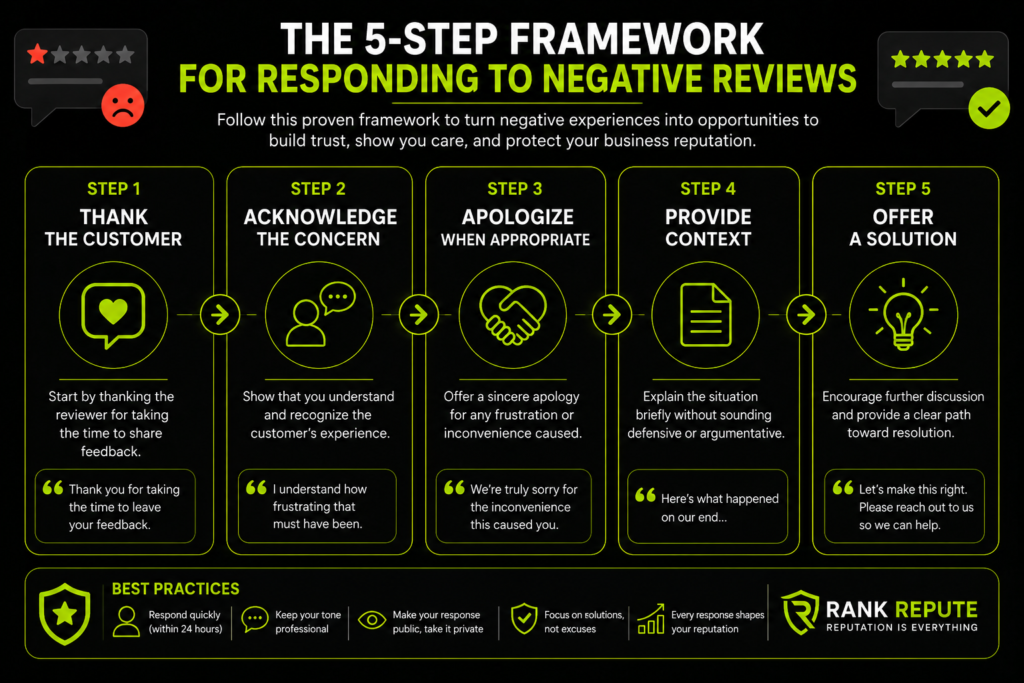
Businesses that consistently achieve better results through professional review management services generally follow a structured process. Rather than reacting emotionally, they use a repeatable framework.
Step 1: Thank The Customer
Start by thanking the reviewer for taking the time to share feedback.
Step 2: Acknowledge The Concern
Show that you understand and recognize the customer’s experience.
Step 3: Apologize When Appropriate
Offer a sincere apology for any frustration or inconvenience caused.
Step 4: Provide Context
Explain the situation briefly without sounding defensive or argumentative.
Step 5: Offer A Solution
Encourage further discussion and provide a clear path toward resolution.
Good Review Responses vs Bad Review Responses
Many businesses understand they should respond to reviews, but struggle with how those responses should be written. The difference between a good response and a bad response often determines whether the situation improves or becomes worse.
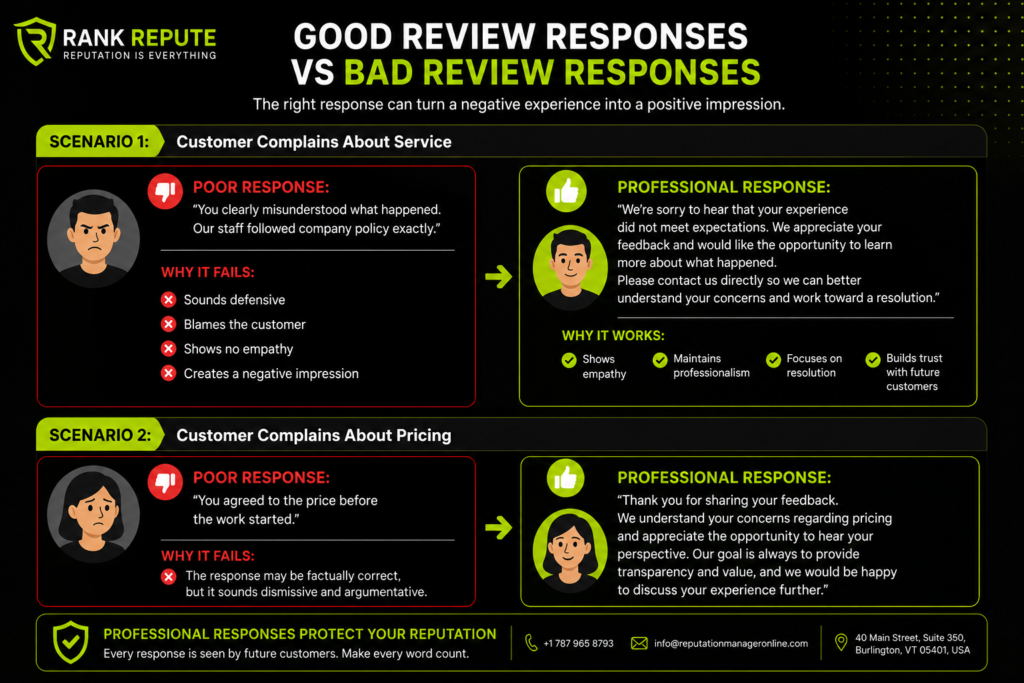
Scenario 1: Customer Complains About Service
Poor Response: “You clearly misunderstood what happened. Our staff followed company policy exactly.”
Why It Fails:
- Sounds defensive
- Blames the customer
- Shows no empathy
- Creates a negative impression
Professional Response: “We’re sorry to hear that your experience did not meet expectations. We appreciate your feedback and would like the opportunity to learn more about what happened. Please contact us directly so we can better understand your concerns and work toward a resolution.”
Why It Works:
- Shows empathy
- Maintains professionalism
- Focuses on resolution
- Builds trust with future customers
Scenario 2: Customer Complains About Pricing
Poor Response: “You agreed to the price before the work started.”
Why It Fails: The response may be factually correct, but it sounds dismissive and argumentative.
Professional Response: “Thank you for sharing your feedback. We understand your concerns regarding pricing and appreciate the opportunity to hear your perspective. Our goal is always to provide transparency and value, and we would be happy to discuss your experience further.”
How Negative Reviews Impact Local SEO?
Many business owners assume negative reviews only affect reputation. In reality, reviews play an important role in local SEO and local search visibility. Search engines evaluate multiple review-related signals when determining which businesses appear in local search results and Google Maps.
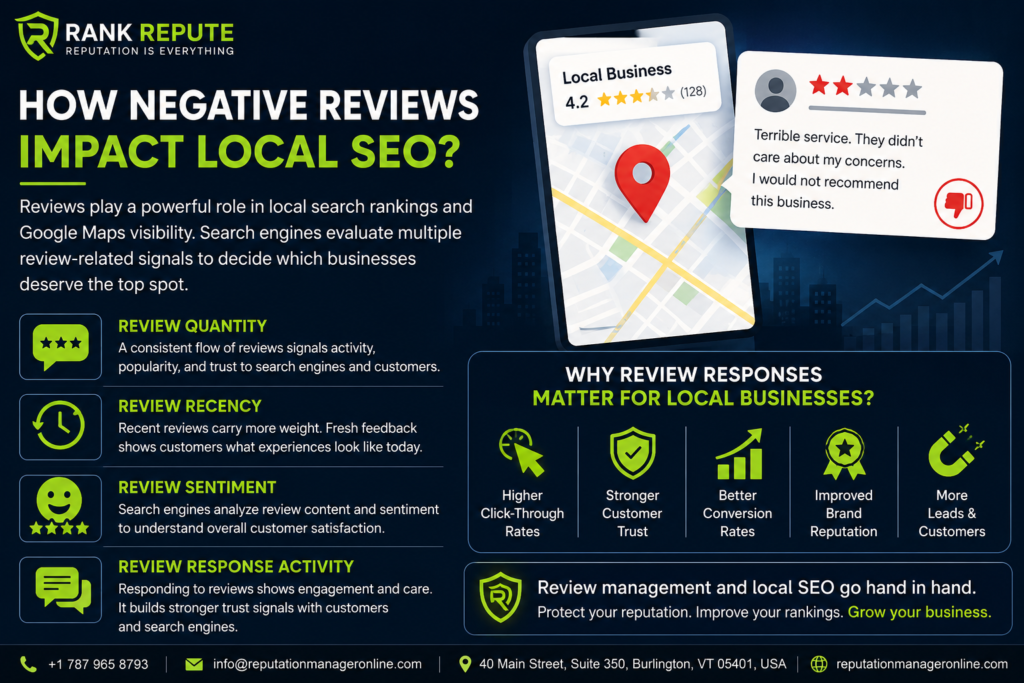
Review Quantity
Businesses with a consistent flow of customer reviews often appear more active and trustworthy. Review volume can influence customer perception and strengthen local authority signals.
Review Recency
Recent reviews are often more valuable than older reviews. Customers want to know what recent experiences look like, not what happened several years ago. A business with consistent recent feedback generally appears more credible than a business with outdated reviews.
Review Sentiment
Search engines analyze review content to better understand customer experiences and satisfaction levels. While a few negative reviews are normal, ongoing patterns of dissatisfaction can affect customer trust.
Review Response Activity
Responding to reviews demonstrates engagement. Businesses that actively manage customer feedback often create stronger trust signals than businesses that ignore reviews entirely.
Why Review Responses Matter For Local Businesses?
For local businesses, review responses influence:
- Click-through rates
- Customer trust
- Conversion rates
- Brand reputation
- Lead generation
This is why review management and local SEO often work together as part of a broader reputation management strategy.
Common Mistakes Businesses Make When Responding To Reviews
Before responding to reviews, businesses should understand that every public response becomes part of their online reputation. Potential customers often read review responses to evaluate professionalism, customer service standards, and how a company handles feedback. Avoiding common review response mistakes can help protect trust, strengthen credibility, and improve customer perception over time.
- Responding Emotionally – Emotional reactions can make a business appear unprofessional.
- Copying The Same Response Repeatedly – Generic replies make customer interactions feel impersonal.
- Arguing With Customers – Public disputes often damage trust more than the review itself.
- Ignoring Reviews – Unanswered reviews can signal poor customer service.
- Sharing Private Information – Never disclose customer, patient, or client information publicly.
When Should Businesses Flag Or Remove A Review?
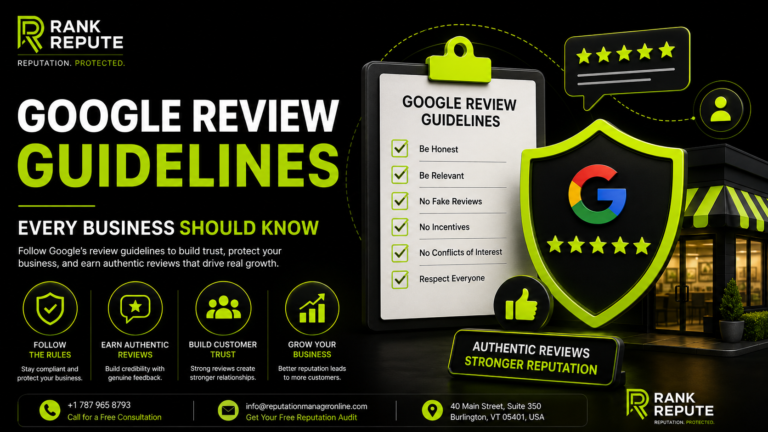
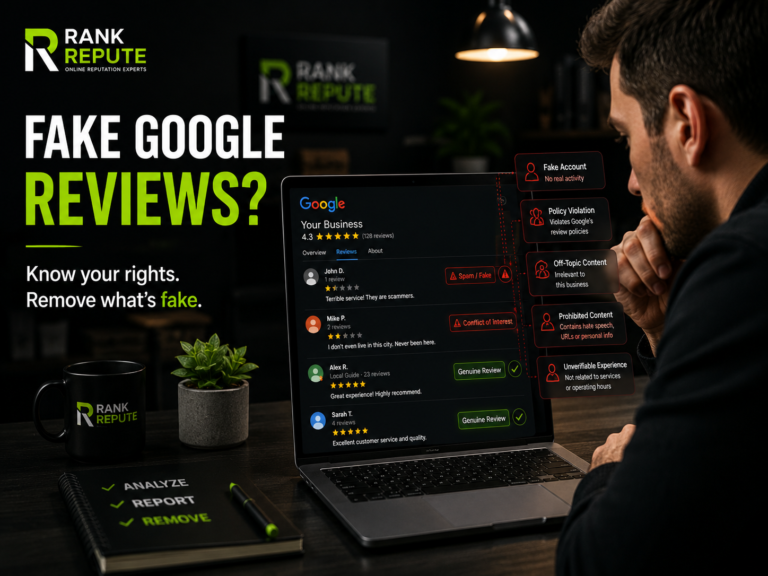
Not every negative review should be removed. In many cases, responding professionally is the better approach. However, some reviews violate platform policies and may qualify for removal. Reviews that contain spam, fake information, conflicts of interest, harassment, or prohibited content may be eligible for action through professional Negative Content Removal services, helping businesses protect their online reputation while remaining compliant with platform guidelines.
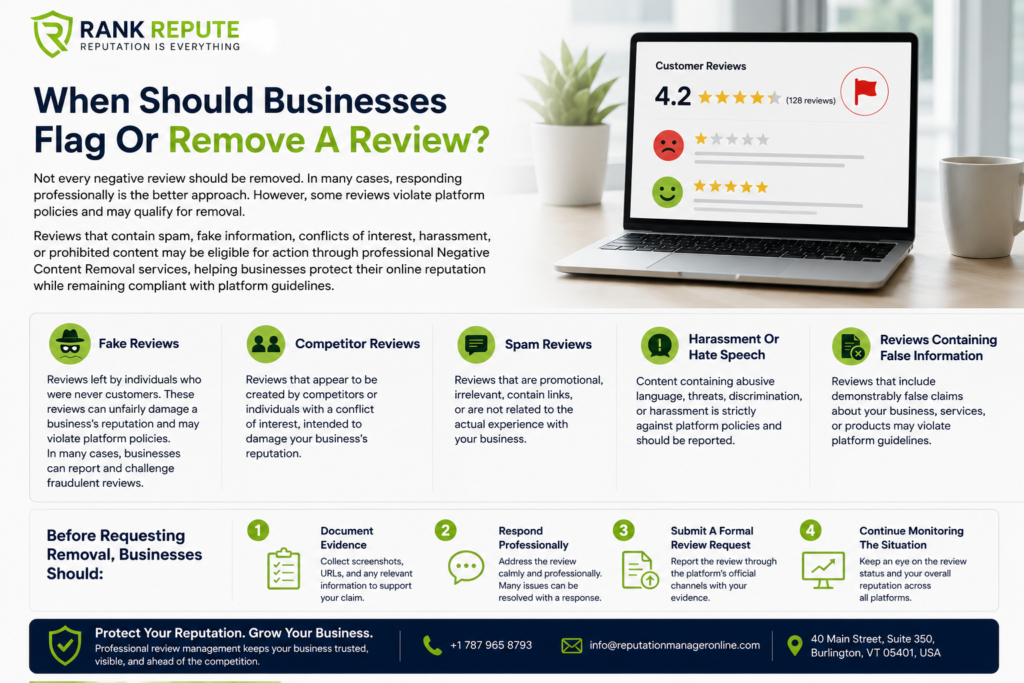
Fake Reviews
Reviews left by individuals who were never customers. These reviews can unfairly damage a business’s reputation and may violate platform policies. In many cases, businesses can report and challenge fraudulent reviews through the proper channels. Learn more about how to remove fake Google reviews and the steps available for addressing policy-violating feedback.
Competitor Reviews
Reviews are intended to damage a competitor’s reputation.
Spam Reviews
Promotional, irrelevant, or misleading content.
Harassment Or Hate Speech
Content containing abusive language, threats, discrimination, or harassment.
Reviews Containing False Information
Some reviews may violate platform guidelines if they contain demonstrably false claims.
Before requesting removal, businesses should:
- Document evidence.
- Respond professionally.
- Submit a formal review request through the platform.
- Continue monitoring the situation.
Industry-Specific Review Response Strategies
Different industries face unique review management challenges.
Healthcare Providers
Healthcare practices must protect patient privacy and comply with HIPAA requirements. A strong medical practice reputation management strategy helps healthcare organizations maintain trust while managing reviews across platforms such as Google, Healthgrades, and Zocdoc.
Law Firms
Law firms should avoid discussing confidential legal matters in public responses. Professional review management, local SEO, and attorney reputation building are critical for attracting new clients while maintaining compliance. Our Law Firm Reputation Management Solutions help attorneys strengthen their online presence on Google, Avvo, and other legal directories.
Restaurants
Restaurants often receive reviews related to food quality, service speed, cleanliness, and staff interactions. Quick responses can significantly improve customer perception. Effective restaurant review management can increase customer trust and improve local search visibility.
Dental Practices
Dental reviews frequently focus on communication, appointment scheduling, treatment quality, and patient experience. Our Dental Practice Reputation Management Services help dentists generate more patient reviews, improve online visibility, and build long-term trust within their local communities.
Home Service Businesses
Contractors, plumbers, roofers, electricians, HVAC companies, and other service providers depend heavily on local reputation signals. A proactive reputation strategy helps generate more leads, improve Google rankings, and convert more customers. Learn how our Home Services Reputation Management Services support home service businesses through review generation, Google Business Profile optimization, and reputation monitoring.
Creating A Review Management Process
The most successful businesses do not respond to reviews randomly. They implement a structured review management process.
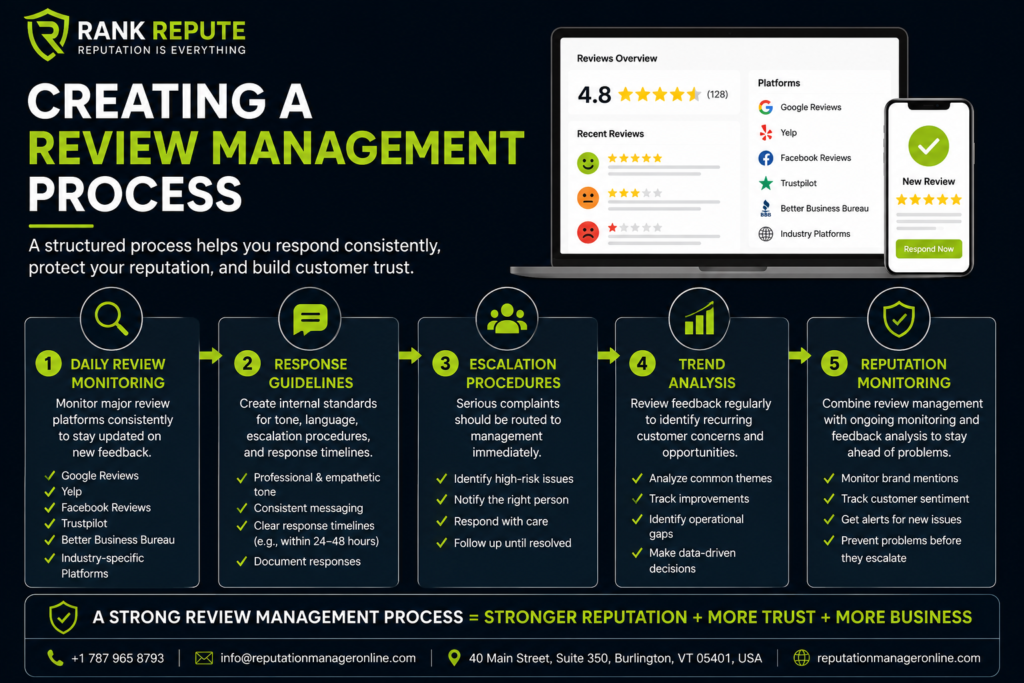
Daily Review Monitoring
Monitor major review platforms consistently. This includes:
- Google Reviews
- Yelp
- Facebook Reviews
- Trustpilot
- Better Business Bureau
- Industry-specific review platforms
Response Guidelines
Create internal standards for tone, language, escalation procedures, and response timelines.
Escalation Procedures
Serious complaints should be routed to management immediately.
Trend Analysis
Review feedback regularly to identify recurring customer concerns. Patterns often reveal opportunities for operational improvements.
Reputation Monitoring
Review management works best when combined with ongoing reputation monitoring and customer feedback analysis. Businesses that actively monitor customer sentiment can often identify issues before they become larger reputation problems.
FAQs
How Quickly Should A Business Respond To Negative Reviews?
Businesses should ideally respond within 24 to 48 hours. Fast responses demonstrate attentiveness, professionalism, and a commitment to customer satisfaction. Delayed responses can create the impression that customer concerns are not a priority. While speed matters, businesses should still take enough time to understand the issue and provide a thoughtful, personalized response.
Can Responding To Negative Reviews Improve Customer Trust?
Yes. Customers understand that no business is perfect, but they expect businesses to address concerns professionally. A thoughtful response demonstrates accountability, transparency, and customer care. Many consumers pay more attention to how a business responds than to the negative review itself.
Can Responding To Negative Reviews Improve Customer Trust?
Yes. Customers understand that no business is perfect, but they expect businesses to address concerns professionally. A thoughtful response demonstrates accountability, transparency, and customer care. Many consumers pay more attention to how a business responds than to the negative review itself.
What Should Businesses Do If A Review Is Fake?
If a review appears fake, businesses should remain professional, investigate the situation, document evidence, and submit a removal request if the review violates platform guidelines. Public arguments rarely help and can damage credibility. A calm response often creates a better impression than an emotional reaction.
Do Negative Reviews Affect Local SEO?
Yes. Reviews contribute to customer trust and local search visibility. Search engines evaluate review quantity, recency, sentiment, and engagement. A few negative reviews are normal, but a pattern of unresolved complaints can affect both customer perception and business performance.
Which Review Platforms Matter Most?
For most local businesses, Google Reviews is the most important platform because it influences both customer decisions and local search visibility. Other valuable platforms include Yelp, Facebook Reviews, Trustpilot, Better Business Bureau, and industry-specific review sites.
Can Negative Reviews Help A Business?
Surprisingly, yes. Negative reviews can make a business appear more authentic and provide opportunities to demonstrate professionalism. They can also highlight operational issues that need improvement. Businesses that respond well often strengthen customer trust despite receiving criticism.
Should Businesses Respond To Every Negative Review?
In most cases, yes. Responding to legitimate negative reviews shows that customer feedback matters and helps build trust with future customers. Exceptions may include spam, fake reviews, or content that violates platform policies.
Why Is Review Management Important?
Review management helps businesses monitor feedback, protect their reputation, improve customer relationships, and strengthen trust. It also supports customer retention and contributes to long-term reputation growth.
Conclusion
Responding to negative reviews professionally is one of the most important aspects of online reputation management. Customers evaluate not only reviews themselves but also how businesses respond to criticism.
Professional responses build trust, demonstrate accountability, strengthen customer relationships, and support long-term reputation growth. By following a structured review response framework, avoiding common mistakes, and implementing a consistent review management process, businesses can turn negative feedback into opportunities to improve customer experiences and strengthen their online reputation.